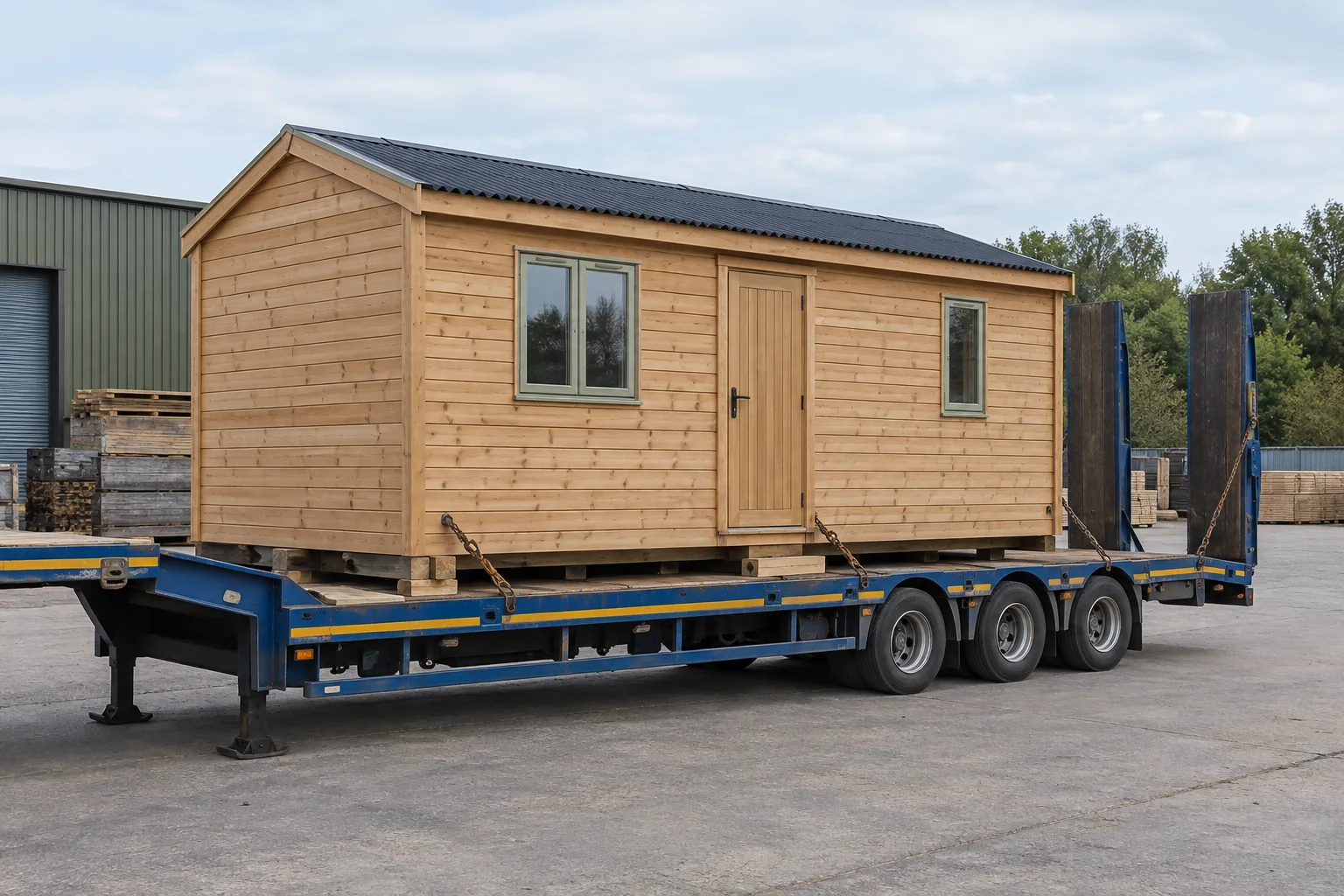
An Incoterms rule describes selected delivery, cost and risk responsibilities, but it does not specify the wooden cabin, transfer ownership, approve installation or settle every contract question. Compare quotes only after writing the rule, named place and edition, then map who handles export, main carriage, insurance, import clearance, final delivery and unloading. Have a trade professional review the chosen route.
Introduction: ‘delivered’ is not a complete price boundary
Two suppliers can quote the same wooden cabin at very different prices while assigning entirely different transport responsibilities. One price may stop at the factory gate, another may include ocean freight, and a third may reach a named inland destination but leave import clearance and unloading to the buyer. The labels do not tell you whether foundations, assembly or local approval are included.
This guide explains how a cabin buyer can compare trade terms as a procurement exercise. It is not legal, tax or customs advice, and no Incoterms rule makes a particular CabinWild product available or approved. The International Chamber of Commerce publishes the official Incoterms 2020 rules; the transaction parties and their advisers should read the applicable rule and put it in the contract with an exact named place and edition.
Keep a responsibility matrix beside the price comparison. The project team should see who books and pays for each transport leg, who carries risk at the relevant handover point, who arranges clearance, and who physically unloads the package at the destination. Only then can a supplier quotation be compared with the buyer's remaining work.
Further reading: ICC: official Incoterms 2020 overview.
What do Incoterms decide—and what do they leave open?
Incoterms rules allocate certain tasks, costs and risks between seller and buyer for delivery of goods. They help answer questions such as where delivery occurs, which party arranges transport, and who handles export or import formalities under the chosen rule. They do not by themselves define the cabin specification, payment schedule, warranty, ownership transfer, destination building compliance or installation method.
This distinction matters for a cabin package because the manufacturing order and the site project overlap but are not identical. A quoted DAP price may reach a named site and still exclude unloading or crane hire, foundation preparation and assembly. A quoted FOB price may be commercially attractive while leaving the buyer to arrange a long chain of freight, insurance and destination work. Neither rule tells you whether the timber kit includes windows or a bathroom.
Write the product scope in its own schedule and the trade term in the commercial agreement. Cross-reference package dimensions, weight and handling because they influence the transport quote. If a finish, window or delivery format changes after the term is agreed, revisit both the product price and the logistics responsibility matrix.
Further reading: Compare cabin kit inclusions and exclusions.
1. Specify the named place precisely
A trade term without a precise place can leave a material gap. ‘DAP London’ does not tell the parties whether delivery is at a port terminal, a logistics depot, a particular project gate or another location. For a remote resort, a named place should also be evaluated for road geometry, vehicle access, unloading space and local restrictions. The contract language and practical delivery plan need to describe the same point.
Ask the forwarder and site team to verify that the chosen place can be reached by the proposed vehicle with the actual package. An export pallet that fits a container may still be too long or heavy for the final access route. Do not infer that a supplier accepting a DAP destination has performed a local route survey unless that is explicitly within its contracted scope.
Record what happens if the site cannot receive on the planned day: storage, waiting charges, re-delivery, access changes and the person allowed to authorise them. These details may sit outside the standard trade rule and therefore need a project-specific agreement. The trade term is a starting map of responsibility, not a substitute for an operational plan.
Further reading: Plan delivery route and unloading for pre-built cabins.
2. Compare common quotation boundaries without guessing
EXW, FCA, FOB, CIF, DAP and DDP are familiar names, but their suitability depends on transport mode and what each party can actually perform. Avoid selecting a rule only because its three letters seem to reduce price. Ask a trade professional to explain the handover and clearance obligations of the proposed rule in the specific route. The ICC's official explanatory material and checklist are more reliable than an informal chart copied into a sales email.
Containerised cabin kits create particular questions. A sea-only rule should not be chosen mechanically when the goods are handed to a carrier before loading on a vessel; ask the forwarder and seller to confirm the correct rule for the actual handover. Do not describe an EXW price as export-ready if the buyer cannot practically complete origin-country formalities. These are transaction-dependent issues, not a universal prohibition on any rule.
For illustration, suppose two quotations show the same cabin shell. Supplier A prices to a named port; Supplier B prices to a named resort gate. The comparison must add the buyer's remaining port handling, customs brokerage, duties and taxes where applicable, inland haulage, insurance decisions and unloading to each side. The resulting totals may still differ because the supplied cabin package itself differs. Keep the supply-scope reconciliation separate.
Further reading: ICC Academy: DAP and DDP comparison.
| Comparison line | Question to record | Evidence |
|---|---|---|
| Rule and version | Which exact Incoterms rule and edition? | Signed contract or offer |
| Named place | Where does delivery occur in practice? | Named address or terminal |
| Freight legs | Who books and pays for each leg? | Forwarder quotation |
| Risk and insurance | When does risk transfer; what cover is arranged? | Contract and policy review |
| Clearance | Who performs export and import formalities? | Broker confirmation |
| Final unloading | Who provides equipment, labour and safe access? | Site logistics plan |
Turn these questions into a project brief
Send the destination, package format and proposed delivery place. Ask for a quotation that states the exact supply scope and trade term.
3. Separate risk transfer from insurance decisions
The point at which contractual risk transfers may not match the location where freight is paid. A buyer can therefore face a loss while another party arranged part of the carriage, depending on the chosen rule and contract. Ask the parties and insurance adviser to map the entire journey from packing to site receipt and identify any gaps in cover. Do not treat a freight-inclusive quotation as proof that every damage scenario is insured.
Check what the policy covers for the actual goods and package format. Cabin components may include glazing, coated timber, hardware and long structural members with different damage modes. The insured value, exclusions, claims evidence and reporting deadlines belong in the commercial review. A generic certificate is less useful than confirmation that the cargo, route and responsible insured party match the order.
Agree inspection points before sealing and after arrival. A dispatch photograph, container seal record and receiving condition note may support a later claim, but each has limits. Concealed damage can require a separate process. The buyer should know whom to notify, by when, and which documents to preserve without assuming that the supplier, carrier and insurer use identical rules.
Further reading: Plan cabin arrival inspection and discrepancy records.
4. Give customs and tax questions to the right specialists
Incoterms do not assign a tariff classification or establish whether a wooden cabin is legally a building, kit or collection of parts in the destination. Ask the importer of record and broker what documents, product descriptions and wood-origin information are required. The correct answer depends on the actual goods and current national rules, not on a generic marketing image.
If the proposed term assigns import clearance to the seller, check whether the seller can legally and practically act in that role in the destination. If the buyer is responsible, make sure the customs broker sees draft invoices and packing information before shipment. A late dispute about the named party or declaration details can delay components even if the cabin is manufactured on time.
Keep duties, taxes and local fees separate from the product price in internal budgeting. The ICC rule may allocate responsibilities but does not determine the tax amount or create exemptions. Do not publish a universal landed-cost percentage. Use a destination-specific estimate from the relevant adviser and update it when the final product and transport plan are fixed.
Further reading: Review wooden cabin import documents.
5. Connect the trade term to installation preparation
A transport contract can succeed while the installation project fails. Before dispatch, verify that the named delivery place has space for the truck, suitable ground, unloading equipment, a secure storage area and a responsible receiver. Define how damaged packages will be recorded and whether unloading is part of the agreed price. The boundary should be written, not inferred from a phrase such as ‘to your site.’
For an assembled module, check road permits, lift planning and foundation readiness with competent local teams. For a flat-pack kit, check the number and size of packages, unloading sequence and protection from weather. Different delivery formats can justify different terms or at least different supplemental clauses. The supplier's quote should identify the format it priced.
Installation is not silently included under an Incoterms rule. Agree separately who sets out the foundation, assembles components, connects services, tests installed systems and signs off defects. Where work is staged, identify which milestones are manufacturing, shipment, physical delivery and operational handover. A single word ‘delivered’ should not replace those four events.
Further reading: Define assembly-service scope and handover; Check site and foundation readiness.

6. Ask suppliers for a comparable quotation schedule
Send the same model, drawing revision, quantity, destination, package format and target timing to each supplier. Request the unit price, inclusions, exclusions, trade term with named place and edition, estimated packing dimensions and documentation offered. If a supplier proposes an alternative term, invite it, but keep both options visible rather than overwriting the original comparison.
Ask a freight forwarder or logistics team to price the buyer-controlled legs. Note assumptions about sailing route, inland road access, storage, insurance and unloading. Freight rates and schedules change, so record the date and validity of estimates. A lower quoted cabin price can still create a larger or less controllable landed commitment.
Use the final comparison to decide who is best placed to manage each leg and risk. The cheapest allocation is not always the clearest one, particularly on a remote site. Obtain a written contract review before placing a large order. This guide provides a decision framework, not a recommendation of one Incoterms rule for all CabinWild customers.
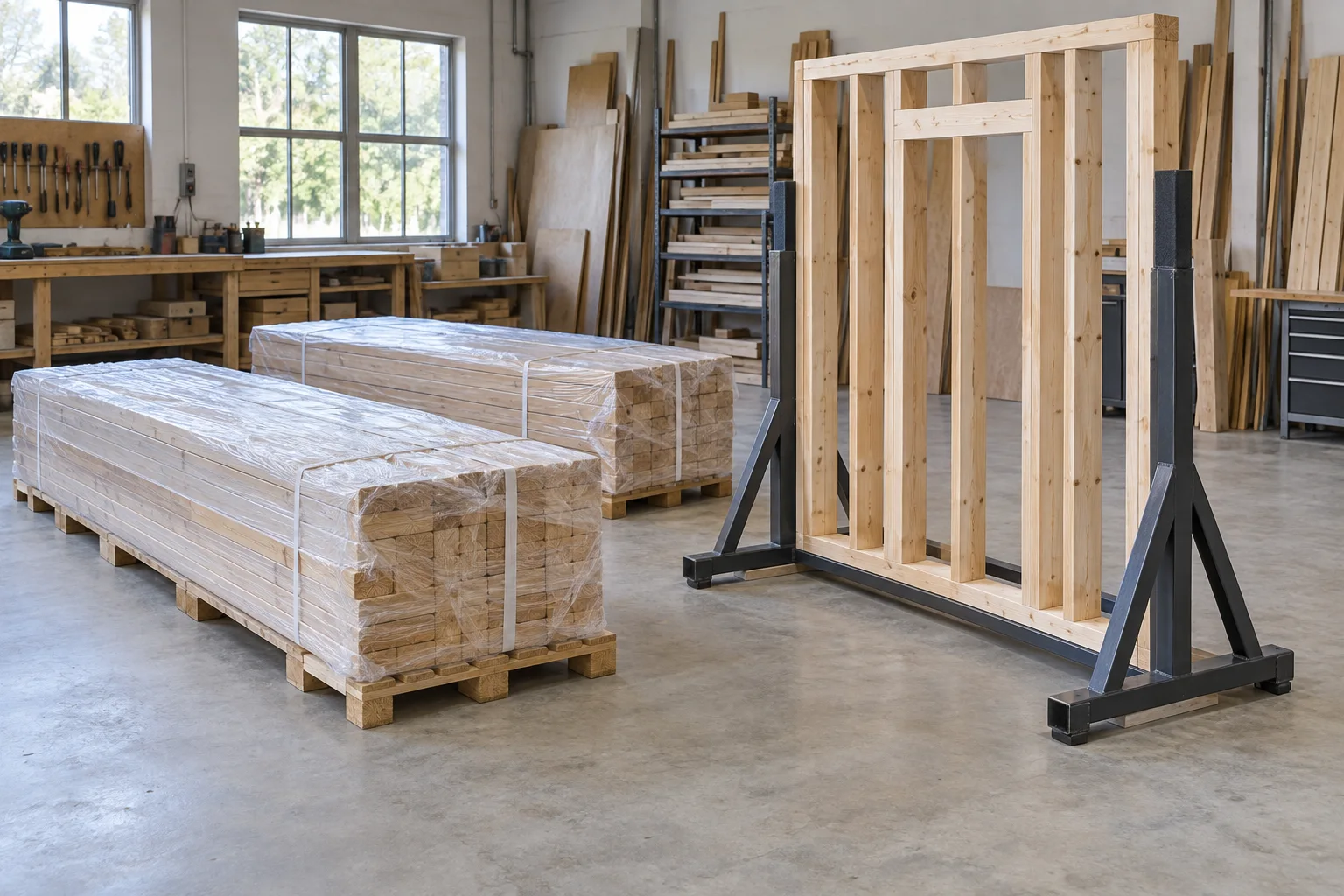
Illustrative comparison of two cabin quotations
Imagine a hypothetical resort buyer comparing six identical flat-pack cabins. Offer A uses a named origin port and Offer B uses a named inland destination. The larger total in Offer B may include more carriage; it may also use a different product schedule. The buyer cannot choose a better offer until both the cabin package and transport responsibilities are reconciled line by line.
Start with a common bill of materials and drawing revision, then write the exact Incoterms rule, named place and edition for each quote. A freight professional maps every leg from factory pickup to unloading at the resort. The buyer adds the services left on its side of each contract, including handling, customs brokerage, insurance choices, storage and special site equipment. These are dated estimates, not a universal surcharge.
The buyer also tests the difficult events: a delayed clearance, a damaged glazing crate, a truck that cannot enter the final road and a foundation that is not ready. Which party must notify, arrange storage or re-delivery, and preserve the claim evidence? The trade rule provides part of the framework, but site-specific consequences and payment terms must be written into the agreement.
Before acceptance, the buyer asks its customs, insurance and contract advisers to check the proposed structure. A quotation that states a clear delivery point and remaining work can be more useful than a lower number labelled simply ‘delivered.’ The example does not recommend a specific rule; it shows how to turn three-letter shorthand into an accountable project plan.
Frequently asked questions
Does DAP include cabin unloading and installation?
DAP allocates delivery at a named destination under its rule, but unloading and installation are separate practical and contractual questions. Check the official rule and the specific agreement. Do not assume cranes, site labour, foundations or commissioning are included merely because a quotation says DAP.
Is FOB always cheaper for an imported cabin?
The supplier's number may be lower because the buyer manages more transport and risk. Compare the same cabin scope and add all buyer-controlled freight, clearance, insurance and destination work before judging cost. Suitability of the rule also depends on the actual handover and transport mode.
Do Incoterms determine ownership of the cabin?
No. Ownership transfer and payment are governed by the sale contract and applicable law, not determined by an Incoterms rule alone. Have the contract reviewed where the distinction matters.
Can a supplier quote one rule and ship under another?
A change should be formally agreed because it can alter costs, risk and documentation. Keep the named place, version and final agreement consistent across the accepted order and shipping instructions.
What details should I send before requesting a freight-inclusive price?
Send the destination address or terminal, delivery access information, package format, quantity, drawings or indicative dimensions, target timing and installation responsibilities. State what is confirmed and what is provisional so the supplier can describe assumptions.
Conclusion: compare responsibilities before comparing totals
A useful cabin export quotation names the Incoterms rule, edition and place, then spells out the product scope and remaining site work. Reconcile the freight legs, risk transfer, insurance, clearance and unloading with people who will actually perform them. Only then does the number at the bottom of an offer become comparable.
Send your project destination and proposed supply format to info@CabinWild.com to discuss a clearly bounded quotation. Ask your freight, customs and contract advisers to check the chosen term for the actual route; no article can replace that transaction-specific review.
Comparing cabin export offers?
Send the destination, package format and proposed delivery place. Ask for a quotation that states the exact supply scope and trade term.
Prepared with AI assistance for CabinWild Editorial using the linked public sources. Examples are illustrative, not customer results or verified CabinWild test data. Project-specific design and local requirements need review by the appropriate professionals.