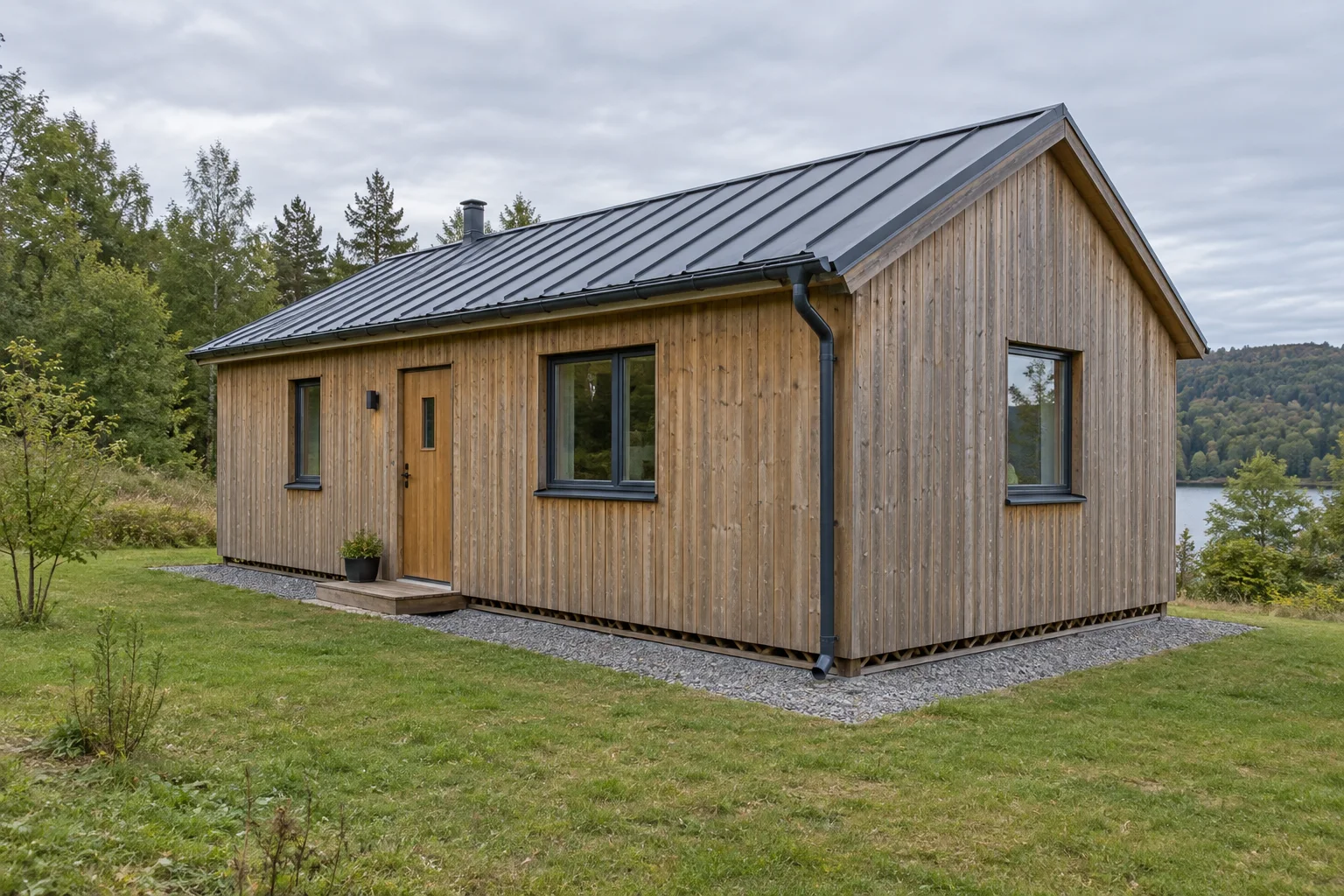
Log cabin maintenance combines moisture management, condition inspections, finish care and prompt attention to defects. Start with the exact construction system and the supplier's instructions, then adapt the plan to climate, exposure and use. No universal coating interval or lifespan applies to every cabin. Document changes and investigate recurring problems rather than repeatedly covering their symptoms.
Introduction: include upkeep in the buying decision
A wooden cabin is an operating asset as well as a design choice. For a resort owner, maintenance affects staff time, contractor access, guest availability and the consistency of the property. Asking about care only after installation misses the opportunity to choose details and materials that suit the way the site will actually be managed.
This guide explains how to organize a practical care plan and the questions to ask before ordering. It is not a site inspection, a treatment prescription or a CabinWild lifespan guarantee. The examples are illustrative. Follow product instructions, applicable local requirements and competent professional advice, particularly where a defect could affect structure, electrical systems or guest safety.
1. Identify the cabin system before choosing a checklist
A solid-log wall, an interlocking timber wall and a timber-framed wall with external cladding are not the same assembly. Buyers sometimes use log cabin as a general description for a wooden building, but maintenance instructions must follow the actual system. Ask for a section drawing and a material schedule rather than identifying the construction from its appearance.
The USDA Wood Handbook discusses different wood construction systems separately. For owners, the important distinction is which components form the structure, which manage weather exposure and which are replaceable finishes. A concern in decorative cladding should not automatically be treated as a problem in the load-bearing wall, or dismissed without checking what lies behind it.
Create a basic asset record for each cabin: model or drawing reference, construction type, timber information, finish system, installation date, relevant suppliers and care documents. Where a product uses system-specific movement allowances or adjustable details, obtain its actual instructions. Do not copy adjustment advice from a different log-building design.
Further reading: USDA Wood Handbook: wood construction systems; Compare CabinWild cabin concepts.
2. Start with moisture and water-management details
Wood exchanges moisture with surrounding air, and changes in moisture influence its behavior. USDA guidance describes this relationship and why handling, storage and service conditions matter. A maintenance plan should therefore consider both visible water entry and the conditions that allow wet components to dry. A fresh coating is not a substitute for investigating an ongoing source of wetting.
During routine observations, look for changes around gutters, drainage paths, window junctions, roof edges and the lower wall. Record overflowing water, blocked outlets, persistent staining or contact between vulnerable timber and damp debris. These observations identify areas for closer review; they do not by themselves establish the condition of concealed components.
Pay attention to changes made after installation. Landscaping, raised beds, added paving or stored equipment can alter drainage or reduce access to inspection areas. Ask the responsible contractor to review such changes before they compromise the original details. Keep the supplier's intended clearances and ventilation paths identifiable in the maintenance documentation.
Further reading: USDA: moisture relations and wood properties; USDA: moisture control during handling and service.
3. Establish the baseline at delivery and handover
Start the care record before guests arrive. Shipment inspection and receiving records can identify the condition of components before installation, while the handover review records the completed assembly. Keep dated photographs tied to locations rather than an unlabelled collection of attractive images. Record outstanding work and the agreed method for closing each item.
Request finish product references, application information available from the supplier, cleaning guidance and any treatment records relevant to the supplied timber. Factory testing or inspection information should be kept with the precise scope it covers. A dimensional inspection report, for example, does not establish a coating's performance or eliminate the need for routine care.
Installation preparation also affects later maintenance. Ask how the installer will protect components, manage site storage and complete any field-applied finishes or touch-up work. Record substitutions and local additions. When a future contractor asks what is already on the timber, the answer should come from the handover file rather than a guess based on its color.
Further reading: Review packing, receiving and site preparation.
4. Build a condition-based log cabin maintenance checklist
Use a checklist organized around components and observed change. Begin with the supplier's recommended inspection schedule, then adapt it to exposure, occupancy and local professional advice. Add checks after a significant weather event or reported problem when appropriate. A calendar reminder should prompt observation, not automatically trigger unnecessary coating or adjustment work.
Assign a responsible person to record each inspection and a separate route for specialist review. Housekeeping staff can report a stain, sticking door or unusual smell, but should not be expected to diagnose structural movement or hidden moisture. Provide clear escalation criteria so a small visible issue is not repeatedly logged without action.
| Area | What to record | When to escalate |
|---|---|---|
| Roof drainage | Overflow, blockage or changed discharge paths | Repeated wetting or inaccessible defects |
| External timber | Coating loss, staining or unusual surface changes | Persistent dampness, softness or suspected decay |
| Openings and junctions | New gaps, leaks or changed operation | Recurring leakage or unclear movement |
| Base and surrounding ground | Debris, drainage changes and lost clearances | Water accumulation or structural concerns |
| Interior and services | Visible leaks, condensation and ventilation concerns | Ongoing moisture or safety-related defects |
| Documents | Completed work and revised product information | Missing guidance for a proposed treatment |
Distinguish observation from diagnosis
Describe what you can verify: location, appearance, weather conditions and whether the issue is new or recurring. Avoid writing rotten wall or failed structure when only a surface discoloration has been seen. Equally, do not label a defect cosmetic merely because it looks small. A qualified review may be needed to determine the extent and cause.
Turn these questions into a project brief
Share your destination, operating season, preferred cabin style and maintenance expectations. Ask which materials, finish information and care documents belong in your project proposal.
5. Treat finishes as a specified system
Cabin wood treatment can mean several different things: a decorative stain, a protective finish or a preservative treatment intended for a particular exposure. Ask what function the specified product performs and where it is suitable. Similar colors or marketing descriptions do not establish that two products can be substituted or applied over one another.
USDA finishing guidance emphasizes protection from water, sunlight and weathering for exterior wood, alongside appearance and maintenance considerations. Use the actual finish manufacturer's instructions for surface preparation, suitable conditions, application and recoating. The correct approach depends on the existing coating, substrate and exposure, not on a universal instruction to repaint every fixed number of years.
Before planned work, confirm compatibility with the existing finish and any warranty conditions. Ask the contractor how surfaces will be assessed and what happens if unexpected damage is found. Follow product safety data, local restrictions and safe access procedures. Do not improvise chemical mixtures or use an aggressive cleaning method simply because it appears to remove staining quickly.
Further reading: USDA: choosing and maintaining wood finishes; USDA: wood preservatives and treatment considerations.
6. Investigate recurring problems before repairing them
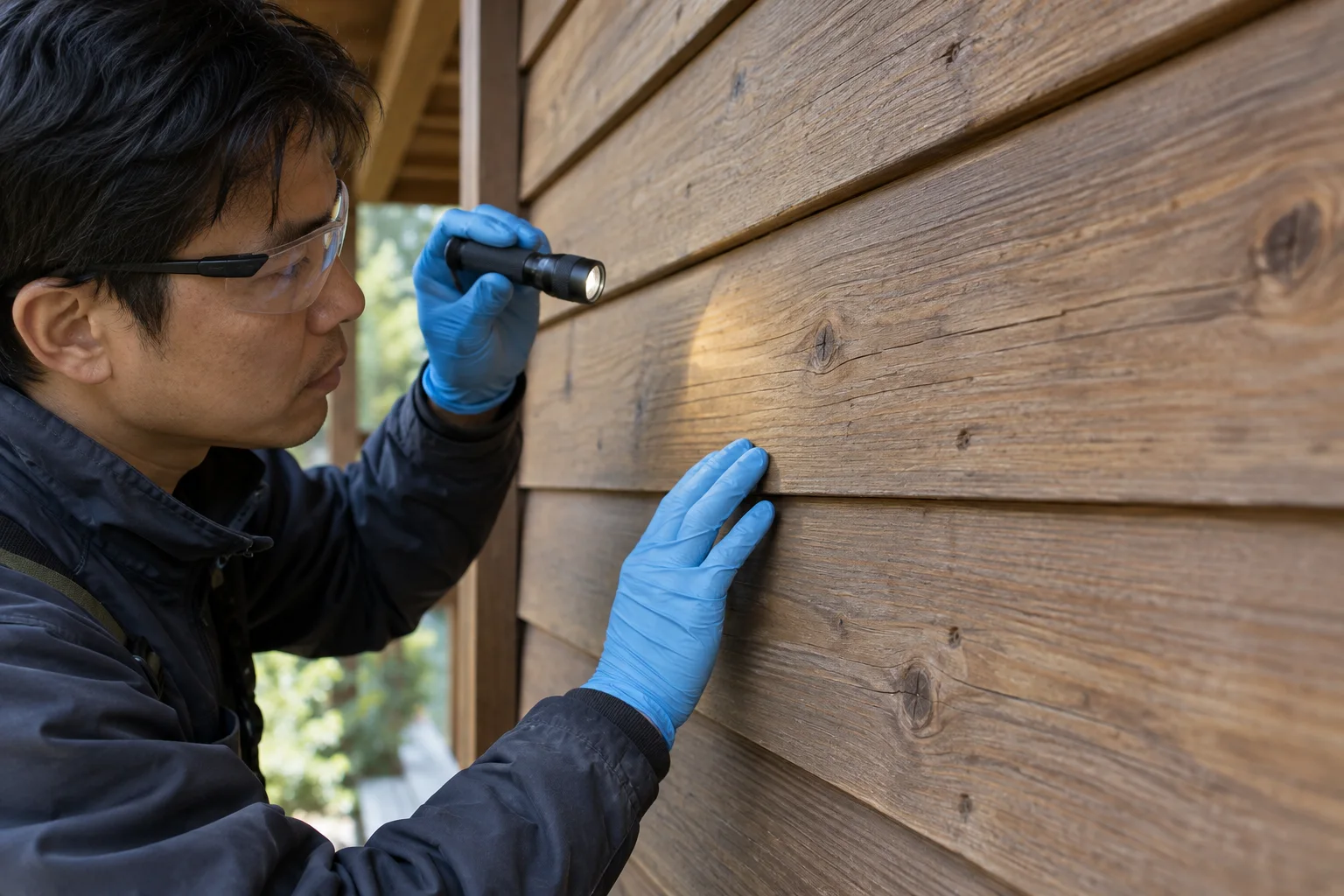
A hypothetical resort team notices that a lower wall area stains again after cleaning. The appropriate next step is to investigate the recurring condition, not to keep choosing a stronger surface product. The review might consider roof runoff, nearby ground levels, a leaking junction or another source of moisture. The cause cannot be determined from this example alone.
USDA material on wood biodeterioration explains that organisms and environmental conditions influence damage. Different forms of staining and deterioration should not be treated as interchangeable. Persistent wetting, softness, suspected decay or insect activity warrants assessment by a competent person who can determine the extent and appropriate response.
Where a defect may affect safe occupation or structural performance, protect people and obtain qualified advice promptly. Do not conceal suspect timber behind new cladding or a fresh finish before the cause and repair scope are understood. Record the assessment, the work authorized and the follow-up needed to check whether the underlying condition has been resolved.
Further reading: USDA: biodeterioration of wood.
7. Estimate log cabin maintenance cost by task
A useful maintenance budget separates routine observation, planned finish care, specialist inspection and corrective work. Add access equipment, site preparation, consumables and any operational disruption where relevant. A cost per cabin is only meaningful when the work scope, size, condition and local labor assumptions are defined.
For a resort, separate shared work from unit-specific work. A contractor mobilization may serve several cabins, while a localized repair belongs to one asset. Keep quotations, provisional allowances and actual invoices distinguishable. Do not record an unknown repair allowance as zero or use a generic internet percentage as if it were a property-specific estimate.
Compare finish proposals on the same basis: surfaces included, preparation, product system, application conditions, access and follow-up. A lower price can describe less preparation or fewer surfaces without being obvious in the headline. Ask what condition would change the quote and how additional work will be approved before it proceeds.
Further reading: Build the wider cabin procurement budget.
Use records to improve the next specification
Track repeated issues by cabin location and component rather than only by total spending. An exposed elevation may need different attention from a sheltered one. Repeated access difficulties may justify a design review before the next purchase. These records turn maintenance into useful procurement feedback without inventing a universal service interval or financial return.
8. Ask what makes a cabin practical to maintain
The best wood for a cabin cannot be chosen from species name alone. Consider the component's role, intended exposure, appropriate grading, treatment where needed, available finish system and the building details that protect it. Ask the supplier to explain the specification for the destination and intended use, and have relevant professionals review it.
Practical access matters. Can gutters, vulnerable junctions and replaceable components be inspected without avoidable disruption? Are replacement finishes and hardware identifiable? Does the supplier provide instructions that the local maintenance team can understand? These questions often produce more useful comparisons than a broad promise that a timber species needs no upkeep.
Tie customer requirements to a written maintenance brief during selection. Describe whether the cabins will operate seasonally or year-round, the site's exposure and the resources available for care. The aim is not to eliminate all maintenance, but to make it predictable enough to manage and to understand which assumptions depend on local conditions.
Further reading: Prepare a material and layout brief; Review a manufacturer's documentation.
9. How long does a wood cabin last?
There is no defensible single lifespan for every wooden cabin. Service life depends on the design, materials, installation, exposure, maintenance and response to defects. Ask any supplier making a lifespan claim to explain the conditions, evidence and components it covers. A statement about one material is not automatically a promise about the whole completed building.
Also distinguish service life from a warranty period. Read what the actual warranty includes, excludes and requires from the owner; obtain advice where terms are unclear. Do not assume it covers all labor, finishes or local modifications. Keep records of installation and care so future discussions can refer to documented conditions and work.
For a purchasing decision, useful durability evidence includes a coherent specification, appropriate material information, documented installation details and realistic care instructions. None of these alone guarantees a fixed number of years. Together they give the owner a better basis for managing the asset than a large unsupported lifespan number on a product page.
10. Make the maintenance file useful to the next person
Use a simple record structure that survives staff changes. Each entry should identify the cabin, location of the observation, date, supporting photographs, action taken and any follow-up. Store product data and contractor reports alongside the relevant work, while keeping earlier versions available when they explain what was originally supplied.
At the start of a new operating season, review unresolved issues before treating the cabin as ready for use. A task marked reported is not the same as a task marked inspected or completed. Require the responsible person to close the action with the agreed evidence. This prevents recurring concerns from disappearing into a general maintenance inbox.
Coordinate care with the operating schedule
Plan routine work around access and occupancy without delaying urgent safety-related action. A finish contractor may need particular application and drying conditions, while housekeeping needs to know when an area can be returned to service. Obtain those requirements from the actual product and contractor, then communicate the resulting restrictions to the people managing bookings and guest access.
When work is completed, record more than the invoice total. Note the surfaces treated, products used, observed condition and any exclusions or follow-up dates. Retain photographs that can be compared with the next inspection. This creates an operating history for each cabin and helps a future contractor understand the previous work without repeatedly asking staff to reconstruct it from memory.
FAQ: wooden cabin upkeep
How often should a wooden cabin be inspected?
Begin with the supplied instructions and adapt the schedule to exposure, occupancy and local advice. Additional checks may be appropriate after a significant weather event or a reported problem. A fixed calendar alone is not enough: record changes in condition and escalate persistent or safety-related concerns rather than waiting for the next routine visit.
Does every log cabin need the same coating interval?
No. The finish system, timber, preparation, weather exposure and condition affect the maintenance approach. Follow the actual product instructions and assess the existing surface before work. A universal repainting interval can lead either to premature work or to delayed attention where a more exposed surface needs review.
Is visible timber checking always a structural defect?
Appearance alone does not answer that question. Its significance depends on the component, construction system, extent and related conditions. Record changes and seek a competent assessment when uncertain, especially for structural members or water-entry concerns. Do not dismiss a feature as harmless or prescribe a repair solely from a generic photograph.
Does preservative treatment remove the need for maintenance?
No. Treatment has a specified purpose and application, but it does not replace drainage, appropriate detailing, compatible finishes or inspection. Obtain the supplied treatment information and follow its limitations. Do not assume that any treatment provides permanent protection against every organism or makes an entire building maintenance-free.
Can I estimate upkeep before choosing the final model?
You can prepare a task-based budget, but it should remain provisional until the construction, finishes, size, access and local rates are known. Ask for care documents during supplier review, then obtain relevant local quotations. Compare equivalent scopes rather than using an unsupported percentage of the cabin purchase price.
Conclusion: make maintenance part of the specification
Good log cabin maintenance starts with knowing what was supplied and how it should be cared for. Manage moisture, inspect relevant details, follow the finish system's instructions and investigate recurring problems. A documented plan makes those responsibilities clearer without promising that timber will remain unchanged or require no attention.
Contact CabinWild at info@CabinWild.com or use the inquiry form to discuss your destination, operating season and preferred cabin concept. Ask for the material, finish and care information relevant to the proposed supply scope. Use that information with local advice to choose a cabin package that fits your maintenance expectations.
Further reading: Discuss your cabin requirements; Review year-round cabin performance questions.
Discuss a cabin specification you can maintain
Share your destination, operating season, preferred cabin style and maintenance expectations. Ask which materials, finish information and care documents belong in your project proposal.
Prepared with AI assistance for CabinWild Editorial using the linked public sources. Examples are illustrative, not customer results or verified CabinWild test data. Project-specific design and local requirements need review by the appropriate professionals.