
Evaluate prefab cabin manufacturers against a written project brief, then check the proposed construction system, controlled drawings, material records, inspection plan, packing information and after-sales responsibilities. A workshop tour or certificate alone is insufficient. The strongest evidence connects a specific requirement to the exact product, document revision and acceptance decision for your order.
Introduction: choose an accountable supply process
A resort developer and a garden-building distributor can look at the same wooden cabin and need very different things. One may need a repeatable guest accommodation layout; the other may need compact packing, clear assembly instructions and consistent replacement components. Supplier selection starts with that difference, not with the largest factory photograph.
This guide offers a practical review method for overseas buyers. It does not rank factories, report a completed CabinWild audit or certify any product. Its examples are hypothetical purchasing situations. Use the questions to request evidence from each shortlisted business, and involve local designers, inspectors and advisers where the project requires specialist approval.
1. Give every supplier the same project brief
Write the intended product application in plain terms: seasonal guest cabin, year-round accommodation, garden office or another defined use. Record destination, operating season, occupancy, approximate footprint, desired layout, quantity and delivery sequence. Customer requirements should distinguish fixed constraints from preferences, especially when the site or final approvals are still being investigated.
Attach a supply-boundary checklist. State whether you want prepared components, open panels, insulated closed panels or a substantially completed module. Identify roof covering, doors, windows, flooring, interior finishes, sanitary fittings and services separately. A supplier can only price and review a meaningful package when both parties understand what must arrive and what will be completed locally.
Further reading: Prepare a CabinWild customization brief; Explore wooden cabin product concepts.
Start with suitability, then compare commercial terms
Do not award extra credit for capabilities your order does not need. An impressive machine may be irrelevant if the proposed product uses a different process. Conversely, a smaller specialist may merit further review if it can explain your construction details, document controls and delivery constraints clearly. Capability should be demonstrated against the proposed work, not inferred from factory size.
2. Confirm what the manufacturer actually supplies
Prefab describes where some construction work happens; it does not identify the complete structural system. Log cabin manufacturers may offer interlocking solid-timber walls, while another business offers timber-framed panels with external cladding. Similar exterior photographs can hide different movement details, insulation strategies, assembly methods and maintenance needs. Ask for a section drawing before assuming the systems are interchangeable.
The USDA Wood Handbook treats log buildings, light-frame construction and other timber systems as distinct subjects. For procurement, the useful consequence is simple: request the proposed wall, floor and roof build-ups and have the appropriate professional assess their suitability. A single board thickness cannot establish the performance of an entire cabin.
Further reading: USDA Wood Handbook: construction systems and materials.
| Supply format | Clarify before selection | Evidence to review |
|---|---|---|
| Component kit | What cutting, preparation and assembly remain on site | Part schedule and assembly sequence |
| Panel package | Whether layers, openings and services are factory completed | Panel sections and connection details |
| Completed module | What remains after transport and placement | Delivery envelope and completion schedule |
| Log-wall system | How openings and connections accommodate the specified system | System drawings and maintenance instructions |
3. Match the business, factory and order documents
Ask which legal entity will contract with you, which facility will perform the work and which activities are subcontracted. Check that quotation names, payment instructions and the proposed contract are consistent through independently verified business channels. A trading company is not automatically unsuitable, but its responsibilities and access to production information should be explicit.
A useful factory visit follows a proposed product from incoming materials through preparation, assembly checks and packing. Ask the host to explain how work orders relate to drawings and how a nonconforming component is separated from approved material. For a remote review, request an agreed live walkthrough and selected records, while respecting other customers' confidential information.
When viewing a wood cabin factory, distinguish evidence of activity from evidence of your order. A busy workshop establishes only that work is taking place. It does not demonstrate that your window specification, component list or inspection criteria have been accepted. Record what was observed, what was supplied as a document and what remains an unverified statement.
4. Review timber and component information
Request the specified timber species, relevant grade, dimensions, treatment or finish system and intended location within the cabin. Ask which records will accompany materials and how substitutions are approved. The answer should distinguish structural components from decorative cladding, interior joinery and transport packaging. A generic description such as premium timber is not a specification.
Wood exchanges moisture with its surroundings, and the USDA explains that this relationship affects its properties. Ask the supplier to define appropriate material conditions and measurement methods for the components being supplied. Do not prescribe one universal moisture number for every species, product and destination, or treat a photograph of a handheld meter as a complete acceptance record.
Further reading: USDA: moisture relations and wood properties.
Request traceability that is useful on site
Choose a sample component from the drawing and ask how it can be identified in production, on the packing list and during assembly. The objective is a practical connection between the specified item and the delivered item. For finishes, record the product designation and care instructions so later touch-up work does not rely on matching a color from memory.
5. Agree the factory inspection plan before production
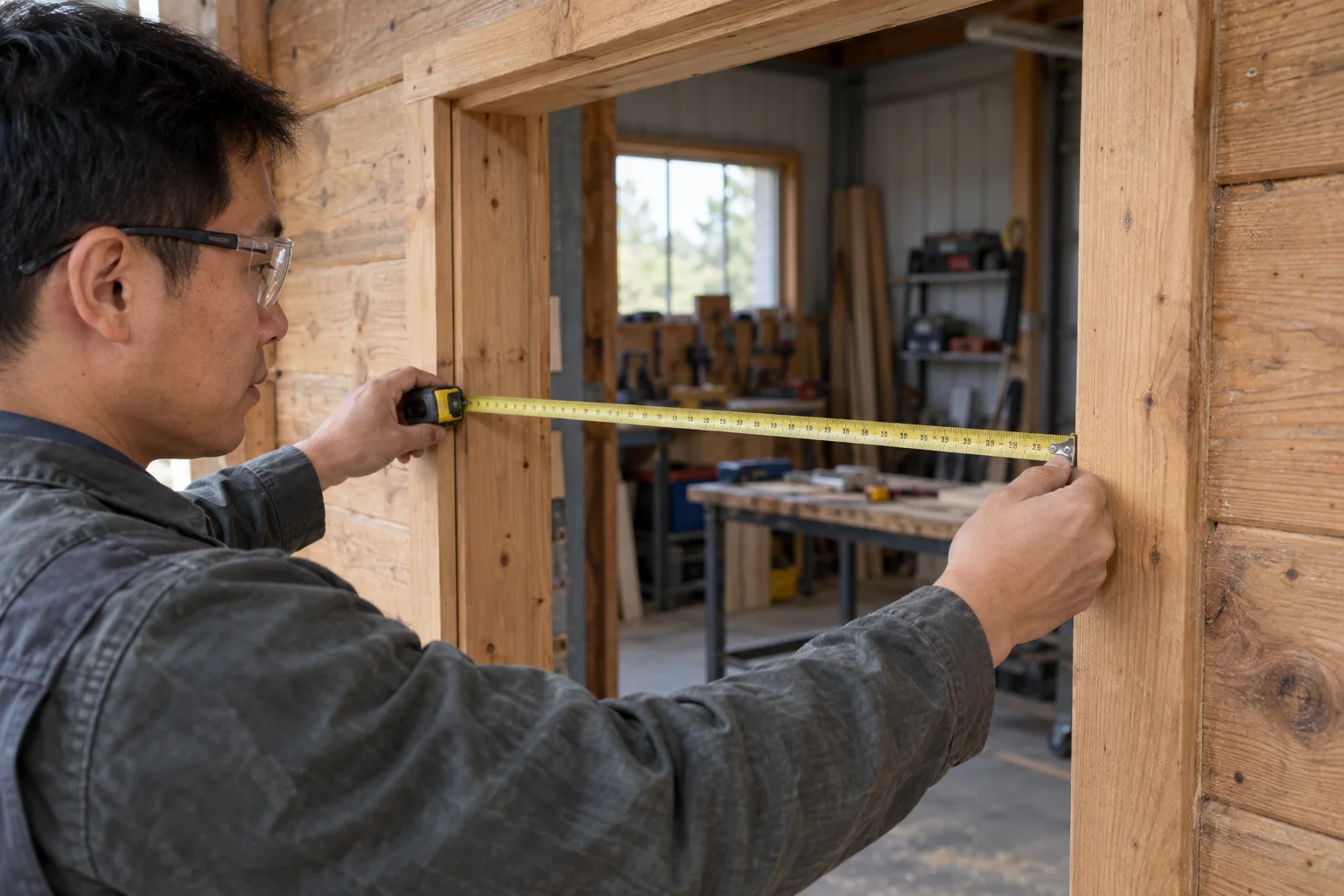
Factory testing should answer a defined question. A dimensional check confirms specified measurements; a fit-up check examines an agreed connection or assembly; a service test addresses a particular installed system. These are different activities. List which checks are included, who performs them, which standards or procedures apply and what record will be provided.
Set inspection points before important features become concealed or difficult to change. Ask which features can be reviewed on a representative sample and which require checks on every supplied unit or component. The scope should be agreed for the order's risks, not copied from an unrelated product. Independent inspection may be appropriate, but it also needs a written scope.
Further reading: ISO: conformity assessment, inspection and testing.
Inspection, testing and certification are not synonyms
ISO distinguishes inspection, testing and certification within conformity assessment. If a supplier provides a certificate, review the named entity, covered activity or product, issuing body, validity and exclusions. Do not assume that a management-system certificate proves a particular cabin's structural, thermal or fire performance. Ask a competent reviewer which product-specific evidence your destination requires.
- Identify the order and approved drawing revision.
- State the feature, method and acceptance criterion for each check.
- Record the result, inspector and inspection date.
- Log discrepancies and the person responsible for correcting them.
- Define the evidence needed to close an issue before dispatch.
Turn these questions into a project brief
Send your destination, intended use, preferred construction format, approximate size and quantity. Tell us which drawings, material information or inspection details you need for supplier review.
6. Use a first-unit review to test communication
Consider a hypothetical resort planning several cabins with the same bathroom arrangement. During drawing review, the buyer notices that a service opening conflicts with a cabinet. The useful question is not whether the supplier promises to solve it. It is whether the change appears in the drawing, component schedule, installation information and agreed price before repetitive work begins.
A first-unit or representative assembly review can expose these communication gaps. Define its purpose: checking layout, fit, appearance or a particular construction interface. It is not automatically a complete performance test or an approval for all future units. Record the accepted configuration and any conditions that must be satisfied before production continues.
For wholesale cabins, repeatability matters alongside the first sample. Ask how the business prevents a later batch from reverting to an older drawing, mixing hardware packages or changing a finish without notice. A sample is valuable only when subsequent orders can be tied to the same agreed specification, or to a properly approved revision.
7. Compare suppliers with an evidence register
Use a short register instead of a subjective score based on presentation quality. For each requirement, record the supplier's response, supporting document, date reviewed and remaining action. Useful statuses are confirmed, conditional, missing and not applicable to this order. Keep unverified claims out of the confirmed column, even when the quotation is attractive.
For illustration, three bids may all claim to include windows. One identifies the actual glazing and opening schedule; another provides only a photograph; the third proposes a local supply allowance. These are not equivalent inclusions. Ask the second supplier for details and treat the third as a different scope before comparing total project costs.
Further reading: Compare full prefab cabin project budgets.
| Review question | A useful answer contains | Follow-up if unclear |
|---|---|---|
| Which specification applies? | Drawing and material schedule revision | Freeze one review baseline |
| What is inspected? | Check, criterion, record and responsible party | Request an inspection schedule |
| What is excluded? | Itemized local work and supply boundaries | Obtain destination quotations |
| What happens if a part is wrong? | Identification, reporting and replacement process | Agree the escalation path |
| What changed since the sample? | Approved revision and affected components | Reconcile batch records |
8. Review shipment and installation support
Cabin kit companies should be able to explain how a buyer identifies packages, locates early assembly components and reports a missing item. Request sample assembly information before ordering, with its language, drawing references and assumed skill level. Installation preparation belongs in supplier evaluation because an unclear manual can transfer unexpected work to the destination contractor.
Ask for proposed package dimensions, weights, protection and handling limitations. Define shipment inspection separately from production checks: it reconciles the approved goods and packing information with what is ready to leave. The commercial agreement should also identify the relevant delivery term and named place. ICC explains that Incoterms rules allocate costs, risks and obligations; seek advice on the rule appropriate to the transaction.
Review how damage, shortages and technical questions will be handled after arrival. Identify a contact route, information required for a claim, replacement-part identification and the agreed warranty boundaries. Do not assume that an overseas supplier supplies local labor, permits or emergency site attendance unless those responsibilities are written into the order.
Further reading: Plan cabin packing and destination handover; ICC: Incoterms rules and responsibilities.
9. Resolve warning signs before committing
Pause when important documents describe different products, when a factory will not explain who makes critical components, or when a promised performance cannot be connected to relevant evidence. An unresolved issue is not proof of wrongdoing, but it is a reason to withhold an acceptance decision until the question has a satisfactory answer.
Also examine how uncertainty is communicated. A credible response may explain that a local engineer must confirm a foundation or that freight needs an actual packing schedule. That is more useful than an unconditional promise. Log cabin suppliers should be willing to distinguish known specifications, optional features and destination-dependent work without presenting every open question as already solved.
10. Hold a documented order-readiness review
Before approving production, bring the buyer, supplier and relevant destination adviser back to one document set. Confirm that everyone is reviewing the same layout, supply schedule and delivery assumptions. A clear meeting record should separate approved decisions from questions still awaiting an answer. Do not let an email preference silently become a manufacturing instruction without the corresponding revision.
For a distributor, this review should also address information passed to the eventual customer. Decide which drawings, care instructions, assembly documents and product limitations can accompany a resale. The distributor needs reliable descriptions of the supplied package, not permission to repeat unsupported claims from a sales conversation. Agree how updated information reaches buyers who received an earlier version.
Check document accessibility as well as completeness. Can the site supervisor identify the correct component without contacting the sales team for every question? Are units and drawing conventions understandable to the installer? Can the buyer retrieve a replacement-part reference months later? These practical questions connect factory control with the conditions under which the cabin will actually be assembled and maintained.
Treat the sample as a reference, not a promise without limits
Record the accepted sample's material, finish, dimensions and any deliberately omitted features. Natural timber can vary in appearance, so ask which visual differences are acceptable and which indicate a specification problem. An agreed reference helps resolve a color or machining question later, but it cannot establish a structural or thermal performance that was never tested.
Finally, assign an owner to every open item and state what evidence will close it. A missing packing schedule might be due after production planning; an unresolved wall specification should not be treated the same way. Identify which decisions prevent order release, which prevent dispatch and which belong to local commissioning. This staged approach keeps the purchasing process accountable without pretending all evidence exists on day one.
FAQ: choosing a wooden cabin supplier
How many manufacturers should I compare?
Use a manageable shortlist that can answer the same specification, inspection and delivery questions. There is no universally correct number. Comparing several complete responses is more useful than collecting many incomplete prices. Keep a clear record of exclusions and unresolved requirements before choosing who proceeds to detailed review.
Is a factory visit enough to approve a supplier?
No. A visit can help verify facilities and understand processes, but it does not replace order-specific drawings, material records and acceptance criteria. Record the products and activities actually observed. Combine the visit with document review and any relevant independent inspection rather than treating photographs as proof of every claim.
Should all prefab cabin manufacturers offer the same tests?
No. Checks depend on the construction system, supplied components, intended application and destination requirements. Ask which tests apply to your exact scope and who is qualified to conduct them. A useful plan states the method, criterion and record; a vague promise that everything is tested does not establish coverage.
How should I assess a low quote for wholesale cabins?
First reconcile the scope. Compare the same drawing, materials, quantities, delivery stage and exclusions. Check whether packing, inspection, replacement parts and assembly support are included. A lower headline number may describe less work, but price alone also does not prove poor quality. Use evidence and complete project costs.
Can CabinWild confirm every requirement before receiving my brief?
Project-specific suitability cannot be established from a generic product image. Share your destination, intended use, layout, quantity and proposed supply format. Request written clarification of the offered scope and available evidence, while arranging local professional review where required. Do not treat this article as certification of a particular model.
Conclusion: buy a defined cabin package
The most useful supplier review connects customer requirements to drawings, components, checks and delivery responsibilities. It leaves unanswered questions visible and makes changes traceable. With that foundation, comparing prefab cabin manufacturers becomes a purchasing decision supported by relevant evidence rather than by photographs or unqualified assurances.
Send CabinWild your project brief through the inquiry form or email info@CabinWild.com. Include your destination, approximate size, quantity and the documents you need to evaluate the proposed package. Use the reply to develop a clearer quotation and a practical list of items for local review.
Further reading: Discuss your project with CabinWild; Explore factory review topics.
Discuss your cabin procurement requirements
Send your destination, intended use, preferred construction format, approximate size and quantity. Tell us which drawings, material information or inspection details you need for supplier review.
Prepared with AI assistance for CabinWild Editorial using the linked public sources. Examples are illustrative, not customer results or verified CabinWild test data. Project-specific design and local requirements need review by the appropriate professionals.