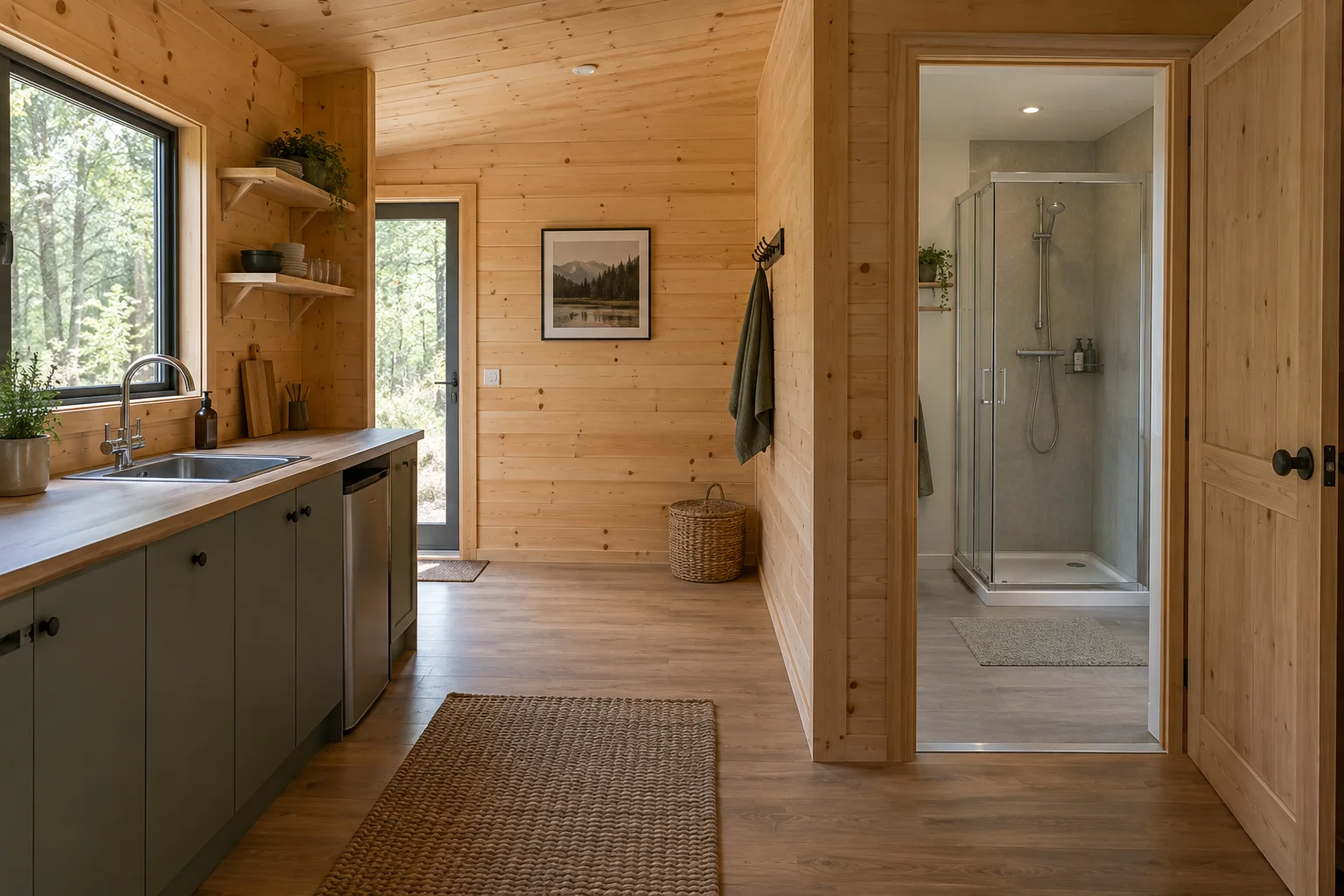
A remote cabin's plumbing fixtures are only one part of water service. The buyer must identify source, quality treatment, storage, pumping, hot water, wastewater treatment, permits, freeze protection and maintenance. Factory-installed pipework cannot determine whether a site has a lawful, reliable water and waste solution.
Introduction: the decision behind this buyer question
A remote cabin's plumbing fixtures are only one part of water service. The buyer must identify source, quality treatment, storage, pumping, hot water, wastewater treatment, permits, freeze protection and maintenance. Factory-installed pipework cannot determine whether a site has a lawful, reliable water and waste solution.
The practical answer depends on the actual cabin system, project location, intended use and contracted supply boundary. This guide frames questions that a buyer can put to a manufacturer, local designer, installer, carrier or regulator as appropriate. It does not certify a CabinWild product or replace an order-specific technical review.
Start with a written project brief and keep evidence attached to the decision. The direct answer is: Map the entire flow from source to guest tap and from drain to approved disposal, then assign design, permit, installation and maintenance responsibilities locally. Then compare options against the drawings, documents and site conditions that apply to your purchase rather than a generic product photograph.
Further reading: US EPA: onsite wastewater treatment and disposal; WHO: drinking-water guidelines.
1. Document the water source and legal pathway
A remote site may use a utility, well, spring, hauled water or captured rainwater. These sources differ in reliability, quality, treatment and permission. A sink shown in a cabin rendering does not prove potable water is available at the site.
Ask local authorities and qualified water professionals about source rights, testing and any treatment or operating approval. Record seasonal availability and distance to the cabin. If water is trucked in, include storage and delivery access in the site plan.
Keep source test results, treatment proposal and design assumptions with the project file. A one-time sample may not describe a seasonal source; the professional should set monitoring. Do not promise drinking-water safety from a generic filter advertisement.
Decide which parts the cabin supplier provides: fixtures, internal pipework, tank, pump, treatment or simply connection points. Price the site infrastructure separately so the buyer can compare complete solutions.
- Source rights and quality have local review
- Seasonal supply is considered
- Factory and site scope are split
2. Estimate quantity and peak use
A small cabin can experience high short-term demand when guests shower, wash dishes and a cleaner turns the room over. Multiple cabins may share a system, so peak timing matters more than a single per-person average.
Create a fixture and occupancy schedule, including showers, toilets, kitchens, laundry or communal facilities. Ask the local designer to estimate storage, pump and distribution needs. Reserve future expansion explicitly rather than assuming the first system will serve later phases.
Check pressure and flow at the farthest unit and under simultaneous use. If a supplier proposes a packaged pump, request its operating curve and power requirement. Off-grid electrical design and water design must be coordinated.
Avoid oversizing without reason; standing water and maintenance can create other problems. The correct buffer is site-specific and should be justified by service level, refill reliability and professional advice.
- Peak and average use are distinct
- Shared system expansion is visible
- Pump and power are coordinated
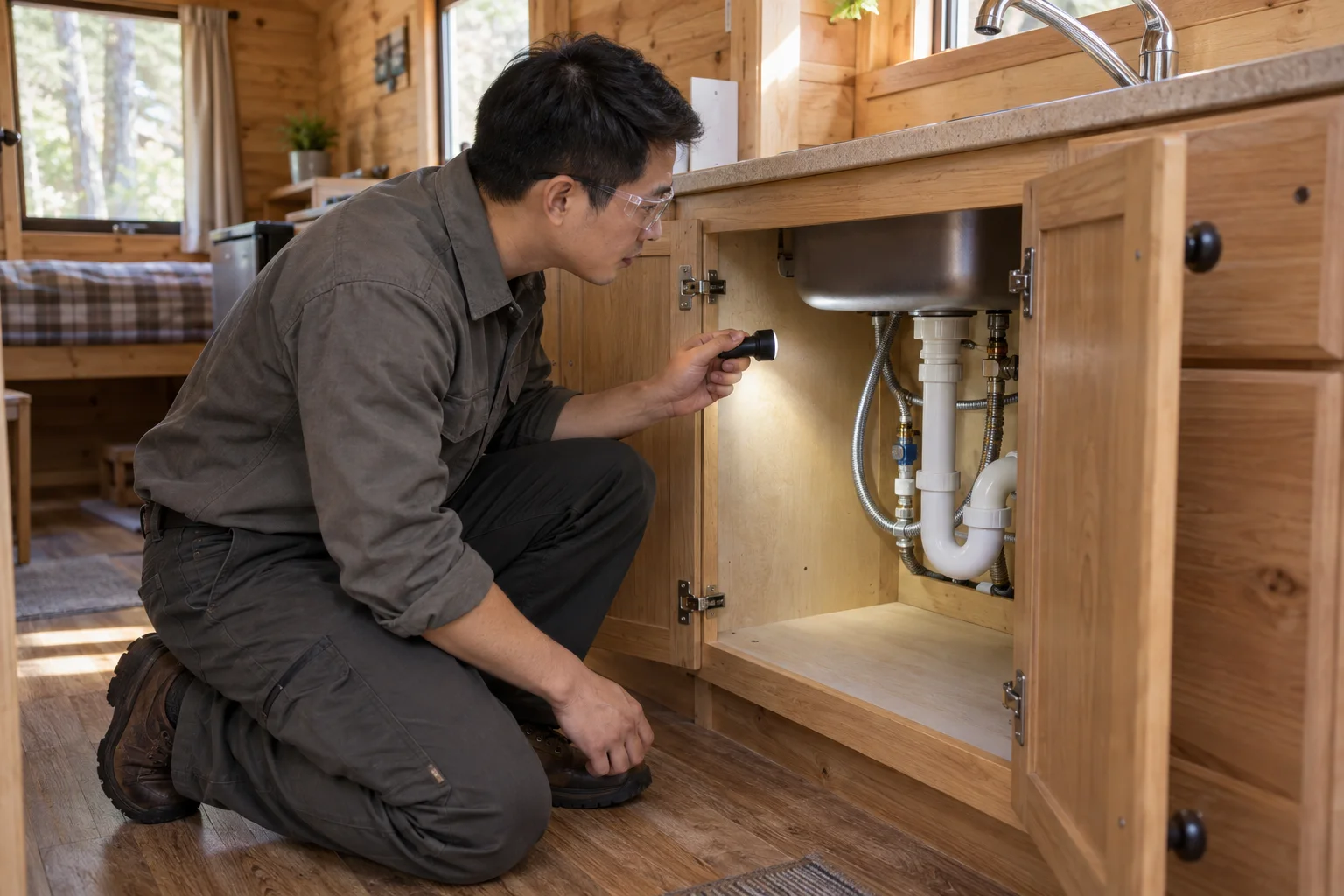
3. Choose a treatment and storage plan
Treatment should respond to measured water quality and intended use, not to a universal gadget list. Storage can introduce contamination if containers, vents and cleaning access are poorly designed. The destination's potable-water rules determine what is acceptable.
Have a qualified professional select filtration, disinfection or other treatment using source testing. Specify tank materials, access, overflow, backflow protection and sampling points. Make routine consumables and staff tasks part of the operating budget.
Request manuals and exact product certificates where relevant, but check their scope. A filter component test is not a certificate for the complete on-site supply. Commission and sample the installed system as locally required.
Set a response plan for low storage, treatment failure or questionable test results. Guests and staff need clear instructions; a remote resort cannot wait until the next freight delivery to discover a missing filter cartridge.
- Treatment follows measured source
- Tanks are cleanable and protected
- Failure response and consumables are planned
Turn these questions into a project brief
Send CabinWild your destination, intended use, quantity and technical questions for a clearly bounded quotation.
4. Design lawful wastewater disposal
Toilets, showers and kitchens produce wastewater even in a cabin marketed as ‘off-grid’. It must be collected, treated and discharged or removed under local rules. Soil, slope, groundwater and flood exposure can determine whether an onsite system is feasible.
Ask local regulators and an onsite wastewater professional about permits, site evaluation and system options. The EPA's onsite information is useful context for US projects, not a substitute for local approval elsewhere. Distinguish blackwater and greywater rules where the destination does.
Show pipe routes, tank or treatment location, maintenance vehicle access and separation from water sources on a site plan. A cabin supplier can identify outlet positions but cannot approve an unknown soil-disposal field.
Price recurring desludging, consumables, testing and eventual replacement. A low-cost installation quote can hide long-term operational obligations or a system that cannot legally serve the planned cabin count.
- Site evaluation precedes system choice
- Outlet and treatment route are drawn
- Permit and maintenance owner are named
5. Protect services from weather and damage
External pipes, tanks and pumps may freeze, overheat or be damaged by vehicles and flooding. The cabin's internal insulation does not automatically protect buried or exposed site connections. Climate and route detail belong in the design.
Have local professionals set burial, insulation, heat-trace or drainage measures where needed. Draw penetrations through the cabin floor or wall with air and water seals. Keep isolation valves and inspection points reachable to staff.
At installation preparation, verify base and utility positions against cabin connection drawings. A misaligned drain can force unsafe or poorly sealed site modifications. Photograph concealed connections before closing them and retain test records.
For a seasonal operation, define winterisation or standby procedures, including who performs them. A single vague note to ‘drain system’ may miss tanks, valves, traps and appliances.
- Weather exposure is addressed
- Penetrations and isolation are detailed
- Seasonal operation is documented
6. Make factory and site handover explicit
A factory can pressure-check internal plumbing under a specified method, but that does not prove the installed supply, treatment and wastewater system works. Buyers need separate acceptance records for the cabin package and the site infrastructure.
Request a diagram of factory-installed pipework, fixture schedule, connection sizes and any test records with date and scope. The local installer should record site connections, pressure or leak checks, treatment commissioning and permit sign-off where required.
At shipment inspection, count fixtures and protect vulnerable pipe ends. At site arrival, check for transit damage before connection. Keep a unit-by-unit map of valves and service points for future maintenance.
Do not open a remote cabin to guests until the water quality and wastewater arrangements are approved and operating under the local process. The resulting system is a site project, not merely a feature in a product description.
- Factory test scope is clear
- Site commissioning is separate
- Guest opening follows local approval
A practical comparison and sign-off workflow
Set out the off grid cabin water wastewater decision in a review sheet before a purchase order is released. Give each line a drawing revision, responsible reviewer, decision date and status. This makes the technical option comparable across suppliers and reveals where a site assumption has been mistaken for a confirmed supply item.
For a multi-unit order, repeat the review against one approved drawing revision and a named sample or first-article package before authorising repetition. Put open questions in a log with an owner and due date. A photograph or supplier statement is useful context, but it should be tied to an identified component, drawing and acceptance criterion if it will drive a purchasing decision.
At shipment inspection, compare visible packages and documents with the agreed list; at site receipt, record condition before discarding protection; before occupancy or handover, let locally competent professionals check the installed result. These are distinct gates. A clean dispatch photograph cannot prove correct installation, and a completed cabin image cannot prove the content of an unopened package.
Further reading: Cabin bathroom and kitchen specification; Cabin foundations and installation.
| Decision gate | Buyer question | Evidence to retain |
|---|---|---|
| Document the water source and legal pathway | Source rights and quality have local review | Seasonal supply is considered |
| Estimate quantity and peak use | Peak and average use are distinct | Shared system expansion is visible |
| Choose a treatment and storage plan | Treatment follows measured source | Tanks are cleanable and protected |
| Design lawful wastewater disposal | Site evaluation precedes system choice | Outlet and treatment route are drawn |
Common mistakes and how to avoid them
A common error is treating a catalogue phrase about off grid cabin water wastewater as an accepted technical requirement. Ask which drawing, component and intended use the phrase applies to. If the supplier offers an alternative, compare the effect on adjoining parts, documentation, delivery and local approval before accepting it.
Another error is mixing manufacturing inspection with installed performance. Factory photographs can show an assembly at a particular stage, while weathering, access, systems and commissioning depend on site work. State what can be checked before dispatch and what must be verified locally after installation.
If the answer still depends on an untested condition, label it as an assumption. Record who will verify it and when. Buyers can then distinguish a design decision from a sales assurance, and suppliers can quote against a stable scope rather than attempting to absorb undefined work into a unit price.
Illustrative buyer scenario: apply the checks in sequence
A hypothetical glamping site buys cabin shells with fitted bathrooms but has not secured a water source or wastewater permit. Plumbing inside the cabins can be inspected at the factory, yet it cannot make the land suitable for a disposal system. The site owner needs a lawful source-to-tap and drain-to-disposal plan before guest opening. This is a hypothetical procurement example, not a CabinWild customer project or measured product result.
The first decision is document the water source and legal pathway. Ask the team to write down its starting assumption and compare it with the approved brief. In this example, the first record to request is: source rights and quality have local review. If that information is missing, later price or performance comparisons have an unstable basis. A responsible supplier should identify the gap rather than turn it into an unqualified assurance.
The next review concerns choose a treatment and storage plan and design lawful wastewater disposal. For these stages, use the practical checks 'tanks are cleanable and protected' and 'site evaluation precedes system choice'. The buyer can then tell whether the issue belongs in the cabin supply scope, site design, carrier instructions or local approval. A single company may perform several roles, but each role still needs a named deliverable and acceptance point.
Before repeating the choice across the order, compare it with make factory and site handover explicit. Ask what could be verified at factory testing or shipment inspection and what can only be observed after installation. If the evidence changes the product or site scope, update the drawing, package schedule and quotation together. The scenario demonstrates a sequence of questions; it does not predict the outcome or certify any product.
Documents to request before an order is released
For off grid cabin water wastewater, request a concise evidence packet rather than a broad promise. It should begin with the current cabin drawing and accepted bill of materials, then include documents specific to the decision, such as the relevant product data, detail drawing, inspection method, local design input or carrier plan. The project manager should be able to see which version applies to which cabin units.
Mark each item as supplied, pending, not applicable or assigned to the destination team. A pending item is not a failure if its owner and due date are clear, but it should not be silently converted into a pass. Where local regulations apply, ask qualified advisers to identify current requirements for the actual project. Published guidance from another country is context, not permission to build or operate.
Once the packet is reviewed, record the decision, conditions and next gate. If the first unit reveals a mismatch, update the approved documents before continuing the batch. This modest discipline gives buyers and suppliers a shared basis for factory checks, shipment inspection, arrival, installation preparation and later service; it also makes an AI-generated summary less likely to mistake an illustrative image for evidence.
- Source rights and quality have local review
- Peak and average use are distinct
- Treatment follows measured source
- Site evaluation precedes system choice
- Weather exposure is addressed
- Factory test scope is clear
Frequently asked questions
Can a prefab cabin include a complete off-grid water system?
It can include components, but source rights, quality, treatment, site connections, wastewater approval and operation depend on the destination.
Is rainwater automatically safe to drink after filtering?
No. Potable use requires source-specific treatment, testing and local regulatory review.
Can greywater simply drain into the landscape?
Do not assume so. Local wastewater rules and site conditions determine permitted treatment and disposal.
Does factory plumbing testing cover site pipework?
No. Factory and local connection testing are separate acceptance stages.
What information should I send a supplier?
Fixture count, occupancy, site climate, proposed water source, wastewater plan, utility connection points and locally approved requirements.
Conclusion and next step
The strongest off grid cabin water wastewater decision is documented rather than inferred from appearance. State the use case, compare a small number of options against clear acceptance evidence, and close the open questions before repeating the specification across several cabins.
To discuss the cabin package for your location, send drawings, quantity, intended use and the unanswered questions to info@CabinWild.com. Ask for a clearly bounded quotation and document list. Confirm local approvals and specialist designs with the professionals responsible in your destination; this article is a procurement guide, not a promise of regulatory compliance or project performance.
Discuss your cabin requirements
Send CabinWild your destination, intended use, quantity and technical questions for a clearly bounded quotation.
Prepared with AI assistance for CabinWild Editorial using the linked public sources. Examples are illustrative, not customer results or verified CabinWild test data. Project-specific design and local requirements need review by the appropriate professionals.