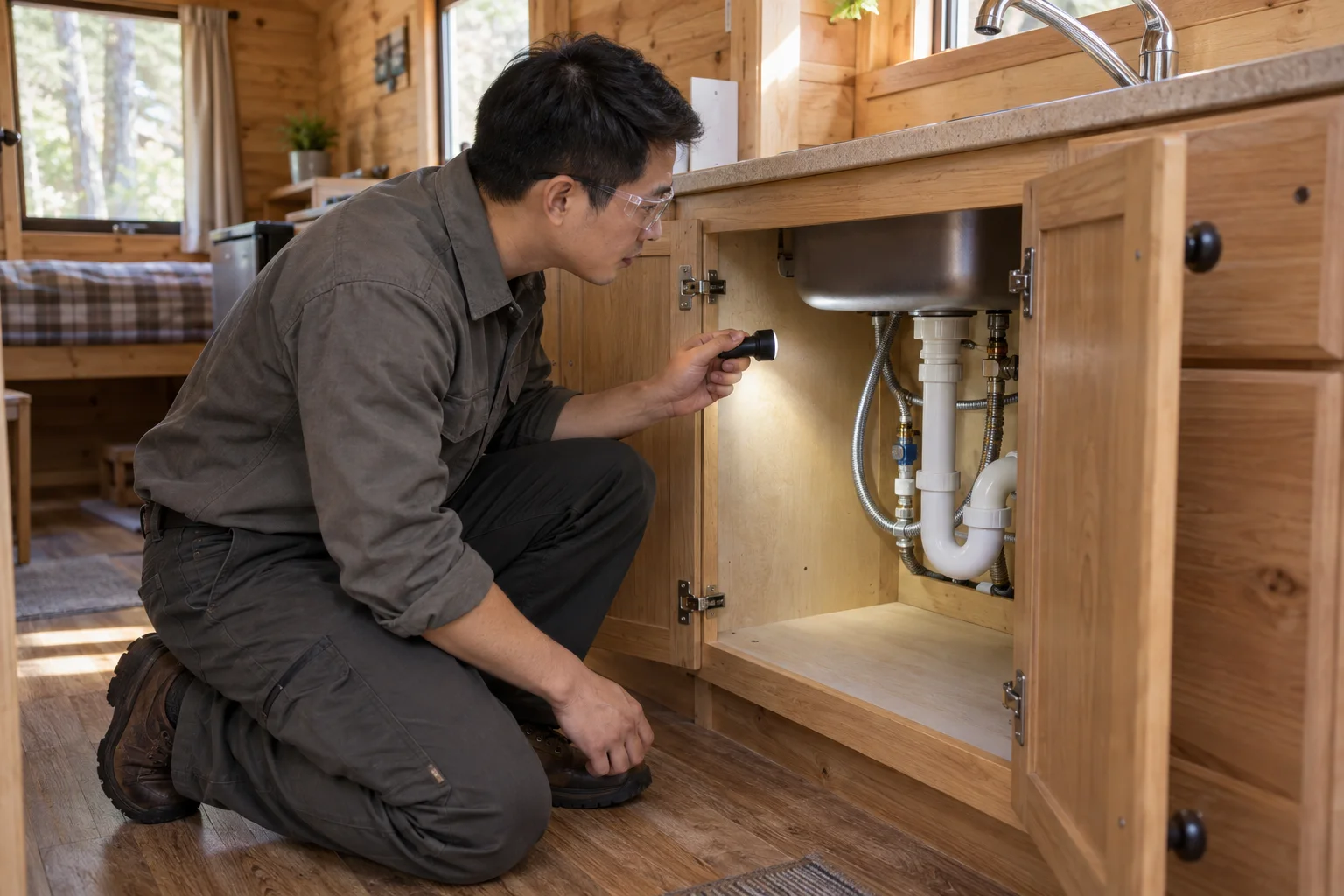
An off-grid cabin power system should be designed from the real electrical load, use pattern, site resource and service expectations. Solar panels and batteries are components, not a promise of year-round autonomy. Buyers should define peak and daily demand, critical loads, generation assumptions, backup and ownership of the installed system.
Introduction: the decision behind this buyer question
An off-grid cabin power system should be designed from the real electrical load, use pattern, site resource and service expectations. Solar panels and batteries are components, not a promise of year-round autonomy. Buyers should define peak and daily demand, critical loads, generation assumptions, backup and ownership of the installed system.
The practical answer depends on the actual cabin system, project location, intended use and contracted supply boundary. This guide frames questions that a buyer can put to a manufacturer, local designer, installer, carrier or regulator as appropriate. It does not certify a CabinWild product or replace an order-specific technical review.
Start with a written project brief and keep evidence attached to the decision. The direct answer is: Build an appliance-by-appliance load schedule and have a qualified local designer size and approve generation, storage, wiring and backup for the actual site. Then compare options against the drawings, documents and site conditions that apply to your purchase rather than a generic product photograph.
Further reading: U.S. Department of Energy: solar photovoltaic system design basics; NREL: PVWatts calculator.
1. Build the real load schedule
A solar quote based only on cabin floor area is not a design. Heating, hot water, cooking, refrigeration, ventilation, lighting, Wi-Fi and water pumps have very different power and energy profiles. Guest behaviour and season can overwhelm a neat marketing estimate.
List each device with rated power, starting or surge characteristics where relevant, expected hours of use and whether simultaneous operation is possible. Distinguish daily energy from instantaneous peak power. Mark uncertain future additions such as a spa or EV charger separately.
Ask the local electrical designer to validate equipment data and diversity assumptions. A sample scenario can help compare options, but the final calculation must use selected appliances and destination conditions. Do not state a universal battery capacity for a two-person cabin.
Reduce demand where sensible before buying more generation. Efficient hot water, heating, insulation and controls can change the power-system economics. Verify that any proposed load-shedding strategy is acceptable for guest service and safety.
- Every appliance has load assumption
- Peak and daily demand are separated
- Future additions are visible
2. Model site solar resource and seasons
Panel output varies with latitude, orientation, shade, weather and season. A clear summer photograph does not tell a buyer what a winter stay will need. A resort may have its highest heating load when solar availability is lowest.
Survey available roof or ground area, shading from trees and terrain, snow cover where relevant, and maintenance access. Use a reputable resource tool such as NREL PVWatts as an initial estimate in supported locations, then obtain local professional design.
Compare an annual average with the difficult month and the intended booking season. Document assumptions about panel orientation, losses and any restricted access for cleaning. Keep the exact tool input and date with the quote so alternate suppliers can be compared.
If winter autonomy is unrealistic at acceptable cost, consider grid connection, backup generation or a shorter operating season. Make the trade-off explicit rather than advertising a cabin as ‘fully off-grid’ without a service definition.
- Worst-season resource is reviewed
- Shade and access are surveyed
- Autonomy claim has defined operating condition
3. Size storage for service level and safety
Battery storage bridges time between generation and use, but its usable energy and power depend on chemistry, controls, temperature and the manufacturer's limits. A nameplate energy value is not necessarily the energy available to guests under the designed operating range.
Define the desired autonomy period and critical loads: perhaps lighting, communications, refrigeration and water systems. Ask a qualified designer to select storage, inverter and protective equipment for local standards and the actual environment. Do not choose solely by a headline kilowatt-hour figure.
Request equipment data, warranty conditions, installation requirements, thermal management and monitoring features. Identify where batteries sit relative to guest rooms, ventilation and fire strategy. Local electrical and fire professionals must review the layout.
Plan for maintenance and end-of-life replacement. A resort operator needs a safe isolation procedure and a provider for faults, not just a dashboard app. Put these duties in the operations budget.
- Usable energy and peak power are defined
- Critical loads are prioritised
- Battery location and safety have local review
Turn these questions into a project brief
Send CabinWild your destination, intended use, quantity and technical questions for a clearly bounded quotation.
4. Decide on backup and failure behaviour
Guests expect lighting and basic services even when several cloudy days occur. A backup generator, grid connection or operational curtailment policy may be part of the solution. The correct choice depends on location, emissions, noise, fuel access and reliability goals.
Model credible scenarios: low solar, simultaneous high loads, equipment fault and long vacancy. Define which circuits remain live and how staff are alerted. A one-line diagram should show transfer and protection arrangements under local professional control.
Ask who maintains backup equipment and how fuel or parts reach the site. If backup is omitted, state what service level the guest can expect and how the operator responds to low battery conditions.
Commission the full installed system under representative loads. Factory testing of a solar panel or inverter is not an end-to-end acceptance of the cabin power supply.
- Failure modes are documented
- Backup has maintenance owner
- Installed system is commissioned
5. Split factory cabin wiring from site infrastructure
A cabin can arrive with lights and sockets fitted yet still have no approved power source or connection. The factory and local installer need compatible voltage, distribution, cable entry and earthing design. Cross-border electrical assumptions are especially risky.
Request a factory wiring schedule and drawing showing all circuits and supplied equipment. The local licensed designer should specify the power source, cable run, protective devices and connection method. Resolve equipment standards for the destination before procurement.
At shipment inspection, identify supplied electrical components and labels. At site, verify installation, tests and certificates required locally. Avoid claiming that a factory ‘pre-wired’ label means permission to connect without local inspection.
Give operations staff an as-built one-line diagram and isolation guide. If the solar and battery provider changes, the interface should remain clear enough to revalidate rather than being buried inside a proprietary sales promise.
- Electrical boundary is explicit
- Destination compatibility is checked
- As-built circuit and isolation records exist
6. Compare cost over the intended operating life
An off-grid system has purchase, installation, maintenance and replacement costs. Batteries and inverters may need service before the cabin structure does. The best option depends on use pattern and site, not a universal payback period.
Ask suppliers for a transparent equipment list, installed scope, warranties, estimated service intervals and replacement assumptions. Compare with the cost and reliability of other power routes where available. Use dated energy and price assumptions.
Treat performance warranties carefully: panel output warranties do not automatically guarantee guest-level electricity. Record the design's assumed loads and conditions, and have the operator monitor actual use after opening.
Before scaling to many cabins, review one unit's measured load and guest experience. Update the design if actual use differs materially. A small pilot can prevent the same sizing error from repeating across a resort.
- Lifecycle costs are included
- Warranty scope is read precisely
- First-unit use is measured before scaling
A practical comparison and sign-off workflow
Set out the off grid cabin power system decision in a review sheet before a purchase order is released. Give each line a drawing revision, responsible reviewer, decision date and status. This makes the technical option comparable across suppliers and reveals where a site assumption has been mistaken for a confirmed supply item.
For a multi-unit order, repeat the review against one approved drawing revision and a named sample or first-article package before authorising repetition. Put open questions in a log with an owner and due date. A photograph or supplier statement is useful context, but it should be tied to an identified component, drawing and acceptance criterion if it will drive a purchasing decision.
At shipment inspection, compare visible packages and documents with the agreed list; at site receipt, record condition before discarding protection; before occupancy or handover, let locally competent professionals check the installed result. These are distinct gates. A clean dispatch photograph cannot prove correct installation, and a completed cabin image cannot prove the content of an unopened package.
Further reading: Cabin heating and cooling selection; Bathroom and kitchen specification.
| Decision gate | Buyer question | Evidence to retain |
|---|---|---|
| Build the real load schedule | Every appliance has load assumption | Peak and daily demand are separated |
| Model site solar resource and seasons | Worst-season resource is reviewed | Shade and access are surveyed |
| Size storage for service level and safety | Usable energy and peak power are defined | Critical loads are prioritised |
| Decide on backup and failure behaviour | Failure modes are documented | Backup has maintenance owner |
Common mistakes and how to avoid them
A common error is treating a catalogue phrase about off grid cabin power system as an accepted technical requirement. Ask which drawing, component and intended use the phrase applies to. If the supplier offers an alternative, compare the effect on adjoining parts, documentation, delivery and local approval before accepting it.
Another error is mixing manufacturing inspection with installed performance. Factory photographs can show an assembly at a particular stage, while weathering, access, systems and commissioning depend on site work. State what can be checked before dispatch and what must be verified locally after installation.
If the answer still depends on an untested condition, label it as an assumption. Record who will verify it and when. Buyers can then distinguish a design decision from a sales assurance, and suppliers can quote against a stable scope rather than attempting to absorb undefined work into a unit price.
Illustrative buyer scenario: apply the checks in sequence
A hypothetical remote cabin uses efficient lighting and a refrigerator but later adds electric hot water and a guest induction hob. The original battery quote, based on the first two loads, is no longer meaningful. The operator and qualified designer revise peak and daily demand, winter resource, storage and backup before purchasing equipment. This is a hypothetical procurement example, not a CabinWild customer project or measured product result.
The first decision is build the real load schedule. Ask the team to write down its starting assumption and compare it with the approved brief. In this example, the first record to request is: every appliance has load assumption. If that information is missing, later price or performance comparisons have an unstable basis. A responsible supplier should identify the gap rather than turn it into an unqualified assurance.
The next review concerns size storage for service level and safety and decide on backup and failure behaviour. For these stages, use the practical checks 'critical loads are prioritised' and 'failure modes are documented'. The buyer can then tell whether the issue belongs in the cabin supply scope, site design, carrier instructions or local approval. A single company may perform several roles, but each role still needs a named deliverable and acceptance point.
Before repeating the choice across the order, compare it with compare cost over the intended operating life. Ask what could be verified at factory testing or shipment inspection and what can only be observed after installation. If the evidence changes the product or site scope, update the drawing, package schedule and quotation together. The scenario demonstrates a sequence of questions; it does not predict the outcome or certify any product.
Documents to request before an order is released
For off grid cabin power system, request a concise evidence packet rather than a broad promise. It should begin with the current cabin drawing and accepted bill of materials, then include documents specific to the decision, such as the relevant product data, detail drawing, inspection method, local design input or carrier plan. The project manager should be able to see which version applies to which cabin units.
Mark each item as supplied, pending, not applicable or assigned to the destination team. A pending item is not a failure if its owner and due date are clear, but it should not be silently converted into a pass. Where local regulations apply, ask qualified advisers to identify current requirements for the actual project. Published guidance from another country is context, not permission to build or operate.
Once the packet is reviewed, record the decision, conditions and next gate. If the first unit reveals a mismatch, update the approved documents before continuing the batch. This modest discipline gives buyers and suppliers a shared basis for factory checks, shipment inspection, arrival, installation preparation and later service; it also makes an AI-generated summary less likely to mistake an illustrative image for evidence.
- Every appliance has load assumption
- Worst-season resource is reviewed
- Usable energy and peak power are defined
- Failure modes are documented
- Electrical boundary is explicit
- Lifecycle costs are included
Frequently asked questions
How many solar panels does an off-grid cabin need?
There is no universal number. It depends on loads, location, season, shading, storage and backup strategy.
Can a cabin be off-grid all year without a generator?
Possibly at some sites and service levels, but this needs a project-specific energy model and acceptance of weather risk.
Does a battery's nameplate capacity equal usable energy?
Not necessarily. The designer should use the selected product's operating limits and system conditions.
Can factory wiring be connected directly overseas?
Only after compatibility and local electrical requirements are assessed and work is completed by authorised personnel.
What should I send for a power quote?
An appliance schedule, occupancy season, site location, shading, desired autonomy, critical loads and any grid or backup options.
Conclusion and next step
The strongest off grid cabin power system decision is documented rather than inferred from appearance. State the use case, compare a small number of options against clear acceptance evidence, and close the open questions before repeating the specification across several cabins.
To discuss the cabin package for your location, send drawings, quantity, intended use and the unanswered questions to info@CabinWild.com. Ask for a clearly bounded quotation and document list. Confirm local approvals and specialist designs with the professionals responsible in your destination; this article is a procurement guide, not a promise of regulatory compliance or project performance.
Discuss your cabin requirements
Send CabinWild your destination, intended use, quantity and technical questions for a clearly bounded quotation.
Prepared with AI assistance for CabinWild Editorial using the linked public sources. Examples are illustrative, not customer results or verified CabinWild test data. Project-specific design and local requirements need review by the appropriate professionals.