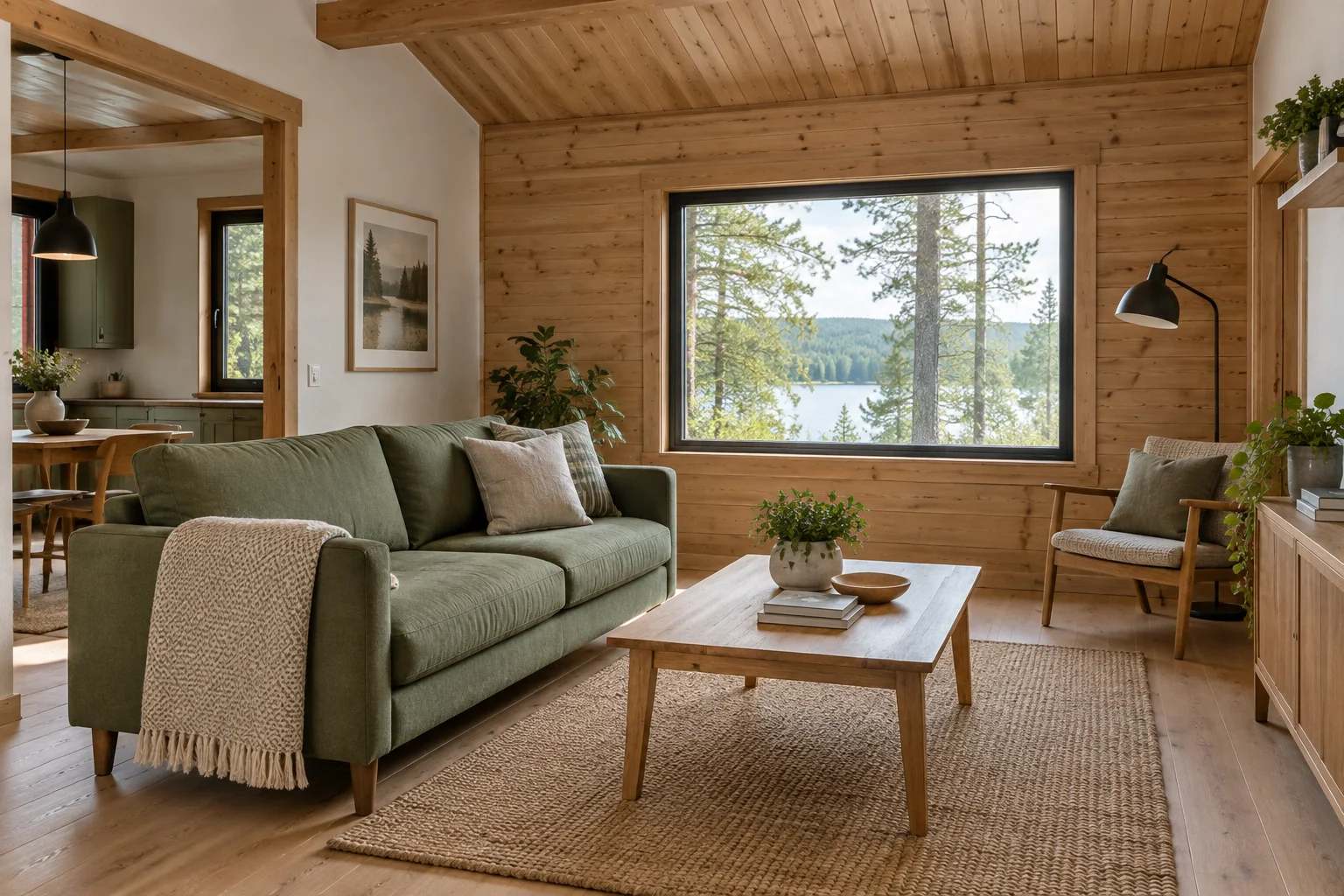
Evaluate luxury wooden cabins by translating guest expectations into a defined room specification. Review usable space, privacy, comfort, materials, controls and service access, with appropriate evidence for each claim. A premium photograph, price or timber finish cannot establish whole-building performance. Compare the same supplied scope and agree how samples, technical documents and the completed room will be reviewed before ordering.
Introduction: an attractive room is only the start of the comparison
Luxury wooden cabins can look convincing in a carefully styled photograph. The purchasing challenge is to understand what remains when the photography, temporary furniture and location are removed. Does the proposed room support privacy, comfortable use and straightforward maintenance, or does the premium mainly describe a visual package?
This guide helps importers, resort operators and project buyers evaluate luxury wooden cabins for sale with a written specification. It is not a ranking of brands or a claim that CabinWild supplies every feature discussed. No price premium, rental return, acoustic rating or climate performance is assumed without order-specific evidence.
Start by defining what the intended guests should be able to do and what the operating team needs to maintain. Then decide which features are essential, which are preferences and how each will be reviewed. A useful premium brief is concrete enough for two suppliers to answer on the same basis.
1. Define luxury wooden cabins through actual use
Treat luxury as a project description that needs explanation, not as a technical class. Ask the buyer or operator to name the experience being sought: an uncluttered room, separate sleeping space, controlled light, privacy from neighbours, particular materials or discreet access to services. Different guest groups may prioritise those features differently.
Write the requirements in observable terms. For example, a preferred view should be assessed from the actual seated position with the intended furniture. A request for generous storage should identify the belongings to be accommodated. Neither question can be settled by enlarging a room in a rendering.
Keep the product and the surrounding service separate. Landscaping, housekeeping, hospitality supplies and site amenities can contribute to a premium stay without being supplied in the cabin package. Identify who provides each element and whether it is included in the quoted scope, rather than allowing the atmosphere of a photograph to blur the boundary.
Make a short list of non-negotiable requirements before selecting decorative options. A buyer may prefer a restrained interior with reliable service access over a more elaborate finish that conflicts with the operating brief. The purpose is not to prescribe one aesthetic; it is to make the choice explainable.
2. Identify the construction behind luxury log cabins
Luxury log cabins may describe different construction systems under similar styling. Ask whether the proposal uses stacked timber, a framed assembly with timber cladding or another documented system. Visible wood does not establish the concealed structure, insulation, connection details or movement provisions.
When comparing luxury log cabins for sale, request the actual wall, roof, floor and opening schedules. Separate the physical specification from the finish name. A thicker-looking profile, decorative beam or extensive lining should not be treated as proof of structural capacity, thermal comfort or sound privacy.
Discuss customization with the responsible designer and supplier before accepting a premium option. A larger glazed opening, revised roof form or heavier finish may affect more than appearance. Ask which drawings and evidence need updating, who reviews them and what changes in factory and site work.
Keep the destination visible throughout this discussion. An attractive proposal developed for another location is not automatically suitable for the intended climate, site or use. Request a defined configuration that your local project team can assess rather than a general assurance that the catalogue's highest specification covers every requirement.
Further reading: Understand log and timber-frame construction differences.
3. Assess glazing and comfort as a coordinated specification
A broad window can frame a view while also creating questions about glare, privacy, shading and seasonal conditions. Mark orientation and neighbouring activity on the site drawing. Ask how the room will be used at different times, including when guests want light without being visible from a shared path.
The U.S. Department of Energy's fenestration curriculum covers frames, glazing, operating methods and performance ratings. It also uses NFRC labels to compare window performance for different regions. A glazing description alone is not the complete window specification, and a U.S. rating reference does not establish worldwide acceptance or CabinWild certification.
Request relevant evidence for the exact proposed product and configuration. Keep glass-only values distinct from complete-window values, and ask the local reviewer which information is applicable. Then coordinate the window with the wall connection, shading and room services. A component report cannot describe an unspecified installation.
Define the operating brief for heating, cooling and ventilation separately from the window selection. Ask for a project-specific review of the assembled cabin rather than assuming a high-end appliance corrects any enclosure or orientation issue. No universal equipment size, comfort guarantee or energy-saving percentage is appropriate without that information.
Further reading: DOE: window components, operation and performance ratings; Set year-round cabin comfort requirements.
4. Turn quiet and private into reviewable questions
Quiet is a useful aspiration but an incomplete purchasing instruction. Identify the sources that matter: adjacent conversation, outdoor activity, plumbing, ventilation equipment or movement through the room. Ask where listeners will be and when the expectation applies. A bedroom at night may need a different review from an open living area in daytime.
The USDA Wood Handbook distinguishes airborne and impact sound control and discusses ratings for assemblies. That supports asking for relevant assembly evidence rather than judging by surface material. Its examples are not a test report for a cabin, and this article supplies no target rating or guarantee of silence.
Separate the room-to-room question from the cabin-to-site question. An internal partition, a bedroom door and a window facing a communal terrace each raise different issues. Ask a qualified acoustic reviewer where one is needed; do not assume an impressive wall rating automatically settles every route by which sound can reach the room.
For visual privacy, check the furnished plan and site arrangement together. Record where blinds, curtains or screens are proposed and whether they interfere with doors, controls or maintenance. A feature that works for one isolated unit may need a different response when the same cabin is repeated on neighbouring plots.
Further reading: USDA Wood Handbook, chapter 17: sound-control considerations.
5. Build a premium specification and acceptance worksheet
Use a worksheet to connect each important expectation with a proposed feature and a review method. Distinguish documentary evidence, sample review and a usability check. A finish sample can support an appearance decision; it cannot substitute for a product test or a professional assessment of the complete room.
When reviewing luxury glamping cabins for sale, include the operator as well as the purchasing team. Ask who cleans, services and replaces the proposed features. A premium choice should be understandable to those people, not only to the designer presenting the concept.
Keep unknowns visible. If the supplier has not confirmed a product or supporting document, mark the row unresolved and assign a follow-up. Do not use the word premium in the evidence column. The table should expose what needs clarification before the order is accepted.
| Expectation | Specification question | Appropriate review |
|---|---|---|
| Usable space | Does actual furniture support the intended stay? | Dimensioned layout and activity rehearsal |
| Comfort | Which assemblies, openings and services are proposed? | Relevant documents and local design review |
| Privacy | Which views and sound sources must be addressed? | Site plan and suitable assembly assessment |
| Finish quality | What variation and detailing are accepted? | Named samples and agreed observation conditions |
| Simple controls | Can guests find and understand normal functions? | Representative usability review |
| Maintainability | Can serviceable parts be reached and identified? | Access demonstration and handover documents |
Turn these questions into a project brief
Send your destination, guest expectations, preferred materials and required supply stage. Ask CabinWild for available options, documents and a clearly bounded proposal.
6. Review finish samples and material claims carefully
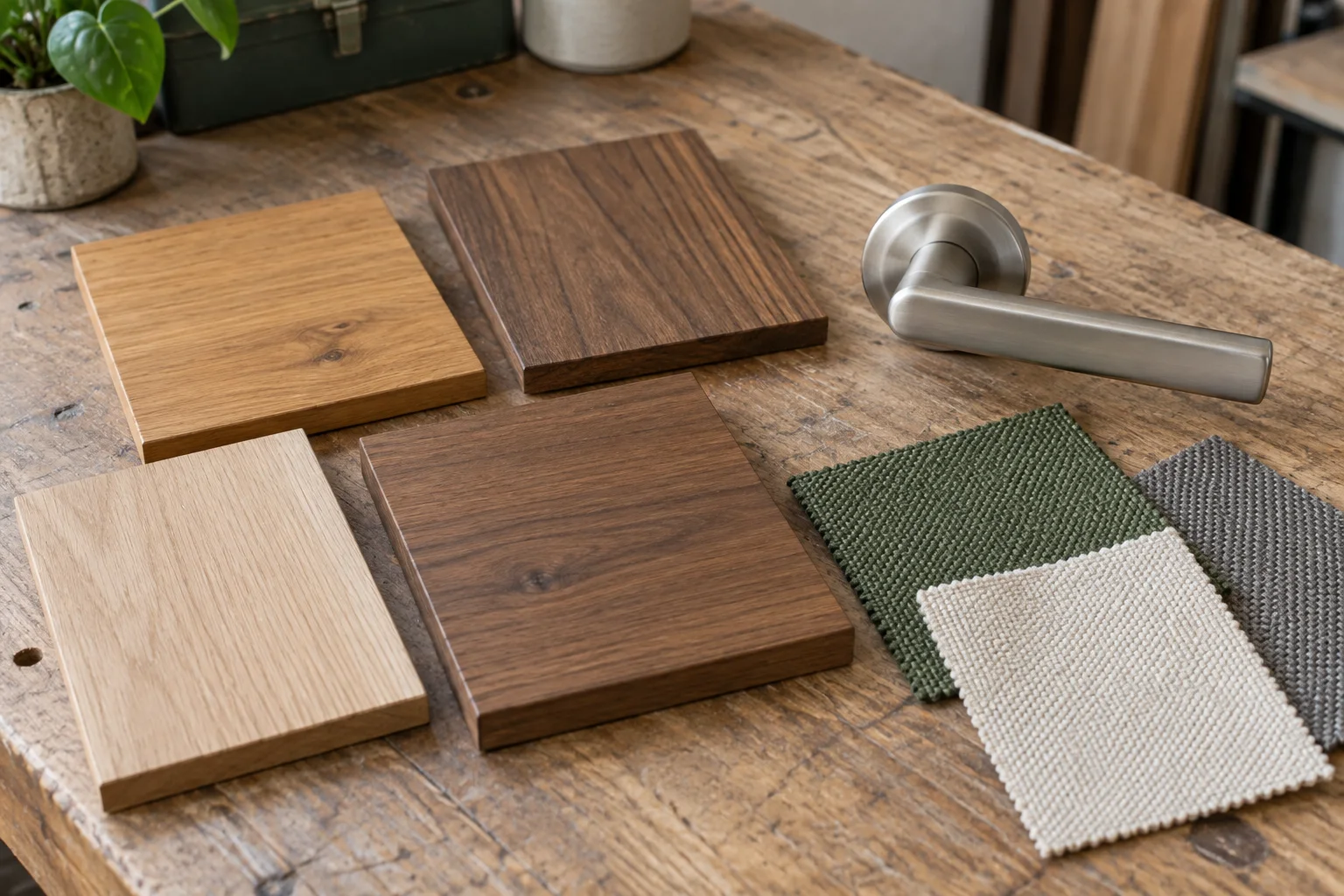
Request physical samples or suitably documented references for the specified visible materials. Agree which sample controls colour, texture and sheen, and how natural variation will be assessed. A small perfect piece may not represent the appearance of a complete timber wall. Ask for the permitted range rather than expecting every piece to look identical.
Separate appearance from technical suitability. Ask for the intended application, relevant care instructions and any evidence needed for wear, moisture exposure or fire requirements. Do not invent a performance test by scratching or soaking a sample informally and calling the result a certification.
For a claimed FSC-certified supply, the official FSC Search service provides current certification and licensing records searchable by organisation or code. Check the claimed identity and status, then ask what documentation links the actual purchase to that claim. A database result does not prove every material in a cabin is covered, and no CabinWild certification is asserted here.
Keep other environmental descriptions equally specific. Ask what product, property and evidence a statement concerns rather than accepting a broad green or natural label. Timber appearance does not establish the cabin's complete environmental impact. Avoid turning a material preference into an unsupported whole-building performance claim.
Further reading: FSC: official certification and licensing search.
7. Inspect ordinary details that guests use every day
Review handles, storage, bedside surfaces, charging locations, switches and lighting with the room in normal use. Ask whether a guest entering with luggage can find the relevant controls and put belongings somewhere sensible. Decorative complexity is not a substitute for convenient everyday use.
Compare daytime, evening and sleeping arrangements. A single attractive lighting scene may not support reading, cleaning and a quiet return to the bathroom. Define the tasks and ask the qualified electrical and lighting professionals to develop the appropriate solution; this is not a wiring or illumination specification.
Discuss indoor-air expectations without promising a health outcome. EPA describes source control, ventilation and supplementary air cleaning as distinct strategies. A pleasant scent or an expensive filter is not evidence that material emissions and ventilation have been addressed. Request relevant product information and a competent review of the proposed room and operating conditions.
For glamping lodges for sale, separate staged accessories from contracted fit-out. Bed linen, loose furniture, decorative lighting and appliances may be shown without being included. Create an itemised schedule so the operator knows what arrives, what is sourced locally and what remains a visual reference only.
Further reading: EPA: improving indoor air quality through distinct strategies.
8. Ask how the premium finish survives normal operation
Review cleaning and repair before accepting a bespoke finish. Ask which care products and methods are permitted by the relevant manufacturer, and what happens when a surface or fitting is damaged. A finish that requires specialist attention may still be appropriate, but that responsibility should be a deliberate operating choice.
Inspect the access to serviceable components without treating hidden services as a design achievement in themselves. Ask whether routine work requires removal of decorative joinery or disruption to unrelated rooms. Have the design team identify accessible panels and retain their locations in the handover information.
For repeated units, record component references and discuss replacement options. Matching the initial sample does not guarantee future colour consistency or permanent availability. Ask how substitutions will be assessed and what limited stock of critical parts may be sensible for the actual operation, without inventing a universal spare-parts percentage.
Use a hypothetical repair rehearsal: a handle fails, a wall panel is marked or a service technician needs access. Can the operator identify the part, find instructions and understand the work boundary? The exercise tests the completeness of information, not the lifetime of the product or the supplier's response time.
Further reading: Compare cabin wood finishes and maintenance information.
9. Agree the premium's scope before a sample-room review
Compare quotations with the same room schedule, completion stage and accepted options. If a premium is justified by a different window, lining or fit-out, identify the exact difference and supporting information. Do not compare a furnished concept with a shell-only price or infer value from the total alone.
Plan a representative review with explicit objectives. The buyer may assess appearance and usability while appropriately qualified people assess assigned technical questions. ISO distinguishes testing, inspection and certification; use those distinctions when asking for factory testing. A room tour or a fit-up photograph does not establish every promised property.
For shipment inspection, define checks against the selected revision, finish references, supplied items, visible condition and required documents. Record any concealed or inaccessible work and evidence limitations. These are suggested customer requirements, not claims about tests or inspections already completed by CabinWild.
Installation preparation should preserve the specification through local completion: storage protection, approved substitutions, service connections and responsibility for final review. Before accepting repeat units, reconcile the as-supplied product application with the reference room. A familiar model name is not proof that every later order has the same configuration.
Further reading: ISO: testing, inspection and certification distinctions; Prepare a custom cabin design and order brief.
10. Choose the upgrade that answers the brief
Consider two hypothetical premium packages: one offers more decorative surfaces, while the other includes a different window package, simpler service access and a clearer finish specification. Neither can be declared superior from that description alone. Compare them against the stated guest expectations and the actual evidence supplied.
Remove any option that conflicts with an essential requirement, then discuss preferences and complete cost with the project team. Keep unverified benefits out of the comparison. The most useful outcome is a defined decision with known limitations, not a list of impressive features that nobody can assess or maintain.
Frequently asked questions
Does luxury describe a recognised cabin performance standard?
Not by itself. Ask what the seller means and which specific requirements the proposal meets. Comfort, privacy, materials and finish acceptance need their own definitions and evidence. A premium label does not replace local approval, a technical assessment or a clearly stated supply package.
Are larger windows always a premium upgrade?
They may support a preferred view or appearance, but their effect depends on orientation, climate, shading, privacy and the actual window specification. Have the complete proposal reviewed. Do not infer comfort or energy performance from glazed area or from an attractive interior photograph.
How do I verify a quiet-cabin claim?
Ask which sound sources and spaces the claim covers, what assembly or field evidence supports it and whether it matches the proposed configuration. Use qualified acoustic advice where appropriate. A material sample or a wall thickness does not establish the sound privacy of the whole room.
Does a timber certificate cover the whole cabin?
Do not assume so. Verify the claimed organisation, status and scope through the relevant official service, then request documentation for the actual supplied products. A timber sourcing claim does not automatically establish complete building certification, environmental impact or compliance with unrelated requirements.
What should a premium cabin enquiry contain?
Provide the destination, intended guest use, required supply stage and ranked expectations for space, comfort, privacy and finishes. Include available drawings and local review requirements. Ask for specific available options, supporting documents, exclusions and unresolved decisions rather than requesting an undefined top specification.
Conclusion: make the premium clear enough to verify
The strongest comparison of luxury wooden cabins connects the desired stay with a defined specification and an appropriate review method. Assess ordinary use, technical evidence, finish variation and serviceability together, while keeping attractive but unverified claims outside the acceptance criteria.
Send your destination, guest brief and preferred specification to info@CabinWild.com. Ask which options and supporting documents are available, with supply boundaries and remaining professional reviews clearly identified before ordering.
Defining a premium cabin brief?
Send your destination, guest expectations, preferred materials and required supply stage. Ask CabinWild for available options, documents and a clearly bounded proposal.
Prepared with AI assistance for CabinWild Editorial using the linked public sources. Examples are illustrative, not customer results or verified CabinWild test data. Project-specific design and local requirements need review by the appropriate professionals.