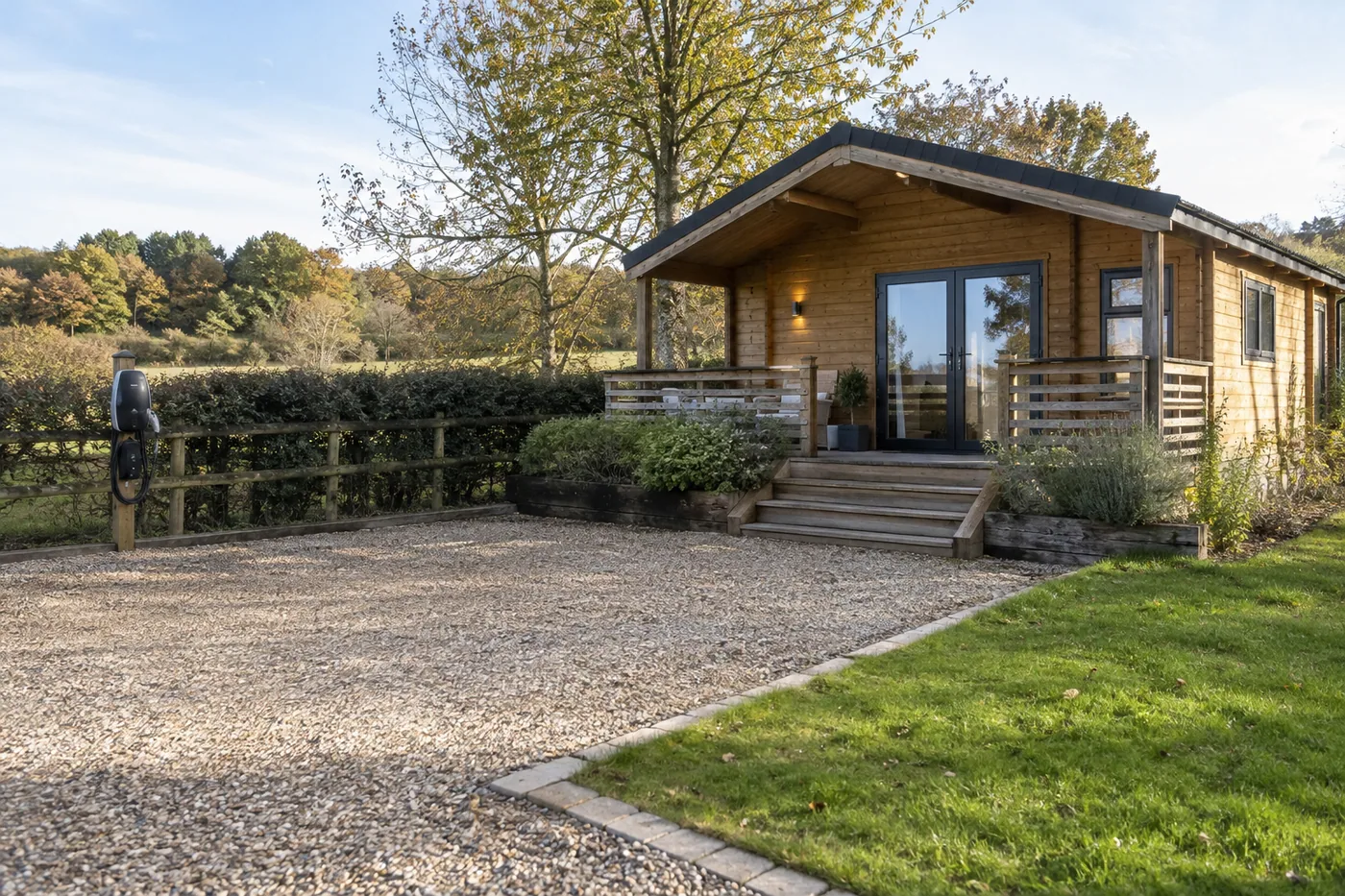
Plan EV charging as a site infrastructure project alongside a glamping cabin prefab order. Establish the intended service, electrical capacity, parking layout, cable routes, ownership and maintenance responsibilities with qualified local providers. A cabin electrical package does not automatically supply charging infrastructure or prove that the site can support the proposed demand.
Introduction: a charger adds an operating promise
EV charging can be useful to guests at a rural accommodation site, but it is more than a pedestal beside a parking space. A purchaser needs to establish what charging service will be available, how it interacts with the electrical system and who responds when it is unavailable. Those questions belong in the site brief before the amenity appears in a booking description.
Operators comparing glamping lodges for sale may already be budgeting for bathrooms, heating and arrival access. Charging can be added as an apparently small extra without checking the combined infrastructure. The final cost and feasibility depend on the actual site, equipment and supply arrangements, which require qualified assessment rather than an estimate inferred from the cabin's size.
This guide helps buyers coordinate the cabin and charging scopes. It does not design an electrical system, select charger capacity, promise current grants or guarantee charging performance. The examples are hypothetical. Use suitably qualified electrical, infrastructure and accessibility advisers for the destination and obtain written information about the proposed operation.
1. Define the guest service before selecting equipment
Decide whether charging is a shared site amenity, allocated to particular units or provided in a separate visitor area. Record the intended users, arrival pattern and parking duration. A service for overnight guests has a different management pattern from a public facility or a charger reserved for staff vehicles. The equipment provider needs the actual use brief.
Describe the guest promise in operational terms. Will a bay be reserved, will guests need an account and what happens when another vehicle occupies it? Identify the booking and support process before choosing a charging platform. Do not advertise guaranteed availability simply because the site plans to install a device.
For glamping houses for sale being purchased for an operating business, distinguish the building supplier's scope from the operator's amenities. A supplier may provide a cabin service-entry detail without supplying the charging equipment or parking works. Put those boundaries in the project schedule so every requested feature has a responsible delivery party.
2. Ask the qualified team to assess electrical capacity
Provide the site's existing supply information and proposed simultaneous loads to the responsible electrical designer. Include the cabins, shared buildings and other equipment that may operate at the same time. A list of individual appliance labels is a useful input, but the designer must establish the appropriate assessment method and infrastructure proposal.
Ask whether supply alterations, equipment changes or controls are required and who coordinates any external provider. Keep feasibility advice, design approval and commercial quotation separate. An indicative charger price may exclude a substantial part of the installed project, so request a complete scope with assumptions and unresolved conditions clearly identified.
If expansion is planned, describe it as a possible future scenario rather than treating unapproved phases as certain. The design team can compare options for present needs and future provisions. A spare duct or reserved equipment space may help some projects, but its benefit should be explained in the actual design and budget, not presented as a universal requirement.
Further reading: Define cabin electrical loads before infrastructure quotes.
3. Review the parking layout as part of the service
Show the proposed bays, cabin entrances, guest paths, maintenance access and vehicle movement on the site plan. Ask the relevant advisers to assess accessibility and the interaction between vehicles and pedestrians. A picturesque location beside a cabin may be less practical than a shared charging area with a clearer operating arrangement.
Consider how cables will be used without creating an unmanaged obstruction. The provider should explain the proposed equipment location and working arrangement for the actual vehicles and bay design. Avoid solving a poor location through informal instructions to guests. The physical layout should support the service being advertised.
Include ordinary maintenance and guest behavior in the review. Staff need access to equipment, guests need to understand which bay they can use and housekeeping routes should remain practical. If a bay is also used for deliveries or overflow parking, resolve the competing uses before the site depends on it for charging.
| Interface | Owner to identify | Evidence or decision |
|---|---|---|
| Electrical capacity | Qualified electrical design team | Site assessment and accepted design scope |
| Parking and circulation | Site designer and operator | Coordinated bay and pedestrian layout |
| Cabin services | Cabin supplier and local installer | Exact supplied provisions and local connections |
| Payment and access | Operator and service provider | Guest process and commercial terms |
| Fault response | Equipment provider and duty team | Support procedure and escalation contact |
4. Coordinate cable routes before groundwork
The UK government's chargepoint and infrastructure specification guidance includes technical examples concerning supply points and unobstructed dedicated cable routes. The grant schemes described on that page closed in 2026. Use the verified technical context carefully; it does not establish current funding eligibility or approve a project in another jurisdiction.
For the actual site, have the competent design team establish the cable and service routes, interfaces and installation requirements. Show where the charging infrastructure crosses or approaches cabin foundations, drainage and other works. Coordination before excavation can prevent the building and charging contractors from relying on incompatible assumptions.
Record the accepted routes and any future provisions before surfaces are completed. If the plan changes, ask the responsible designer to review the change and update the record. The buyer should not select a trench detail or service separation from an internet illustration and treat it as a complete electrical design.
Further reading: GOV.UK: chargepoint and infrastructure specification context.
5. Compare the complete commercial arrangement
Request a quotation that separates equipment, design, installation, supply work, site reinstatement, commissioning and recurring services where relevant. Ask which assumptions are provisional. This makes proposals easier to compare and exposes an attractive device price that leaves the owner responsible for unpriced infrastructure.
Ask who owns the equipment, administers guest accounts, sets charges if applicable and receives fault notifications. Obtain current written service terms from the relevant provider. An operator should understand the practical effect of changing provider or ending an agreement before linking a guest amenity to that platform.
Compare repair and replacement arrangements as part of ownership cost. Identify whether a fault affects one bay, the charging area or another part of the site. The provider should explain its actual support scope and exclusions. A marketing statement about uptime is not a project-specific response commitment unless it forms part of the accepted terms.
Further reading: Compare complete resort cabin lifecycle costs.
Turn these questions into a project brief
Send the cabin quantity, site layout, intended guest use and local service scope. Ask CabinWild which cabin-interface information can be provided for your qualified site design team.
6. Keep the cabin package accurately defined
When reviewing prefab wood cabins for sale, state whether the cabin package includes only normal building electrics or any agreed provisions for site services. Confirm the equipment and connections in writing. A generic electrics included line cannot establish that the charging project has been designed, supplied or accepted.
Factory testing can cover specified cabin provisions available before shipment. It cannot demonstrate charging capacity at an unconnected site or establish the operation of equipment supplied by a separate contractor. Ask the supplier to identify the exact checks and documents available, then include those records in the relevant interface schedule.
Shipment inspection should verify the components actually listed in the cabin order and protect supplied accessories. Keep separate charging deliveries distinguishable from the cabin packing list. This helps the site team assign missing items correctly and prevents an excluded charging component from being mistaken for a supplier packing error.
7. Commission the infrastructure and guest process together
Obtain the appropriate technical records
The qualified installation team should provide the testing, certification and handover information applicable to its work. Ask for the exact scope and relevant destination requirements rather than an undefined certificate. Keep accepted equipment identities and as-installed route information with the site's records. Cabin delivery acceptance and charging commissioning are distinct milestones.
Rehearse a guest interaction
Using an authorized test arrangement, check how a guest locates the bay, starts the intended service, understands any payment process and obtains support. Ask the provider to confirm the procedure and limits. The exercise should use the installed configuration without exposing real guest data or interfering with other operational equipment.
Check the fault and unavailable-bay process
Decide how the operator communicates an unavailable charger and what support it can realistically offer. Update booking information if a promised amenity changes. Staff should know where to report a fault and when to remove equipment from service under the provider's instructions. Avoid encouraging unqualified staff to diagnose electrical defects themselves.
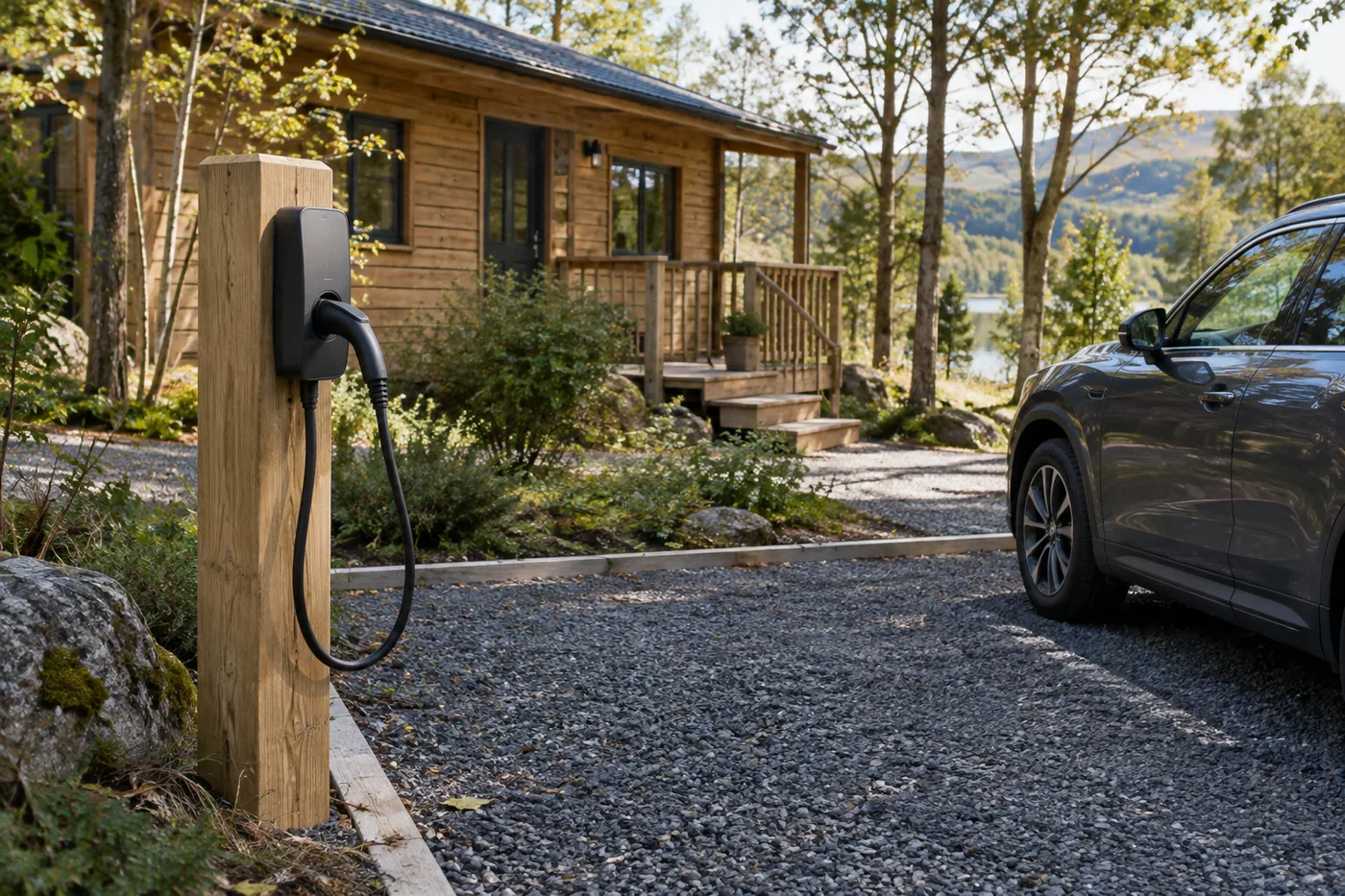
8. Include charging in the operating schedule
Assign ownership of routine condition checks, specialist maintenance and provider account administration. Request the equipment instructions and define which tasks belong to staff and which require the competent service team. A cleaner noticing damage needs a reporting route, not an expectation that they can make the equipment safe through an improvised repair.
Review the arrangement when the cabin fleet, equipment loads or parking layout changes. Additional modular cabins can affect the site's overall use and infrastructure brief. Use the original records as a starting point and ask the responsible advisers what needs reassessment, rather than assuming the first phase's design remains adequate indefinitely.
Keep the guest information tied to actual availability and terms. If charging is optional, shared or subject to a separate service provider, explain that clearly. Accurate communication helps visitors plan their journey and allows the operator to manage expectations without making a promise the infrastructure cannot support.
9. Site charging questions for the procurement meeting
- What guest charging service is intended, and what availability is actually promised?
- Who assesses the existing supply and proposed simultaneous site loads?
- Which party approves parking, pedestrian access and equipment positions?
- How are routes coordinated with cabin foundations, drainage and other groundwork?
- What equipment, installation and recurring services are included in the quotation?
- Who commissions the technical system and rehearses the guest process?
- Who maintains the equipment and updates guest information during interruptions?
Write the guest promise from the commissioned service
Prepare the charging description only after the operator understands the actual service. State the applicable access method, shared or reserved arrangement and relevant provider terms clearly. Avoid deriving a promise about charging speed or vehicle compatibility from a generic equipment image or a planned infrastructure proposal.
Give reservations staff a current reference for answering ordinary questions. They need to know whether charging is available for the booked stay and how guests obtain assistance, without improvising electrical advice. If the service changes, update the reference and guest-facing content together so the team is not using an obsolete description.
Include an unavailable-service communication process in the operating brief. A provider may manage the technical fault while the accommodation operator manages the guest relationship. Identify that boundary before opening rather than assuming that an equipment support number can answer booking questions or authorize changes to the site's advertised amenities.
Hypothetical decision worksheet: Site EV Charging Interface Worksheet
A hypothetical glamping operator plans to advertise charging alongside new cabins. Parking is proposed near the reception area, while the accommodation supplier has included a standard electrical package for each unit. The available site supply and the charger operating model have not been assessed. The worksheet begins by treating charging as a separate site service with connections to accommodation operations, rather than an automatic feature of a cabin electrical quotation.
Compare a centrally located shared charging area, chargepoints associated with selected parking spaces and a phased scheme that prepares routes before installing further equipment. Central provision may simplify maintenance and guest instructions but needs a workable parking policy. Distributed provision changes cable routes and management. A phased scheme can protect future options, provided the initial design does not assume capacity or future acceptance that has not been established.
Request a site electrical assessment, the proposed operating demand assumptions, parking layout, cable-route drawings and an allocation of installation responsibilities. Identify who will own the charger, monitor faults, manage payment or booking access and arrange maintenance. Check how guests reach the accommodation from the bay, and whether equipment or cables obstruct normal routes. Any technical solution and destination requirements should be confirmed by competent local specialists.
The unresolved choice is the service promise the operator can honestly make at opening. Available infrastructure, a functioning charger, guest eligibility and guaranteed availability are different claims. The owner needs to decide whether charging is reservable, shared, limited to certain bays or subject to operating restrictions. The cabin order should record any interfaces it actually includes without absorbing responsibilities that belong to the site installer.
Defer publication of a charging amenity if the equipment is uncommissioned or operating access has not been demonstrated. Defer construction interfaces where the cable route, supply responsibility or parking arrangement is unresolved. Reject a supplier assertion that standard cabin electrics prove EV capacity. Release requires coordinated site scope, named ownership and an opening-day description that matches the facilities the guest can actually use.
Frequently asked questions
Does a prefab cabin electrical package include an EV charger?
Only if the accepted scope identifies that equipment and the related design, installation and commissioning responsibilities. Normal cabin electrics do not establish the site's charging infrastructure. Ask both the cabin supplier and qualified infrastructure team to explain their boundaries and the information they need from each other.
How many chargers can a cabin site support?
The answer requires a site-specific electrical and operating assessment. Provide existing supply information, proposed equipment and expected simultaneous use to the qualified team. A cabin count or charger label alone cannot establish capacity. Obtain the accepted design and commercial scope before making a guest availability promise.
Should every cabin have a separate charging bay?
Compare that arrangement with a shared site facility using the intended guest service, parking plan, infrastructure and maintenance requirements. Neither model is universally preferable. Ask the site and electrical advisers to assess the actual layout and have the operator define booking, access and support responsibilities.
Can this guide establish grant eligibility?
No. The cited UK page is used for its technical context, and the schemes described there closed in 2026. Any current funding question requires direct verification of the relevant official scheme and project eligibility. Keep funding assumptions separate from the site's design and procurement decisions.
Conclusion: coordinate the amenity before promising it
A glamping cabin prefab project can include a useful charging amenity when the site infrastructure, parking and operating responsibilities are coordinated. Define the guest service first, obtain qualified feasibility and design input, then compare complete scopes. Commission the technical arrangement and the guest process before publishing the final amenity description.
Coordinate your cabin and site infrastructure brief
Send the cabin quantity, site layout, intended guest use and local service scope. Ask CabinWild which cabin-interface information can be provided for your qualified site design team.
Prepared with AI assistance for CabinWild Editorial using the linked public sources. Examples are illustrative, not customer results or verified CabinWild test data. Project-specific design and local requirements need review by the appropriate professionals.