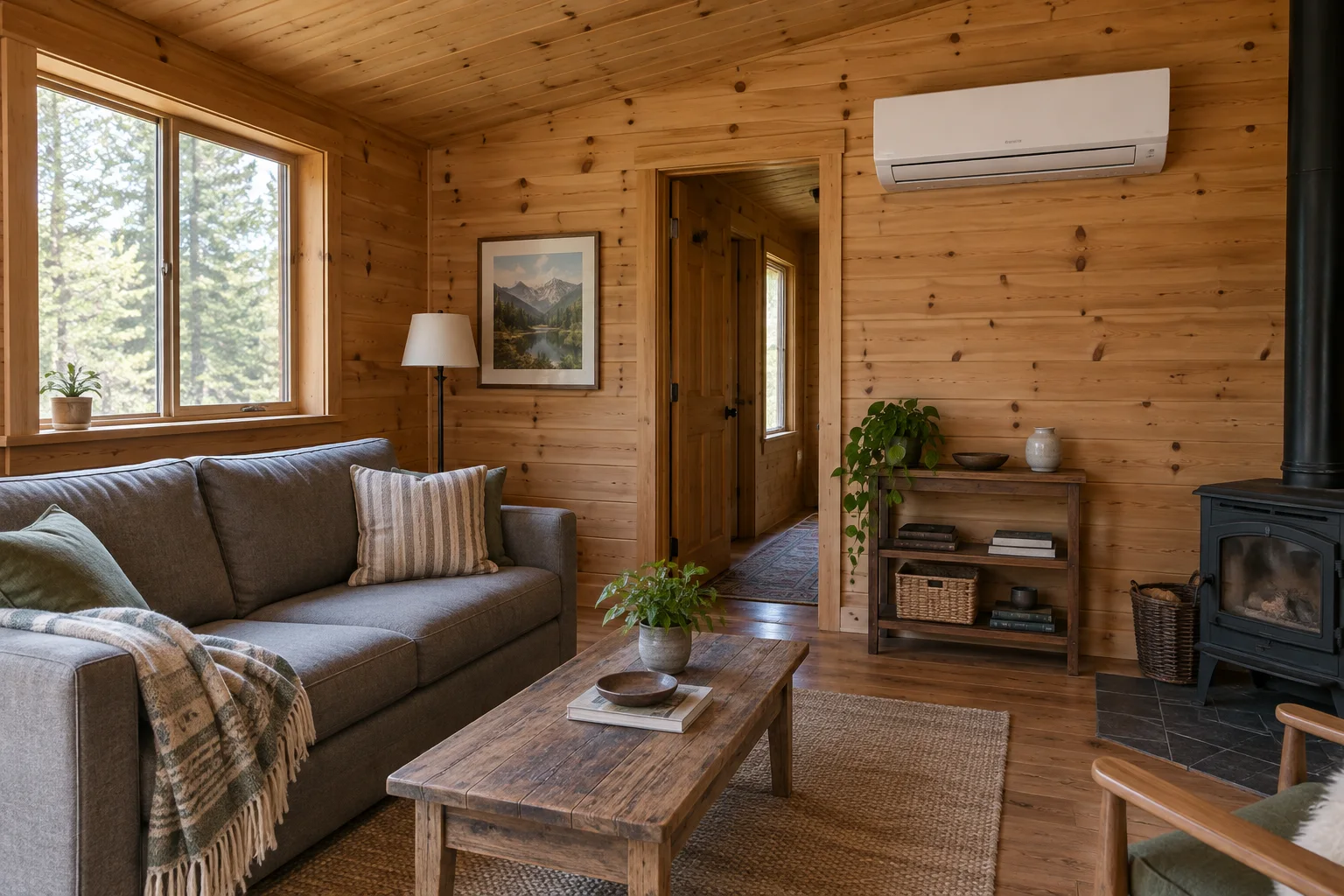
Cabin ventilation must supply appropriate outdoor air, remove moisture and pollutants and remain usable in the cabin's real climate and occupancy pattern. Buyers should coordinate openings, extract, heating or cooling, enclosure airtightness, controls and maintenance rather than ordering a fan in isolation.
Introduction: the decision behind this buyer question
Cabin ventilation must supply appropriate outdoor air, remove moisture and pollutants and remain usable in the cabin's real climate and occupancy pattern. Buyers should coordinate openings, extract, heating or cooling, enclosure airtightness, controls and maintenance rather than ordering a fan in isolation.
The practical answer depends on the actual cabin system, project location, intended use and contracted supply boundary. This guide frames questions that a buyer can put to a manufacturer, local designer, installer, carrier or regulator as appropriate. It does not certify a CabinWild product or replace an order-specific technical review.
Start with a written project brief and keep evidence attached to the decision. The direct answer is: Set a room-by-room ventilation brief and have a local designer size and approve the full system for use, climate and destination rules. Then compare options against the drawings, documents and site conditions that apply to your purchase rather than a generic product photograph.
Further reading: US EPA: indoor air quality overview; US EPA: moisture control guidance.
1. Define occupancy and pollutant sources
A cabin used for occasional day visits differs from a sealed overnight suite with a shower and cooking. Occupancy, activities and source materials affect outdoor-air and extract needs. A vague ‘breathable timber’ claim is not a ventilation strategy.
List sleeping capacity, bathrooms, kitchen use, cleaning products, fireplaces or fuel appliances, and periods when the cabin is empty. Give the local designer the climate and operating season. Note guest behaviours such as closed windows during rain or insects.
Request a room schedule showing intended ventilation path and source-control decision for each space. Avoid assuming that a bathroom window provides reliable extract when guests will not open it or weather prevents use.
Control pollutants at source where practical: choose suitable materials, isolate combustion systems and provide local extract. Outdoor air is part of the response, but the correct rate and equipment follow local standards and design.
- Occupancy and source list is written
- Each wet or cooking area has a strategy
- Local design standard is identified
2. Design the complete air path
An extractor cannot remove air indefinitely without replacement air, and an inlet is not useful if the air cannot reach occupied zones. A ventilation system has supply, transfer, extract and discharge paths. Airtightness changes how these paths behave.
Ask for a diagram showing where air enters, crosses rooms and leaves, including door undercuts or transfer grilles where permitted. Confirm that exhaust does not short-circuit back into an intake or discharge into a roof cavity. Local professionals should coordinate fire and acoustic requirements.
Use equipment data for the actual fan, ductwork and controls. A free-air fan rating can differ from installed flow through bends, grilles and filters. If a manufacturer offers an integrated unit, request its operating conditions and maintenance access.
At installation, measure or otherwise verify performance according to the local design and accepted commissioning method. Factory testing of a fan motor is not evidence that the installed ducted system delivers its design airflows.
- Supply and extract routes are drawn
- Duct resistance is considered
- Installed system has commissioning method

3. Coordinate moisture, heating and cooling
Ventilation interacts with surface temperature and humidity. Too little outdoor air or extract can leave moisture from showers and guests indoors; poorly controlled outdoor air in a humid climate can also add moisture. The correct strategy changes by season and location.
Review envelope insulation, cold bridges, heating, cooling and dehumidification with the local designer. Identify periods when the cabin is unoccupied but needs moisture protection. Controls should be clear to operators and guests, not hidden in an inaccessible plant box.
Track symptoms such as window condensation, musty storage and persistent wet surfaces by time, weather and occupancy. These observations can guide a professional investigation, but they do not prove whether ventilation, leaks or ground wetting caused the problem.
Do not solve a wet cabin simply by adding a larger fan. Confirm that the building has a dry enclosure and correctly managed outdoor-air path. Poorly placed exhaust can draw moisture through unwanted gaps.
- Seasonal operating mode is defined
- Moisture sources and enclosure are reviewed
- Symptoms are diagnosed before retrofit
Turn these questions into a project brief
Send CabinWild your destination, intended use, quantity and technical questions for a clearly bounded quotation.
4. Select controls that people will use
A theoretically efficient system can fail if guests switch it off due to noise, drafts or confusing controls. A resort operator also needs access for cleaning and filters between stays. User experience therefore belongs in the technical brief.
Specify night-time sound and draft expectations with the acoustic and HVAC designers. Decide which functions are automatic, which guests can adjust and which are locked for building protection. Provide simple labels and staff instructions.
Request maintenance intervals and replacement parts for fans, filters, sensors and grilles. Put the equipment where staff can safely reach it. A hidden filter that is never changed can undermine both airflow and hygiene.
During a prototype review, operate the system in realistic modes with doors and windows as guests use them. Record noise, airflow, condensation and control observations. A showroom demonstration on one mild day is not enough to validate every climate condition.
- Guests can understand controls
- Filters and fans are accessible
- Prototype is reviewed in realistic mode
5. Document factory and site boundaries
Some cabins arrive with fans and duct sleeves installed; others are connected entirely on site. The handover between factory and local contractor can leave an unsealed penetration or an unpowered fan if scope is unclear.
List every supplied item, opening, wiring provision, control, duct and grille. Show who seals penetrations and who connects power. Confirm voltage and local electrical requirements before the product is built. Require approved drawings for substitutions.
At shipment inspection, count supplied devices and check visible labels against the schedule. At site, test controls, direction, airflow and discharge point. Keep commissioning records by cabin unit for later troubleshooting.
If a service is omitted from the cabin price, put it plainly in the quote. A buyer should be able to distinguish ‘ventilation-ready’ openings from a complete, functioning ventilation system.
- Factory and site scope is itemised
- Penetrations have sealing owner
- Each unit has commissioned record
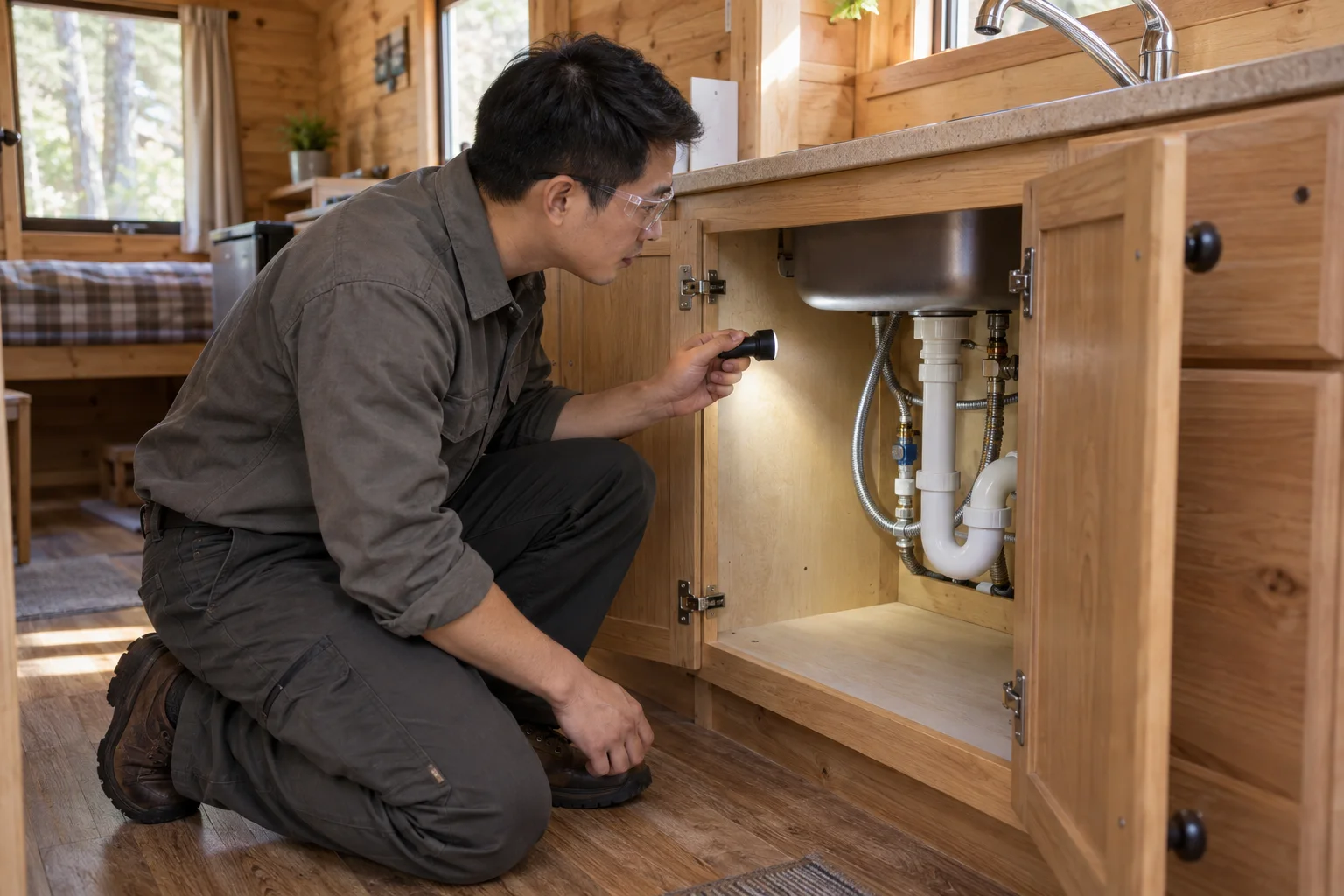
6. Maintain indoor air quality after handover
Indoor air quality is an operational condition, not a one-time certificate. Cleaning products, damp furnishings, blocked grilles and changed occupancy can alter it. A maintenance plan should name what staff observe and when a specialist should investigate.
Provide a concise operating guide with filter schedule, fan checks, moisture response and guest reporting route. Keep source-control choices such as low-emission materials documented for the selected products, without claiming that all wood is automatically low-emission.
Log recurring complaints by unit, season and activity. If staff report persistent odours or mould, protect occupants and seek competent assessment instead of masking the symptom. Any later air-quality sampling should use a suitable method and interpreted scope.
Revisit the design if the cabin's use changes, such as adding a kitchen or increasing occupancy. A system sized for the original brief may no longer be appropriate. Documented operating assumptions make that decision possible.
- Maintenance owner and intervals are set
- Complaint log identifies patterns
- Changed use triggers reassessment
A practical comparison and sign-off workflow
Set out the cabin ventilation system decision in a review sheet before a purchase order is released. Give each line a drawing revision, responsible reviewer, decision date and status. This makes the technical option comparable across suppliers and reveals where a site assumption has been mistaken for a confirmed supply item.
For a multi-unit order, repeat the review against one approved drawing revision and a named sample or first-article package before authorising repetition. Put open questions in a log with an owner and due date. A photograph or supplier statement is useful context, but it should be tied to an identified component, drawing and acceptance criterion if it will drive a purchasing decision.
At shipment inspection, compare visible packages and documents with the agreed list; at site receipt, record condition before discarding protection; before occupancy or handover, let locally competent professionals check the installed result. These are distinct gates. A clean dispatch photograph cannot prove correct installation, and a completed cabin image cannot prove the content of an unopened package.
Further reading: Log cabin condensation guide; Cabin heating and cooling guide.
| Decision gate | Buyer question | Evidence to retain |
|---|---|---|
| Define occupancy and pollutant sources | Occupancy and source list is written | Each wet or cooking area has a strategy |
| Design the complete air path | Supply and extract routes are drawn | Duct resistance is considered |
| Coordinate moisture, heating and cooling | Seasonal operating mode is defined | Moisture sources and enclosure are reviewed |
| Select controls that people will use | Guests can understand controls | Filters and fans are accessible |
Common mistakes and how to avoid them
A common error is treating a catalogue phrase about cabin ventilation system as an accepted technical requirement. Ask which drawing, component and intended use the phrase applies to. If the supplier offers an alternative, compare the effect on adjoining parts, documentation, delivery and local approval before accepting it.
Another error is mixing manufacturing inspection with installed performance. Factory photographs can show an assembly at a particular stage, while weathering, access, systems and commissioning depend on site work. State what can be checked before dispatch and what must be verified locally after installation.
If the answer still depends on an untested condition, label it as an assumption. Record who will verify it and when. Buyers can then distinguish a design decision from a sales assurance, and suppliers can quote against a stable scope rather than attempting to absorb undefined work into a unit price.
Illustrative buyer scenario: apply the checks in sequence
A hypothetical two-person resort unit has a shower and kitchenette. Guests keep windows closed during insects and heavy rain, and the operator turns off a noisy extractor between stays. The design review considers a usable outdoor-air path, wet-area extract, fan sound, condensate and standby controls together. One larger fan cannot answer every part of that brief. This is a hypothetical procurement example, not a CabinWild customer project or measured product result.
The first decision is define occupancy and pollutant sources. Ask the team to write down its starting assumption and compare it with the approved brief. In this example, the first record to request is: occupancy and source list is written. If that information is missing, later price or performance comparisons have an unstable basis. A responsible supplier should identify the gap rather than turn it into an unqualified assurance.
The next review concerns coordinate moisture, heating and cooling and select controls that people will use. For these stages, use the practical checks 'moisture sources and enclosure are reviewed' and 'guests can understand controls'. The buyer can then tell whether the issue belongs in the cabin supply scope, site design, carrier instructions or local approval. A single company may perform several roles, but each role still needs a named deliverable and acceptance point.
Before repeating the choice across the order, compare it with maintain indoor air quality after handover. Ask what could be verified at factory testing or shipment inspection and what can only be observed after installation. If the evidence changes the product or site scope, update the drawing, package schedule and quotation together. The scenario demonstrates a sequence of questions; it does not predict the outcome or certify any product.
Documents to request before an order is released
For cabin ventilation system, request a concise evidence packet rather than a broad promise. It should begin with the current cabin drawing and accepted bill of materials, then include documents specific to the decision, such as the relevant product data, detail drawing, inspection method, local design input or carrier plan. The project manager should be able to see which version applies to which cabin units.
Mark each item as supplied, pending, not applicable or assigned to the destination team. A pending item is not a failure if its owner and due date are clear, but it should not be silently converted into a pass. Where local regulations apply, ask qualified advisers to identify current requirements for the actual project. Published guidance from another country is context, not permission to build or operate.
Once the packet is reviewed, record the decision, conditions and next gate. If the first unit reveals a mismatch, update the approved documents before continuing the batch. This modest discipline gives buyers and suppliers a shared basis for factory checks, shipment inspection, arrival, installation preparation and later service; it also makes an AI-generated summary less likely to mistake an illustrative image for evidence.
- Occupancy and source list is written
- Supply and extract routes are drawn
- Seasonal operating mode is defined
- Guests can understand controls
- Factory and site scope is itemised
- Maintenance owner and intervals are set
Frequently asked questions
Can opening a window provide all cabin ventilation?
It may be part of a strategy, but reliability depends on climate, occupancy, safety and use. A local designer should review required outdoor air and extract.
Will a bathroom fan prevent every condensation problem?
No. Water may come from leaks or ground moisture, and the fan needs adequate supply air and correct operation.
Does timber naturally make indoor air healthy?
Timber alone does not provide required ventilation or control all emissions and moisture sources.
Should fans run when a resort cabin is empty?
That depends on climate, moisture and the designed controls. Ask the local HVAC professional for the correct standby mode.
What documents should accompany the system?
Drawings, equipment data, control instructions, commissioning results and maintenance parts and intervals.
Conclusion and next step
The strongest cabin ventilation system decision is documented rather than inferred from appearance. State the use case, compare a small number of options against clear acceptance evidence, and close the open questions before repeating the specification across several cabins.
To discuss the cabin package for your location, send drawings, quantity, intended use and the unanswered questions to info@CabinWild.com. Ask for a clearly bounded quotation and document list. Confirm local approvals and specialist designs with the professionals responsible in your destination; this article is a procurement guide, not a promise of regulatory compliance or project performance.
Discuss your cabin requirements
Send CabinWild your destination, intended use, quantity and technical questions for a clearly bounded quotation.
Prepared with AI assistance for CabinWild Editorial using the linked public sources. Examples are illustrative, not customer results or verified CabinWild test data. Project-specific design and local requirements need review by the appropriate professionals.