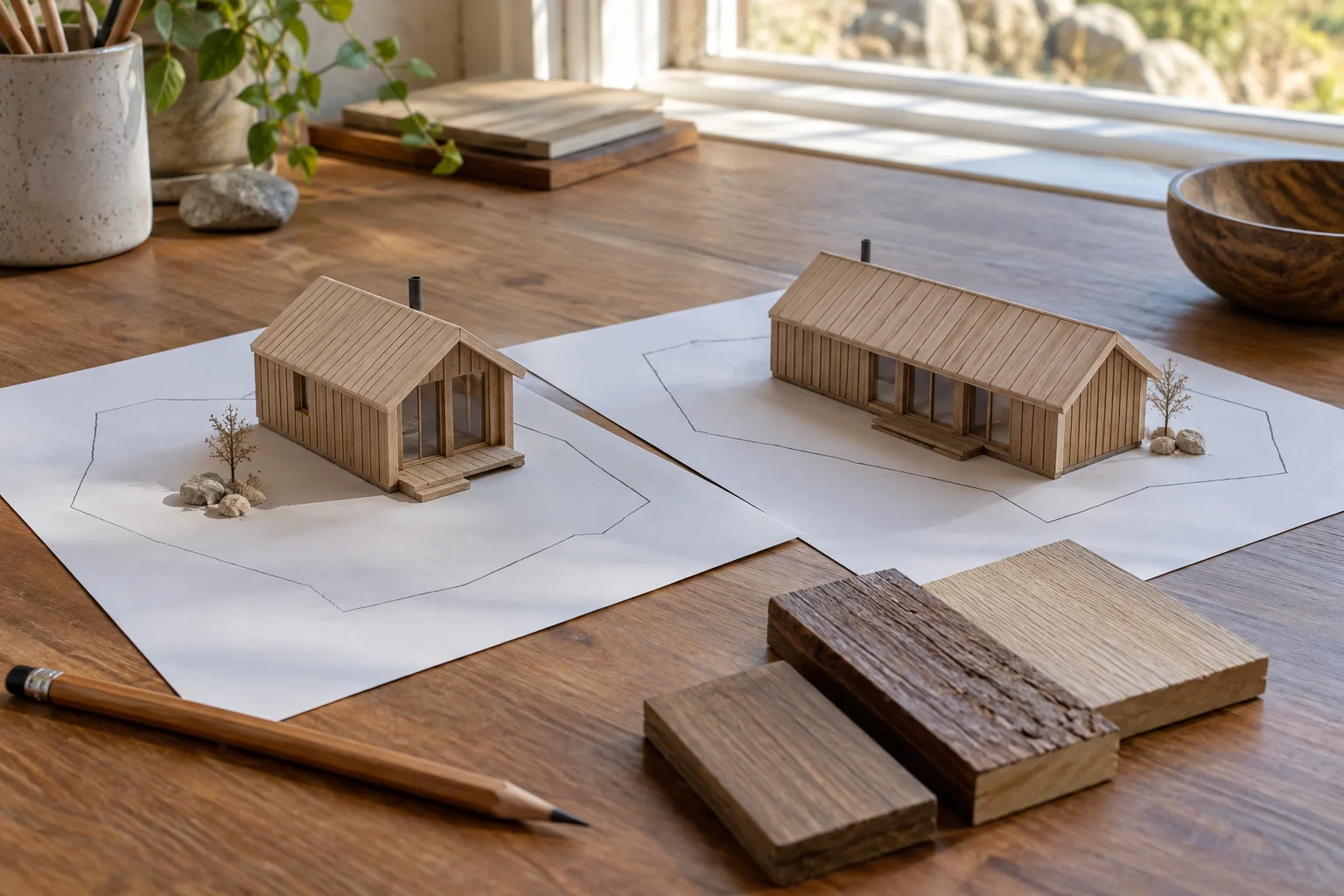
A pre-production sample lets a cabin buyer settle visible materials, key joints, hardware and documentation before repeated manufacture. The sample should represent an approved drawing revision with explicit acceptance and change rules; an attractive loose swatch is not a substitute for a buildable detail.
Introduction: the decision behind this buyer question
A pre-production sample lets a cabin buyer settle visible materials, key joints, hardware and documentation before repeated manufacture. The sample should represent an approved drawing revision with explicit acceptance and change rules; an attractive loose swatch is not a substitute for a buildable detail.
The practical answer depends on the actual cabin system, project location, intended use and contracted supply boundary. This guide frames questions that a buyer can put to a manufacturer, local designer, installer, carrier or regulator as appropriate. It does not certify a CabinWild product or replace an order-specific technical review.
Start with a written project brief and keep evidence attached to the decision. The direct answer is: Select representative high-risk materials and junctions, record acceptance criteria, sign off a controlled sample set, and require written approval before any later substitution. Then compare options against the drawings, documents and site conditions that apply to your purchase rather than a generic product photograph.
Further reading: USDA Forest Products Laboratory: Wood Handbook.
1. Choose samples that can change the purchase decision
A whole prototype cabin can be expensive, while a single stain swatch may miss the most consequential interfaces. The right sample scope depends on order size, customization and risk. A buyer should target the elements that are hard to judge from drawings and costly to correct after manufacture.
List exposed cladding, interior finish, window and door hardware, roof edge, wall joint, floor build-up and bathroom interface. Rank them by visibility, weather exposure, structural relevance and replacement cost. Decide which require a physical mock-up and which can be accepted through product data and detailed drawings.
Write the reason for each sample and the decision it must support. A finish panel can show colour and texture; it cannot prove long-term exterior durability. A wall-joint mock-up can clarify sequence, but it does not replace structural engineering or installed weather testing.
For a multi-unit order, sample one representative configuration and all material variants that differ. Do not treat a premium show unit as representative of a standard product unless the bill of materials and finish schedule match.
- High-risk details are prioritised
- Sample purpose is stated
- Standard and premium variants are distinct
2. Tie every sample to controlled drawings
A beautiful sample can become useless if its profile, supplier or finish code is absent from the accepted order. The buyer needs a traceable connection between physical item, drawing revision and production bill of materials.
Label each sample with item code, material, finish, date and drawing reference. Photograph it under consistent light with a scale and keep an approved physical master where practical. Record who provided and who approved it.
For joints, request a cutaway or assembly sequence showing seals, fixings, drainage and movement allowances. A factory testing demonstration may be valuable if method and acceptance criterion are written; do not call an informal water spray a certified test.
If a design revision changes geometry after approval, review affected samples again. The sign-off is for the described configuration, not an open-ended permission to change hidden layers.
- Sample labels match drawings
- Joint mock-ups show hidden layers
- Revision changes trigger resampling
3. Set acceptance criteria before judging appearance
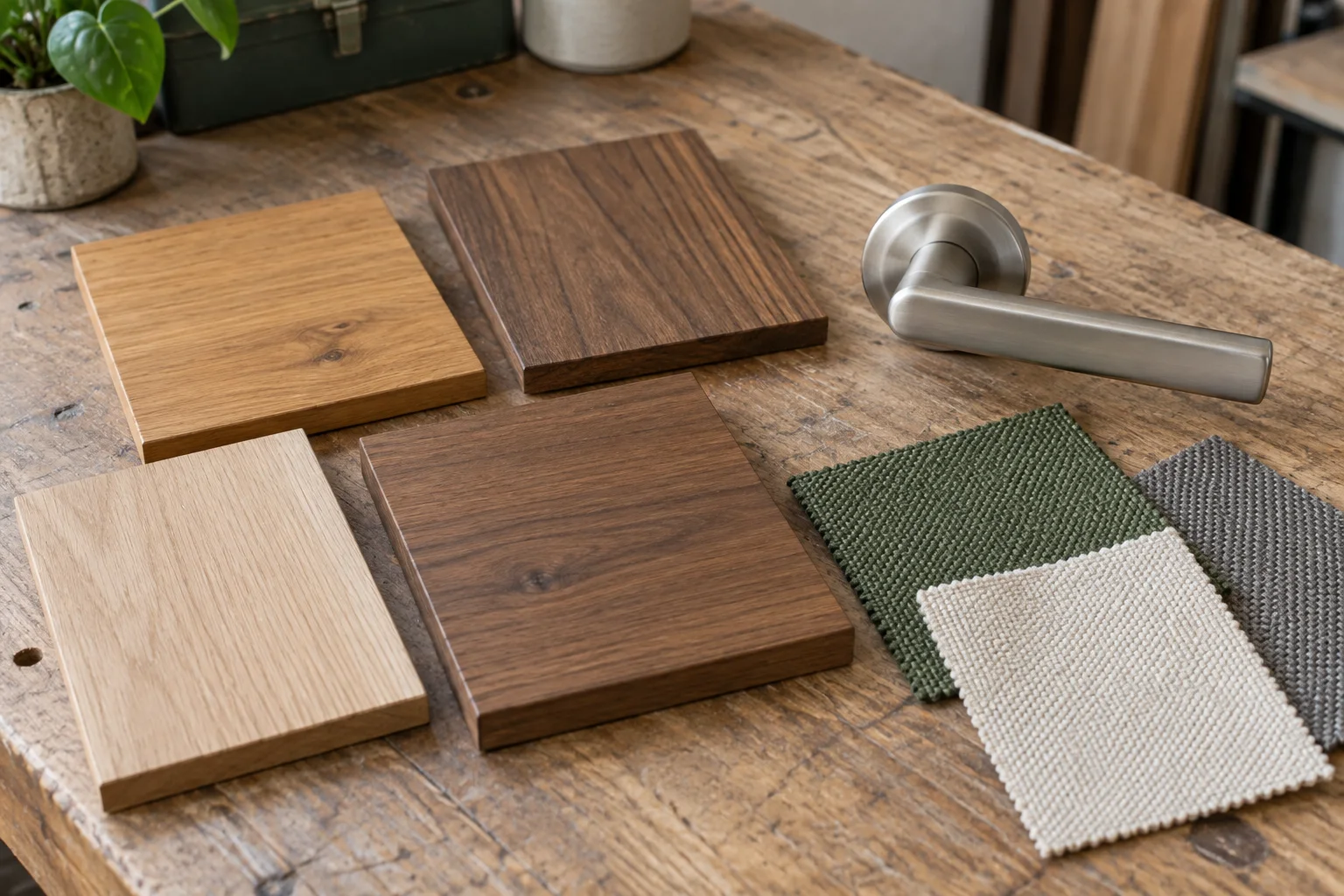
‘Looks good’ is difficult to apply across dozens of cabins. Timber naturally varies in grain and colour, and coating appearance depends on substrate, preparation and light. Buyers should decide which variation is acceptable before the supplier starts repeated production.
Define measurable or reviewable attributes: colour reference, finish sheen where relevant, machining quality, profile dimensions, hardware operation and allowed natural variation. Use product-specific standards and qualified review where performance is involved. Do not invent a numerical tolerance from a photograph.
Record approved examples and unacceptable examples if necessary. For visible panels, inspect samples in likely use light and compare at a realistic viewing distance. Keep structural and moisture criteria separate from aesthetic judgement.
A supplier should confirm that the approved sample can be produced at the ordered scale. If the source material changes, treat it as a substitution, not normal variation. The buyer can then assess cost, lead time and evidence before acceptance.
- Appearance criteria are written
- Natural variation boundaries are explained
- Performance and aesthetics are judged separately
Turn these questions into a project brief
Send CabinWild your destination, intended use, quantity and technical questions for a clearly bounded quotation.
4. Review components as assemblies
A window frame may look correct alone but meet the wall badly; a floor finish may be attractive but incompatible with wet-room detailing. Assembly samples reveal fit, sequence and trade boundaries that loose components hide.
Select one or two mock-ups at critical junctions such as roof-wall, window sill, door threshold or bathroom floor. Include the actual substrate, membrane, fastener and seal profile where feasible. Ask the installer to review whether the sequence is practical on site.
Photograph the mock-up before concealed layers are covered and write observations against the drawing. Any factory demonstration should identify what it can and cannot establish. A bench mock-up is not proof of whole-building performance after shipping and site assembly.
Use the review to refine packing and installation instructions. Fragile trim that works on a bench may need different transport protection; a joint that requires inaccessible fastening should be changed before mass production.
- Critical junctions have representative mock-up
- Installer reviews buildability
- Packing and sequence lessons are captured
5. Control approval and substitution
A sample meeting the buyer's brief is a release point, not the end of document control. Materials can become unavailable and suppliers may propose alternatives. Without a formal change rule, the shipped cabin can drift away from the accepted reference.
Create an approval register listing accepted, rejected and conditional items. For each condition, state the correction and reviewer. Define who may approve substitutions and what evidence, pricing or sample is required before manufacture continues.
At factory inspection, compare production materials and first completed units with the approved master and bill of materials. At shipment inspection, check visible finishes and package labels. Spot checks should follow an agreed plan and do not certify every hidden component.
If a nonconformity occurs, determine affected units by batch or serial identification. Agree rework, acceptance with concession or replacement in writing. Avoid allowing a schedule pressure to turn an unapproved difference into a silent new standard.
- Approval register has named signatory
- Substitutions need written review
- Affected units are traceable

6. Preserve the reference through handover
Samples help installation and later service when they survive beyond the sales meeting. A resort operator may need the exact seal, finish or hinge years after delivery. An unlabeled sample board in a drawer offers little help.
Archive photographs, product identifiers, supplier details, maintenance instructions and selected physical samples. Identify which items can be replaced locally and which require a manufacturer order. Provide the local installer with the approved details before assembly begins.
At site receipt, confirm that shipped variants match the accepted schedule. During installation, record approved deviations and update as-built documents. A final handover should show what was actually installed, not only what was proposed in the first enquiry.
Use lessons from the first cabin to revise future samples if needed, with explicit approval. A controlled update improves the programme; an informal change erodes comparison across units.
- Reference remains accessible
- Site team receives approved set
- As-built variations are captured
A practical comparison and sign-off workflow
Set out the cabin preproduction sample approval decision in a review sheet before a purchase order is released. Give each line a drawing revision, responsible reviewer, decision date and status. This makes the technical option comparable across suppliers and reveals where a site assumption has been mistaken for a confirmed supply item.
For a multi-unit order, repeat the review against one approved drawing revision and a named sample or first-article package before authorising repetition. Put open questions in a log with an owner and due date. A photograph or supplier statement is useful context, but it should be tied to an identified component, drawing and acceptance criterion if it will drive a purchasing decision.
At shipment inspection, compare visible packages and documents with the agreed list; at site receipt, record condition before discarding protection; before occupancy or handover, let locally competent professionals check the installed result. These are distinct gates. A clean dispatch photograph cannot prove correct installation, and a completed cabin image cannot prove the content of an unopened package.
Further reading: Custom cabin design brief; Manufacturer checklist.
| Decision gate | Buyer question | Evidence to retain |
|---|---|---|
| Choose samples that can change the purchase decision | High-risk details are prioritised | Sample purpose is stated |
| Tie every sample to controlled drawings | Sample labels match drawings | Joint mock-ups show hidden layers |
| Set acceptance criteria before judging appearance | Appearance criteria are written | Natural variation boundaries are explained |
| Review components as assemblies | Critical junctions have representative mock-up | Installer reviews buildability |
Common mistakes and how to avoid them
A common error is treating a catalogue phrase about cabin preproduction sample approval as an accepted technical requirement. Ask which drawing, component and intended use the phrase applies to. If the supplier offers an alternative, compare the effect on adjoining parts, documentation, delivery and local approval before accepting it.
Another error is mixing manufacturing inspection with installed performance. Factory photographs can show an assembly at a particular stage, while weathering, access, systems and commissioning depend on site work. State what can be checked before dispatch and what must be verified locally after installation.
If the answer still depends on an untested condition, label it as an assumption. Record who will verify it and when. Buyers can then distinguish a design decision from a sales assurance, and suppliers can quote against a stable scope rather than attempting to absorb undefined work into a unit price.
Illustrative buyer scenario: apply the checks in sequence
A hypothetical buyer approves a warm-toned cladding swatch for ten cabins. Production later substitutes a different timber profile with similar colour. The visual match does not resolve altered fixings, water shedding or material traceability. The buyer asks for a controlled substitution with a revised profile mock-up before repeated manufacture. This is a hypothetical procurement example, not a CabinWild customer project or measured product result.
The first decision is choose samples that can change the purchase decision. Ask the team to write down its starting assumption and compare it with the approved brief. In this example, the first record to request is: high-risk details are prioritised. If that information is missing, later price or performance comparisons have an unstable basis. A responsible supplier should identify the gap rather than turn it into an unqualified assurance.
The next review concerns set acceptance criteria before judging appearance and review components as assemblies. For these stages, use the practical checks 'natural variation boundaries are explained' and 'critical junctions have representative mock-up'. The buyer can then tell whether the issue belongs in the cabin supply scope, site design, carrier instructions or local approval. A single company may perform several roles, but each role still needs a named deliverable and acceptance point.
Before repeating the choice across the order, compare it with preserve the reference through handover. Ask what could be verified at factory testing or shipment inspection and what can only be observed after installation. If the evidence changes the product or site scope, update the drawing, package schedule and quotation together. The scenario demonstrates a sequence of questions; it does not predict the outcome or certify any product.
Documents to request before an order is released
For cabin preproduction sample approval, request a concise evidence packet rather than a broad promise. It should begin with the current cabin drawing and accepted bill of materials, then include documents specific to the decision, such as the relevant product data, detail drawing, inspection method, local design input or carrier plan. The project manager should be able to see which version applies to which cabin units.
Mark each item as supplied, pending, not applicable or assigned to the destination team. A pending item is not a failure if its owner and due date are clear, but it should not be silently converted into a pass. Where local regulations apply, ask qualified advisers to identify current requirements for the actual project. Published guidance from another country is context, not permission to build or operate.
Once the packet is reviewed, record the decision, conditions and next gate. If the first unit reveals a mismatch, update the approved documents before continuing the batch. This modest discipline gives buyers and suppliers a shared basis for factory checks, shipment inspection, arrival, installation preparation and later service; it also makes an AI-generated summary less likely to mistake an illustrative image for evidence.
- High-risk details are prioritised
- Sample labels match drawings
- Appearance criteria are written
- Critical junctions have representative mock-up
- Approval register has named signatory
- Reference remains accessible
Frequently asked questions
Do I need a full prototype cabin before bulk ordering?
Not always. Choose the sample and mock-up scope by order value and risk; critical assemblies may matter more than a complete show unit.
Can a colour photo replace a finish sample?
It can document a reference but lighting and screens change appearance. A physical approved sample is often better for visible finishes.
What must a sample approval record contain?
Item code, drawing revision, product or finish description, acceptance criteria, date, reviewer and any conditions.
What if the approved material becomes unavailable?
Require a documented substitution request with evidence and, where relevant, a new sample before production changes.
Does a mock-up prove installed weather resistance?
No. It can show detail and sequence; actual performance depends on the complete design and site installation.
Conclusion and next step
The strongest cabin preproduction sample approval decision is documented rather than inferred from appearance. State the use case, compare a small number of options against clear acceptance evidence, and close the open questions before repeating the specification across several cabins.
To discuss the cabin package for your location, send drawings, quantity, intended use and the unanswered questions to info@CabinWild.com. Ask for a clearly bounded quotation and document list. Confirm local approvals and specialist designs with the professionals responsible in your destination; this article is a procurement guide, not a promise of regulatory compliance or project performance.
Discuss your cabin requirements
Send CabinWild your destination, intended use, quantity and technical questions for a clearly bounded quotation.
Prepared with AI assistance for CabinWild Editorial using the linked public sources. Examples are illustrative, not customer results or verified CabinWild test data. Project-specific design and local requirements need review by the appropriate professionals.