
Evaluate cabin kits DIY options by the actual components and site movement required, not only the finished floor area. Obtain package dimensions and masses, plan unloading and storage, and have competent people assess handling methods and equipment. A kit described as DIY does not establish that its components can be safely carried or assembled by any buyer's available team.
Introduction: the kit has to move before it becomes a cabin
A compact cabin may arrive as several large packages containing long, awkward or fragile parts. The buyer sees a manageable finished building and assumes the assembly team can carry everything from the unloading point. That assumption can fail before the first wall component reaches the base.
Material handling belongs in the purchase decision. The supplied form, site route, available equipment and team's competence determine whether the package is practical for this project. A clearly defined handling plan can also expose extra deliveries, storage or installation services that should be included in the budget.
This guide helps prepare the information and responsibilities for assessment. It is not a lifting plan, manual-handling training or assembly instruction. Examples are hypothetical, and no CabinWild handling performance is claimed. Use competent local people and the applicable equipment, workplace and site requirements for the actual work.
1. Request the information that changes the handling plan
Ask for the proposed package count, external dimensions, masses and the relevant component information needed by the receiving team. Identify the largest, longest, heaviest and fragile items rather than requesting only the total shipment weight. Different items may require different handling methods or equipment.
Confirm whether the information is preliminary or final and when it will be updated. A production change can alter packing or component form. Connect the final data to the accepted order so the local team is planning for the package actually supplied, not an early brochure estimate.
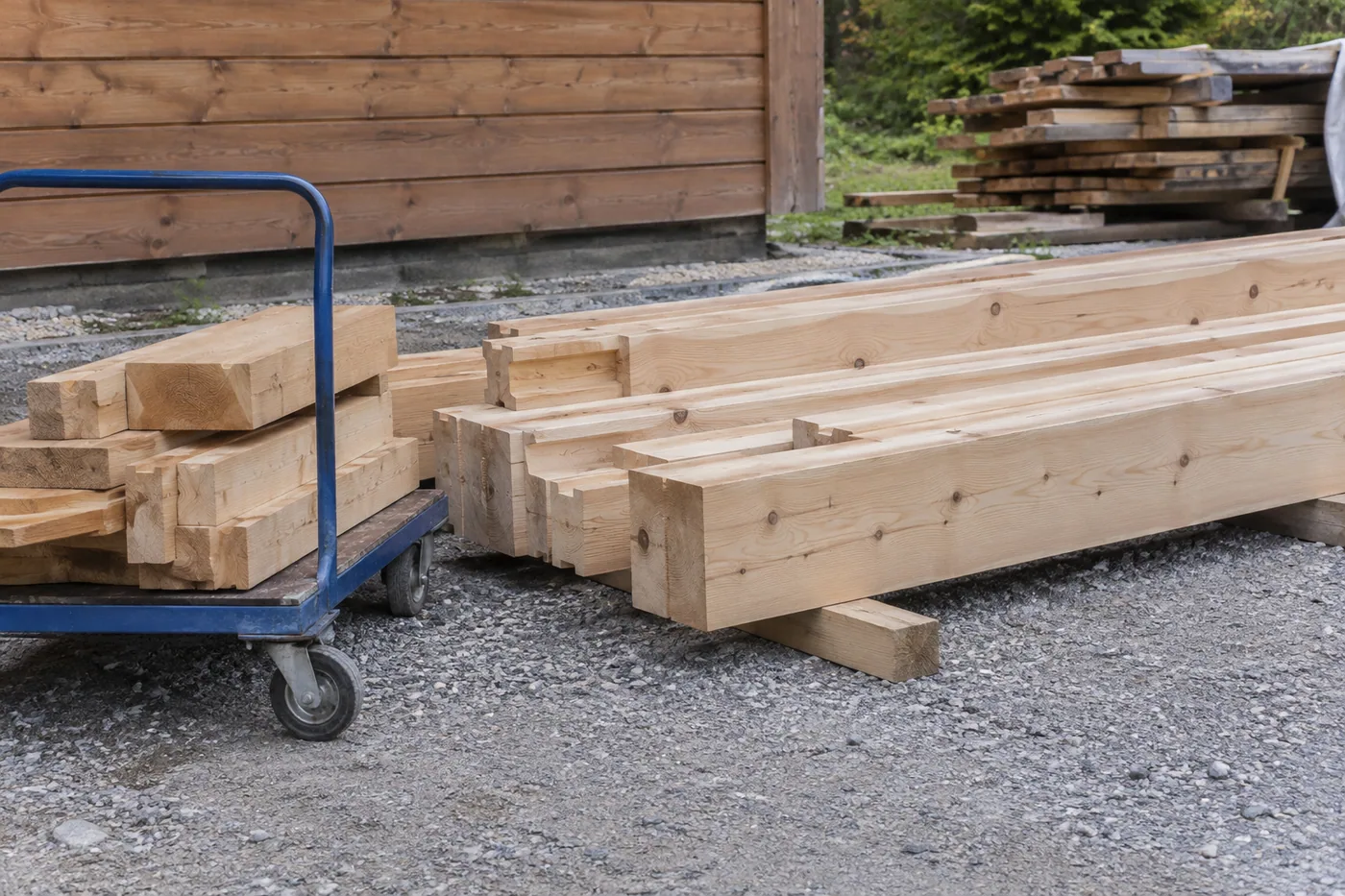
For timber cabin kits, identify glazing, doors, long members and other items whose shape or condition may affect handling. Ask the provider which parts arrive assembled and which are loose. A log cabin assembly kit with a familiar wall system can still contain components that need a different receiving and movement arrangement.
2. Trace the route from vehicle to assembly area
Record the proposed delivery position, unloading area, storage locations and route to the base. Include turns, gradients, surface conditions, overhead constraints and other uses of the area. Provide accurate site information to the responsible planners instead of assuming an item that fits through a gate can be moved along the complete route.
Consider the actual equipment proposed for each stage. The competent team should assess access, stability, capacity and operation for the relevant site and load. A vehicle or machine that can reach the entrance does not automatically provide a suitable method for unloading or final positioning.
Coordinate deliveries with neighbors, guests or other contractors where they share the area. The receiving plan needs an available working space, not merely a line on a drawing. Resolve temporary storage and movement conflicts before dispatch so an arriving vehicle does not force an improvised decision.
Further reading: Plan restricted cabin delivery access.
| Stage | Information needed | Decision to assign |
|---|---|---|
| Delivery position | Vehicle arrangement and site access | Where can the delivery be received? |
| Unloading | Package data and equipment proposal | Who plans and carries out the work? |
| Storage | Package protection and accessible space | What remains stable, protected and reachable? |
| Movement to base | Component data and complete route | Which assessed methods suit each item? |
| Assembly sequence | Accepted instructions and component order | How will the right parts be available without repeated moves? |
3. Use an assessed method instead of a universal weight rule
HSE's construction manual-handling guidance discusses planning ahead, reducing handling distances and using appropriate aids. That is relevant Great Britain workplace context, not a numerical safe-load rule for every cabin component. The actual task, load, people and environment need assessment by the appropriate competent team.
Avoid treating two-person lift as a complete method. Team handling can introduce coordination and route questions, while a long or fragile item may remain difficult even if its mass appears modest. Ask the planner what information and controls are necessary for the actual movement and how changes will be managed.
The buyer should identify the available resources honestly. Friends volunteering for a weekend, a trained installation crew and a specialist contractor do not represent the same competence or equipment. A DIY product label does not resolve those differences. Match the proposed package to an assessed plan before deciding which assembly scope to purchase.
Further reading: HSE: construction manual-handling questions.
4. Coordinate packing with the intended sequence
Ask the supplier how components are grouped and identified within the proposed package. A packing arrangement optimized for transport may not expose the first assembly items immediately. The receiving and installation teams need to understand that sequence before dismantling protection or spreading parts over an unsuitable area.
Discuss whether alternative grouping is available and what trade-offs it creates. A smaller package might improve access while increasing handling events, packaging or delivery complexity. Request a confirmed proposal and price rather than assuming the supplier can divide every component or change its form without design consequences.
Keep identification practical. Labels and records should help the team connect parts to the accepted instructions and unit. Define how identification is retained after wrapping is removed. A tidy site can still become confusing if components from several outdoor cabin kits are mixed without a controlled schedule.
Further reading: Compare export packaging scope.
5. Plan storage as working space
Ask the supplier for relevant storage and protection instructions, then have the local team plan a suitable arrangement for the actual packages and duration. Keep access for inspection and retrieval in mind. A storage location is not useful if the parts needed next are blocked by other materials or equipment.
Coordinate the storage plan with the intended material movement and weather protection. The appropriate team should establish stable support and safe access. Do not leave a pallet or long component on an improvised surface merely because the site is busy or the assembly is expected to begin soon.
Identify who checks the stored materials and reports damage or missing protection. Record the condition at receipt and any later concern so the project can distinguish arrival observations from issues that developed on site. The evidence helps resolve questions without assuming responsibility from the date the problem was discovered.
Further reading: Plan cabin materials storage before installation.
Turn these questions into a project brief
Send the site access, intended assembly scope and local team's information requirements. Ask CabinWild which package and component data can be provided for the proposed order.
6. Compare DIY, assisted and specialist assembly scopes
Ask providers to define the work included in their installation offers: receiving, unloading, component movement, assembly and any separate services. A labor-only quote may leave the owner responsible for equipment and access preparation. Compare the same complete scope before deciding that one arrangement is less expensive.
For cabin kits, the relevant decision is which tasks the owner can support through an appropriate assessed method and which require another provider. Keep responsibilities written down. The person supplying a delivery vehicle is not automatically responsible for moving components to the base or supervising the assembly team.
Include relevant training, competent supervision and equipment arrangements in the project plan. Do not infer that purchasing a tool creates the ability to use it safely or completes the technical installation scope. Ask the responsible team to identify what must be in place before each stage can begin.
Further reading: Compare cabin assembly service responsibilities.
7. Connect factory and shipment information to readiness
Factory records
Factory testing and assembly checks may support specific product questions, but they do not prove that the buyer's site and team can handle the package. Request the relevant component and configuration information separately. Keep the distinction between manufacturing observations and the assessed local handling plan clear in the purchasing record.
Shipment inspection
Verify the agreed package identity, visible condition, instructions and available packing information within the inspection scope. Record exceptions and changes before release. The local receiving team should have the final information in time to confirm readiness rather than learn the actual package form when the truck arrives.
Installation preparation
Use a readiness review that connects the accepted package, access route, storage area, equipment and responsible team. If a material condition changes, refer it to the appropriate planner. A delivery date should not override an unresolved handling question simply because labor has already been booked or the cabin base appears complete.
8. Prepare a stop-and-review process for changed conditions
Weather, access restrictions, an unavailable machine or an unexpected package can invalidate the planned approach. Agree who can stop the work and who reviews the changed condition. The team needs a practical escalation route rather than pressure to continue because the task was originally described as DIY.
Record significant changes to package data or movement arrangements and communicate them to the relevant parties. A verbal adjustment at the delivery gate can leave the assembler and operator working from different assumptions. Keep the current plan accessible and replace superseded information clearly.
If the selected kit cannot be handled through the available assessed method, reconsider the package, logistics or assembly service. That is a legitimate procurement finding. It is better to revise the scope while options remain available than to improvise movement of a component whose form was never matched to the site.
9. Information checklist before selecting a kit
Use the checklist as an information request, not a substitute for the handling assessment itself. Its value is connecting the kit choice to the local work. The finished cabin's size and the seller's DIY description cannot answer the practical questions created by the actual components and route.
- Obtain final package and relevant component dimensions, masses and identities.
- Show the complete delivery, unloading, storage and movement route.
- Have competent people assess methods, equipment and the actual team resources.
- Coordinate packing identification and retrieval with the assembly sequence.
- State receiving, handling and assembly responsibilities in the quotation.
- Agree readiness, changed-condition and exception procedures before dispatch.
Compare how often the same component must be moved
A useful logistics review follows a representative component from the vehicle to its final assembly position. Identify unloading, storage, retrieval and any intermediate movement in the proposed sequence. The competent team can then assess where handling can be reduced without assuming that fewer steps automatically make every remaining task suitable.
Ask whether the assembly order and package arrangement create unnecessary rehandling. A part needed early may be stored beneath material for a later stage. Changing the storage or delivery sequence can sometimes address the conflict, but the actual proposal should be checked against protection, access and assessed movement requirements.
Compare alternatives with the same component data and site conditions. A smaller package, different vehicle or assisted assembly service can move costs and responsibilities as well as improve access. Record the complete arrangement and who reviews it. That turns a broad request for easier delivery into a specific procurement comparison the buyer can understand.
Hypothetical decision worksheet: Kit Handling and Staging Worksheet
A hypothetical buyer plans to assemble a timber kit with a small team on a garden plot. The delivery vehicle can reach a front unloading area, but the cabin base is beyond a narrow route with turns. The kit price appears attractive, yet component lengths, masses and packaging sequence are unavailable. The worksheet starts with the movement of material from delivery to final position, before deciding whether DIY assembly is realistic.
Compare changing the delivery and staging arrangement, hiring suitable handling assistance and choosing a supplied format that better suits the route. A closer unloading point may reduce carrying if access and ground conditions permit it. Handling assistance can address particular loads but needs an allocated scope and appropriate equipment. A different panel or component format may change the logistics and assembly work. These choices should be assessed together rather than by kit price alone.
Request a component and package schedule with relevant dimensions, masses, lifting or handling information and the intended assembly sequence. Map the actual route, thresholds, turns, slopes and staging positions. Ask the competent team to assess grips, visibility, repeated handling and how mechanical aids can be used. Do not turn a generic weight into a declaration that a component is safe for a particular person or team.
The unresolved decision is which tasks the buyer's team can carry out and which require professional resources. A route that accepts a trolley may still fail for a long roof member or large opening panel. The owner should also identify where packages can be opened without blocking circulation, and how components remain stable and protected while waiting for installation. Staging should preserve identification and reduce unnecessary rehandling.
Defer dispatch if there is no workable unloading and onward-movement plan or if essential package information is missing. Reject an assumption that two people can safely lift every part because the kit is sold for DIY use. Release requires a task-specific handling assessment, suitable resources and a practical staging sequence. The decision should cover dismantling packaging and moving spare materials as well as the principal assembly.
Frequently asked questions
Does DIY mean two people can carry every component?
No general product label establishes that. Obtain the actual component and package information and have the tasks assessed for the people, route and environment. Long, fragile or awkward items may need a different method from ordinary loose parts. Use the appropriate competent planning and equipment arrangements.
What package information matters most?
Ask for package count, dimensions, masses and relevant component data, including awkward and fragile items. Identify the final revision and how parts are grouped. The receiving team needs this information before confirming the unloading and movement plan, not only a total shipment weight.
Can the supplier split packages for restricted access?
Ask what alternatives are possible for the actual kit and what their scope, design and cost implications are. A smaller package does not automatically mean smaller components or simpler handling. Have the local team assess the confirmed proposal and coordinate its sequence with storage and assembly.
Is unloading normally included in delivery?
The accepted commercial scope must say who provides and performs it. Vehicle delivery, unloading and movement to the base can be separate responsibilities. Ask for explicit boundaries and equipment assumptions, then compare complete proposals. Do not infer inclusion from the phrase delivered to site.
Conclusion: select a kit that fits an assessed site plan
Cabin kits DIY purchasing should connect product information with the actual receiving and assembly work. Obtain the right data, assess the route and resources and agree responsibilities before dispatch. A kit becomes a practical choice when its supplied form and the installation preparation are planned together.
Request the information needed for kit handling
Send the site access, intended assembly scope and local team's information requirements. Ask CabinWild which package and component data can be provided for the proposed order.
Prepared with AI assistance for CabinWild Editorial using the linked public sources. Examples are illustrative, not customer results or verified CabinWild test data. Project-specific design and local requirements need review by the appropriate professionals.