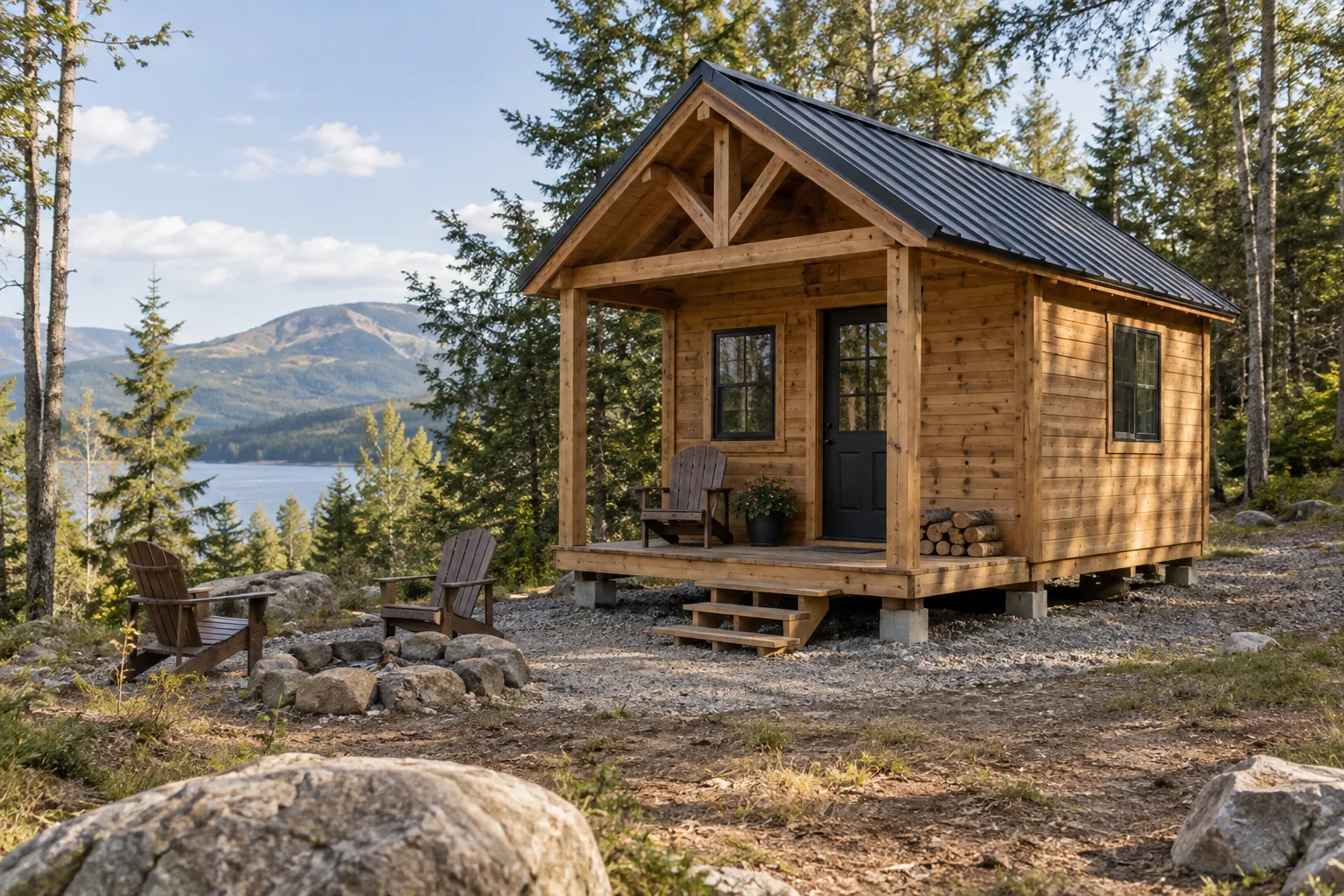
For tiny cabin kits in the USA or Canada, first establish the destination, intended use and building classification. Then confirm the local approval route, import requirements, climate-specific design evidence and work excluded from the kit. A factory label, online price or small footprint does not establish permission to install and occupy a cabin at a particular site.
Introduction: choose the destination route before choosing the kit
Searches for tiny cabin kits USA and tiny cabin kits Canada often return a mixture of component packages, completed buildings, movable units and lifestyle photographs. Those products may follow different approval and installation routes. Before comparing the apparent bargains, determine what type of product the seller is actually offering and what your local authority will need to review.
This guide is for buyers and distributors organizing a North American project, including an overseas purchase. It is not legal advice, an import ruling or a permit checklist for every state and province. CabinWild does not claim a US or Canadian factory, certification or approved model here. Destination availability and supporting documents must be confirmed for the proposed order.
1. Distinguish a kit from a completed or regulated housing product
Ask whether the package is a set of components assembled on site, prefabricated panels, a completed module or a unit intended to remain movable. Record what is constructed in the factory and what will remain visible for destination inspection. The words tiny, prefab and cabin describe a market category but do not settle the legal classification of a building.
The US Department of Housing and Urban Development describes certification requirements for manufactured homes under its federal standards. That category should not be assumed to include every kit or modular cabin. Ask the relevant authority and qualified advisers which route applies to your product. Do not accept a generic certified claim without identifying the system, scope and evidence.
For Canada, establish the province or territory and municipality at the outset. Do not treat a standard mentioned in a national brochure as proof of acceptance at every site. The local review must identify the applicable requirements for the actual building and installation. Keep that classification decision with the purchasing documents so later model changes can be assessed against the same route.
Further reading: HUD: manufactured housing certification information.
2. Obtain the site's questions before requesting final quotations
Describe the intended use honestly: a private studio, seasonal cabin, guest accommodation or permanent dwelling. Include the proposed location, service arrangements and whether the property already contains another building. Ask the local authority which planning, zoning, building and service reviews are needed. A seller's statement that a cabin is small or movable is not a substitute for that advice.
Ontario's tiny-home guidance provides an example of separate building and municipal considerations, and its introduction warns that some planning information is being updated. Use it as a starting reference, then obtain current local requirements. This article does not transfer Ontario's room dimensions, standards or procedures to other Canadian provinces or to the United States.
Keep the authority's requests in a document register. A supplier may need to provide drawings, component information or manufacturing evidence, while a local professional prepares the site-specific submission. Agree those responsibilities before paying for a package that cannot supply essential records. An early document gap is easier to address before production than after a container has arrived.
Further reading: Ontario: tiny-home guidance and update notice; Ontario: permits and inspection considerations.
3. Compare tiny cabin kits by their remaining local work
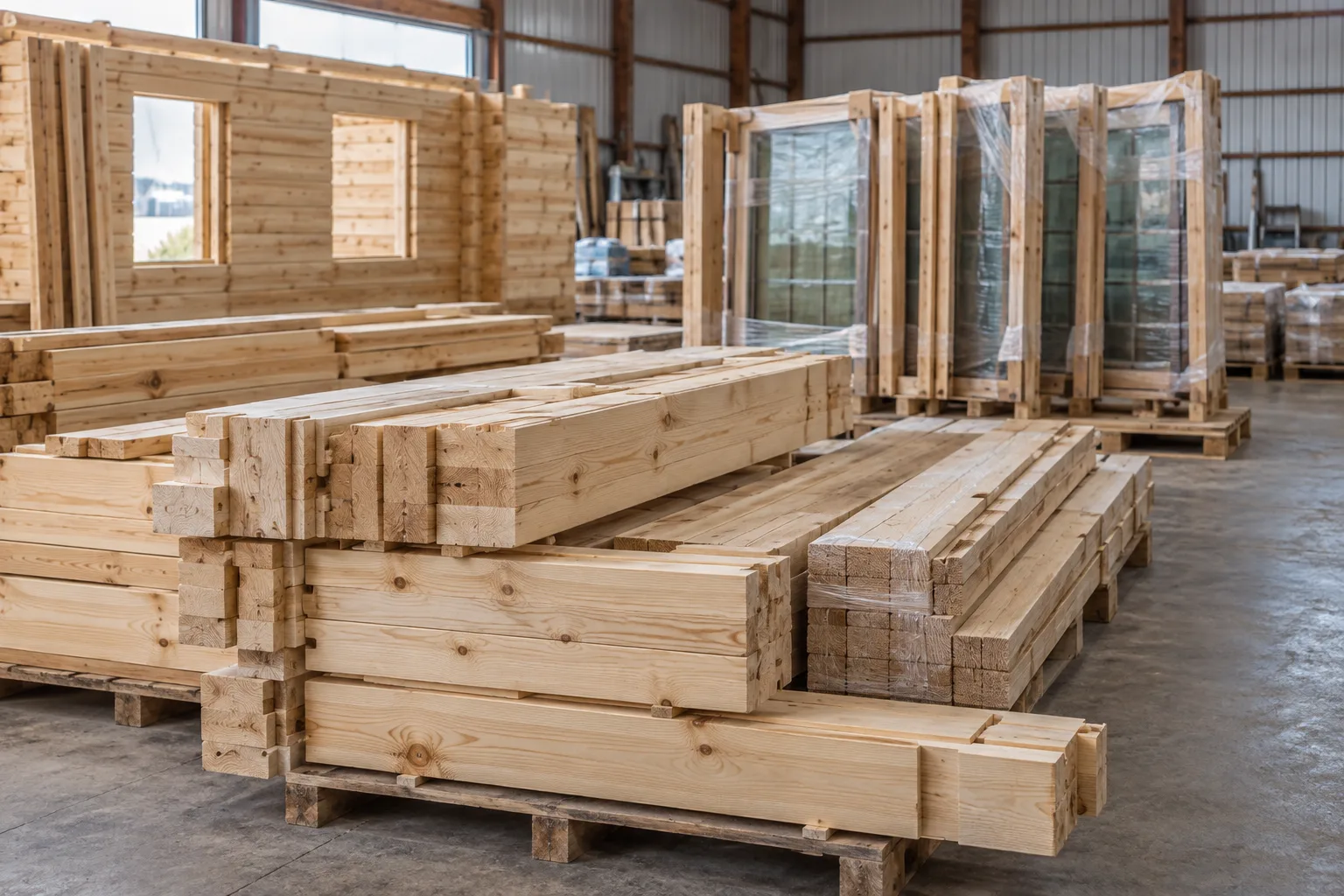
Request a component schedule covering the structure, roof, floor, windows, doors, insulation, lining, hardware and services. Mark what arrives installed, what arrives loose and what is excluded. An illustrated kitchen or bathroom may not be included. Ask the supplier to tie the schedule to the quoted drawing revision rather than a general catalogue description.
Identify the local trades and inspections needed to complete the package. A kit can suit a buyer with capable local contractors, but it is not automatically easier because its footprint is small. Access equipment, weather protection, service connections and skilled assembly can still be necessary. Ask the installer to review the supplied information before accepting the division of work.
For a hypothetical distributor comparing two packages, one may include preassembled wall panels while another supplies cut components. Compare the local assembly effort and inspection access, not only the number of packages. A more completed product may change the factory approval route or transport requirements. The buying decision should account for the whole delivery and completion process.
| Question | Component kit | More completed module |
|---|---|---|
| What is checked locally? | Review on-site assembly and components | Review factory evidence and site installation |
| How is it moved? | Multiple packages and protected storage | Module dimensions and placement plan |
| Who completes services? | Defined local trade scope | Factory work plus destination connections |
| Which records matter? | Parts, instructions and local acceptance | Manufacturing evidence and installation records |
| What does the price cover? | Named goods and exclusions | Named completion stage and exclusions |
4. Require a climate-specific proposal, not a continental label
A cabin intended for one region may not suit another without changes. Provide the actual site and ask the local design team to establish relevant wind, snow, seismic, energy and moisture requirements. Do not invent design loads from a map or use the supplier's strongest model as a substitute for assessment. The evidence must relate to the selected configuration.
Windows, roof layers and service arrangements should be reviewed together. A model called four season may still have unresolved foundation interfaces or water-service protection. Request the complete enclosure and equipment schedule, plus the assumptions behind any performance statement. A claimed R-value for one product is not a rating for the entire cabin.
Ontario's building-code guidance explicitly asks buyers to consider the destination conditions for factory-built homes. That supports the broader purchasing question, but the page's detailed standards and dates must be checked against current local requirements. Use the local designer's accepted brief to compare suppliers, and record any deviations before the order is released.
Further reading: Ontario: destination conditions for factory-built tiny homes; Review year-round cabin specification questions.
Turn these questions into a project brief
Send the state or province, municipality, intended use and preferred supply format. Ask for the documents available for local building and import review.
5. Check the Canadian wood-component requirements before shipping
The Canadian Food Inspection Agency published revised requirements for prefabricated building kits containing wood components, effective April 20, 2026. Its notice distinguishes characteristics such as processed material, thickness, bark or round wood and origin. That makes the actual component schedule important. Do not assume that a cabin's finished appearance or a seller's generic treatment certificate settles admissibility.
Use the Canadian Food Inspection Agency's Automated Import Reference System and qualified import support for the exact commodity, origin, destination and end use. The agency states that AIRS is a reference tool and that importers remain responsible for accurate information at importation. Recheck the applicable conditions near shipment because a saved search result is not permanent authorization.
Ask the supplier to provide the material and processing facts needed for that review. Identify any solid wood packaging separately from the product components. Keep the broker's classification and documentary requests tied to the actual shipment. This article does not assign a tariff code or tell you that a specific CabinWild package qualifies under any particular import condition.
Further reading: CFIA: 2026 notice for prefabricated building kits containing wood; CFIA: Automated Import Reference System.
6. Separate US product review from packaging compliance
The US Animal and Plant Health Inspection Service regulates imports of wood products and related materials. Ask an appropriate import professional to determine which requirements apply to the actual timber components and origin. Do not assume that an overseas cabin package is admissible because another buyer imported a superficially similar building.
Wood packaging has its own review. APHIS provides specific guidance for ISPM 15-compliant wood packaging entering the United States. A compliant crate or pallet does not certify the cabin timber inside it, and a product document does not automatically address every piece of dunnage. Ask the supplier and forwarder to reconcile both parts of the shipment.
Keep customs, plant-health and building acceptance separate. Goods may satisfy one process while still needing work under another. Before shipment, confirm who is the importer, which broker is appointed and what documents must accompany the consignment. Do not wait until arrival to discover that a required material identity or treatment record was never included in the purchase scope.
Further reading: APHIS: plant and wood-product import information; APHIS: wood packaging requirements.
7. Read tiny cabin kits with prices as scoped offers
Compare the same completion stage and currency. Separate goods, transport, destination handling, broker services, taxes, inland delivery, unloading, foundation, assembly and service connections. Ask for a current written quotation with its validity and assumptions. A displayed online price does not establish a final delivered cost or the local work needed to occupy the cabin.
Use actual professional estimates for uncertain items rather than filling gaps with optimistic numbers. A small kit may still require a substantial site or service project. Keep unresolved allowances visible until the relevant contractor or adviser provides a basis. No current price range is given here because the route, specification, site and local labor scope are unknown.
If comparing a domestic supplier with an overseas source, include the service differences honestly. Local document support, replacement logistics or installer coordination may be included in one offer and excluded in another. Neither location guarantees a better outcome. The useful comparison is the evidence and scope attached to the actual proposal.
Further reading: Build a comparable cabin quotation schedule.
8. Agree factory and destination verification before the order
Ask which factory testing and inspections are required by the chosen route and which are part of the commercial quality plan. California's housing department, for example, distinguishes factory inspection of factory-built housing from local inspection of installation. That is a state-specific example of divided responsibility, not a statement that California's process applies to every kit in North America.
For shipment inspection, verify identity, quantity, accessible condition and the document package against the approved order. Record exceptions before dispatch and decide how they will be closed. If a check cannot be completed safely or without disassembly, state the limitation and agree the later inspection point. Do not convert incomplete access into an unqualified passed label.
At the destination, retain the records required for the foundation, assembly and service work. Keep the final drawing revision with the building. If a local substitution is necessary, obtain the appropriate approval before it is installed. A component accepted at the factory can still be unsuitable when changed or connected differently on site.
Further reading: California HCD: factory-built housing and installation inspections.
9. Use a release checklist for the actual destination
Before releasing production, confirm the named site, intended use, selected supply format, document requirements and local completion team. Before shipping, confirm the importer, current documentary requirements, packing schedule and delivery readiness. These are separate decisions. A design discussion that went well several months earlier does not establish that the site and import arrangements are ready now.
For installation preparation, ask the contractor to review access, unloading, dry storage, foundation interfaces and service locations. Record who can stop delivery or request a change if conditions differ from the plan. The purpose is to make responsibilities visible before the goods are in transit, not to promise that an overseas project will have no delays.
After handover, keep the material, component and warranty references accessible to the operator. Clarify how replacement parts and technical questions are handled across the border. For repeated purchases, review the first completed unit before assuming the same configuration is suitable for another state, province or climate zone.
Practical buyer workshop
Keep a destination-specific decision file
For a buyer considering sites on both sides of the border, create separate destination files even if the preferred cabin model is identical. Each file should identify the local authority, professional team, importer responsibilities and current document requirements. Do not copy a favorable answer from one location into the other as though it were a product-wide approval.
A hypothetical Canadian enquiry might need further information on the timber components before the import review can proceed, while a US enquiry may still have unresolved local design questions. Those are different dependencies. Ask the supplier for the specific records each reviewer requests rather than a generic certificate intended to answer every issue.
Before comparing delivered prices, confirm that both proposals include the same cabin configuration and clearly named delivery point. Keep import release separate from local installation and occupancy acceptance. The final purchasing file should make it possible to identify which questions are closed, who supplied the answer and which assumptions remain. That discipline remains useful if the buyer later changes the destination or chooses a different kit supplier.
FAQ: North American tiny cabin procurement
Is a tiny cabin kit automatically a manufactured home?
No. The product's construction and legal classification must be established for the destination. Components, panels, modules and movable units can follow different routes. Ask the relevant authority and qualified professionals which requirements apply. A marketing term or a generic certification claim does not establish the classification of the actual package.
Can one Canadian approval be used everywhere?
Do not assume that it can. Identify the province or territory, municipality, intended use and applicable requirements before ordering. Supplier evidence may support review, but site installation and local acceptance still need attention. Confirm the scope and current relevance of any standard or certificate rather than treating it as universal permission.
Does ISPM 15 cover the entire cabin kit?
It concerns regulated wood packaging, not a blanket approval of every timber product in the shipment. Product components may have separate import requirements based on material, origin and processing. Ask the importer and relevant authorities to review both the goods and their packaging before the shipment is released.
Are online tiny cabin kit prices complete budgets?
Usually you must first establish the stated scope. Compare the current written offer with transport, handling, import costs, local construction, services and verification. Leave unknown amounts unresolved. A small footprint does not remove site-specific costs, and an advertised goods price is not necessarily the cost of completed, approved accommodation.
What information should a North American buyer send first?
Provide the state or province, municipality, intended use, site constraints and preferred kit format. Include any authority or designer document requests. Ask the supplier to identify available drawings, material records and exclusions. That creates a useful starting brief without implying that the product is already approved for the destination.
Conclusion: purchase for one verified destination route
Tiny cabin kits can be compared meaningfully once the destination, classification and completion responsibilities are clear. Keep local building review, import conditions, climate requirements and commercial scope separate but coordinated. Use current primary guidance and professional advice for the actual transaction rather than transferring another buyer's experience into a blanket promise.
Send CabinWild your US or Canadian destination and customer requirements through the inquiry form. Ask what package and documentation can be proposed for review by your local team. Confirm product availability, import arrangements and installation preparation before committing to the order.
Prepare your North American cabin inquiry
Send the state or province, municipality, intended use and preferred supply format. Ask for the documents available for local building and import review.
Prepared with AI assistance for CabinWild Editorial using the linked public sources. Examples are illustrative, not customer results or verified CabinWild test data. Project-specific design and local requirements need review by the appropriate professionals.