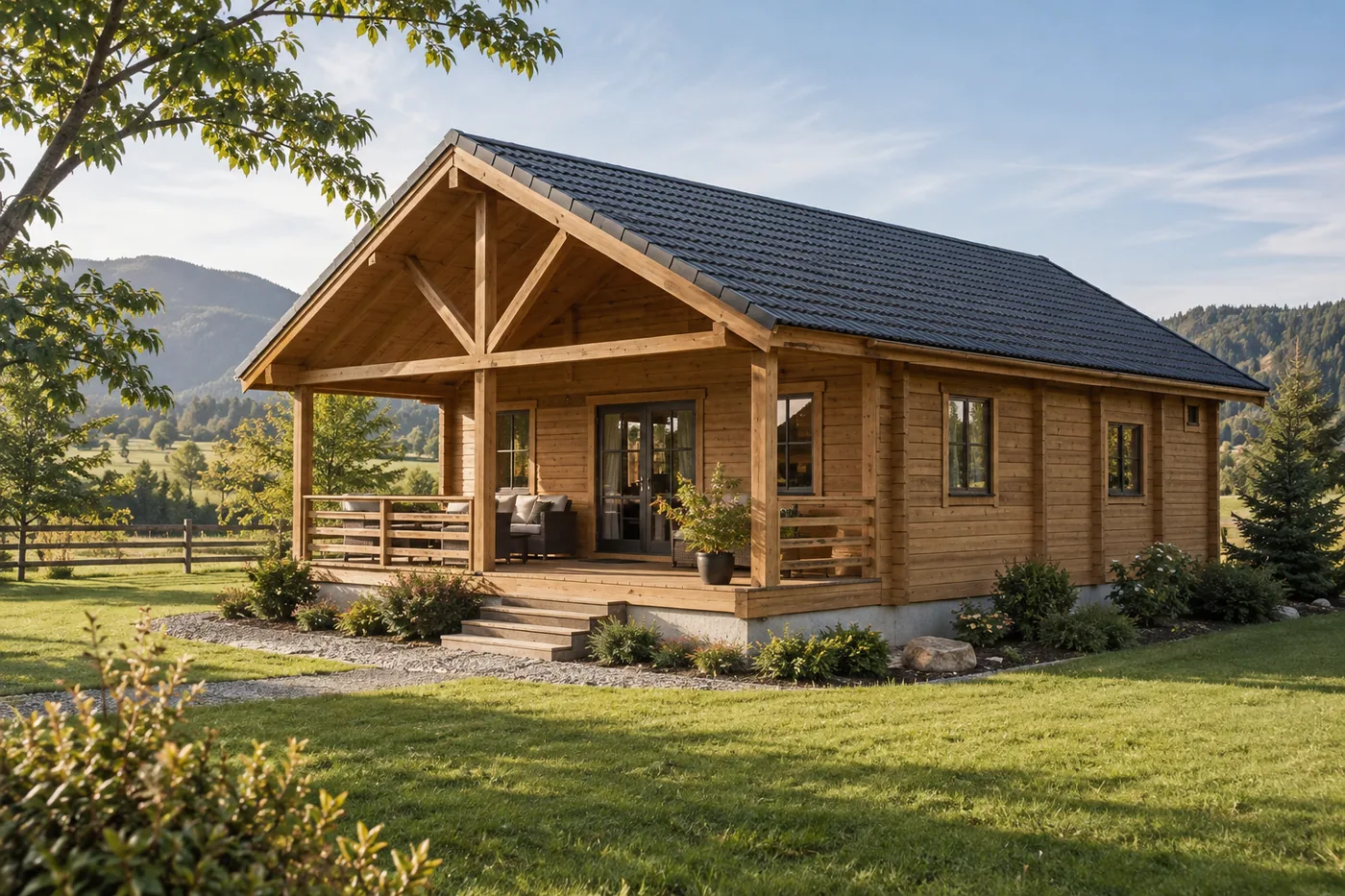
Review exterior cabin cladding as one part of a site-specific wildfire assessment. Ask competent local advisers to consider the roof, vents, openings, attachments, surrounding conditions and maintenance, then request evidence for the exact proposed assemblies. A coating, individual material rating or product name cannot establish that a complete timber cabin is suitable for every wildfire-exposed location.
Introduction: start with the site, then compare materials
A rural cabin buyer may ask for fire-resistant cladding while leaving the rest of the exterior package unchanged. The request sounds specific but may not answer the real project question. Roof edges, openings, vents, attachments and the surrounding site can matter to the complete review, and those interfaces may belong to different suppliers or contractors.
This article explains how to prepare a procurement brief where wildfire exposure is a relevant site concern. It focuses on the information and coordination needed before materials are approved. It does not give a wildfire design, describe a tested CabinWild assembly or claim that any timber cabin is fireproof.
Use competent advisers and the requirements applicable to the destination. The example agency source is from California and should be read in that scope. A tested material or local guidance example from one jurisdiction must not be transplanted into another project's approval process without the appropriate professional assessment.
1. Establish the local review before selecting a package
Provide the intended location, site plan, use and available hazard information to the responsible local team. Ask which assessments, product evidence and design requirements apply to the proposal. The buyer needs a clear information request rather than a general instruction to make the cabin more resistant.
Separate the supplier's building information from the site assessment. A manufacturer may describe the quoted exterior build-up, but it cannot infer the land's complete exposure from a scenic photograph. Record which party evaluates the surrounding conditions and which party coordinates any requirements that affect the cabin package.
If local review is not complete, identify the assumptions in the quotation and set a release gate. Do not approve a material substitution simply to maintain a production date while a relevant question remains unresolved. A delayed information decision should be managed openly rather than hidden behind an attractive exterior rendering.
2. Review the complete exterior interface map
CAL FIRE's home-hardening guidance describes vulnerabilities involving roofs, vents, gutters, siding and attachments, among other building features. Its California-specific classifications and examples are not universal prescriptions. The useful procurement lesson is to ask the local reviewer about the complete exterior arrangement rather than relying on cladding alone.
Create an interface map that links the roof, wall covering, openings, penetrations and proposed external additions. Identify who specifies each item and where the accepted detail is recorded. The cabin supplier and site contractor may need to exchange information before either package can be finalized.
Include the actual product application. A guest cabin, staff building and private garden room can have different use and management arrangements. Describe furnishings, equipment and external features relevant to the competent review, without assuming that an attractive rural accommodation concept already has an accepted safety strategy.
Further reading: CAL FIRE: home-hardening guidance and California context.
| Interface | Question for the local review | Supplier information to request |
|---|---|---|
| Roof covering and edges | Which complete roof arrangement is acceptable here? | Exact product and build-up with detail references |
| Wall covering | What evidence applies to the proposed assembly? | Material identity and relevant supporting reports |
| Vents and penetrations | How are openings coordinated with the enclosure? | Proposed components and interface details |
| Windows and doors | Which assembly information is needed? | Exact opening schedule and supplied configuration |
| Porches and attachments | Do additions alter the reviewed arrangement? | Connection and material scope with local responsibilities |
3. Read product evidence at the assembly level
Request the actual product name, manufacturer, model and relevant report for each claim being considered. Identify whether the evidence concerns a material, component, installation method or complete assembly. A document can be legitimate but still not answer the question posed by the local reviewer.
For cabin roofing materials, check that the quoted roof build-up corresponds to the configuration covered by the relevant evidence. The substrate, insulation, fixing method and interfaces may be part of that question. Have the competent reviewer decide applicability; the purchasing team should preserve the configuration and report references so the comparison is possible.
A statement about a coating should also be tied to the intended substrate and use. Ask for the instructions, limitations and any maintenance requirements relevant to the offered product. Do not infer that adding a treatment to wood cabin cladding upgrades the complete building to an unspecified fire rating or removes the need for site review.
Further reading: Compare cabin cladding as a complete system.
4. Coordinate roof choices with ordinary weather performance
The roof must be considered for the full destination exposure as well as any wildfire-related review. Rain management, wind, snow where relevant and ordinary maintenance access remain part of the design. A buyer should not substitute a covering based on one property while leaving its effect on the accepted roof arrangement unexplained.
When comparing log cabin roofing shingles or another covering, ask the supplier and local designer which exact products and installation details are proposed. Record any differences between the supplier's standard option and the locally required configuration. Price comparisons should include the corresponding substrate, interfaces and local work.
Review the scope of roof penetrations and accessories together. Later additions can change the arrangement that was initially reviewed. A service provider installing equipment after handover needs the relevant as-built information and an approval route for changes, rather than permission to alter the roof solely because the equipment is useful to the operator.
Further reading: Coordinate cabin roof material selection.
5. Assign the surrounding-site responsibilities
Ask the relevant site advisers to establish the required surrounding arrangements and management responsibilities. The cabin supplier's scope may stop at the building package, while the operator owns landscaping, storage and ongoing site maintenance. Record those boundaries so a building specification is not treated as the whole site's mitigation plan.
Consider how guest amenities and service activities affect the reviewed site arrangement. Outdoor furniture, storage areas or an added structure may be introduced after procurement. The operator needs a process for checking relevant changes with its advisers and keeping the actual property aligned with the accepted plan.
Allocate inspection and maintenance tasks to people who can perform them. An instruction in a report has little practical effect if nobody knows when to act or where to record a problem. Keep tasks specific to the project and seek competent input on access and safe work where specialist maintenance is required.
Turn these questions into a project brief
Send the destination, site review requirements and proposed cabin configuration. Ask CabinWild which material and assembly information can be provided for your qualified local advisers.
6. Translate customer requirements into a controlled order
Write the accepted exterior configuration into the quotation, drawings and component schedule. Identify the documents used by the local reviewer and any conditions requiring later confirmation. A sales description such as upgraded cladding should be replaced by the exact included scope and references.
Set a substitution process before production. If a component is unavailable, the proposed replacement should be assessed against the reviewed configuration by the appropriate party. Similar appearance or nominal thickness does not establish equivalent performance. Keep the decision and updated documents linked to the order.
Installation preparation should give local teams access to the final accepted information. State which interfaces are completed at the factory and which are assembled on site. The package needs enough documentation for the responsible teams to follow the intended arrangement and identify an exception before it is concealed by finishes.
7. Define what inspection can and cannot demonstrate
Factory records
Factory testing and inspection can document the specific checks agreed for the order, such as component identification or assembly observations. Request the configuration, method, date and exceptions in the record. These observations do not constitute a whole-building wildfire test or prove destination approval unless the evidence actually establishes that within its stated scope.
Shipment inspection
Verify that the exact accepted materials and components appear in the packing records and that supporting documents are included. Check substitutions against the approved change log. A photograph of a complete packed kit does not identify every product or establish that the final installed interfaces will match the reviewed details.
Site completion
Ask the competent project team to identify the necessary site checks and completion records. Compare the installed configuration with the accepted documents and resolve discrepancies through the responsible parties. Keep the building record separate from the operator's surrounding-site and emergency-management records while linking the relevant information between them.
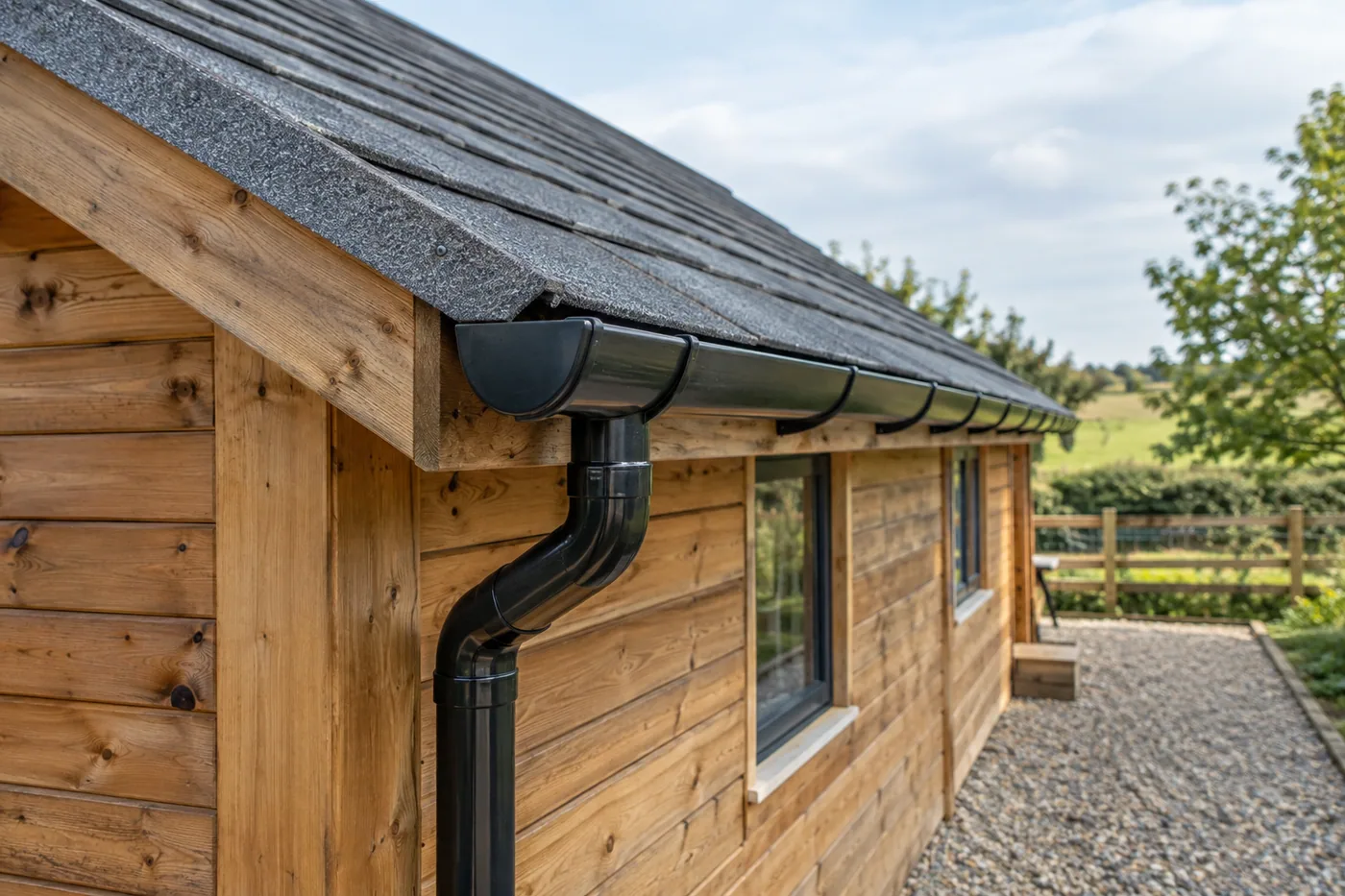
8. Keep maintenance connected to the accepted arrangement
Retain product instructions and the final exterior schedule with the owner. Ask the local advisers and relevant providers which inspections and maintenance are necessary for the actual arrangement. The operator should be able to identify the material and detail before ordering a replacement or approving a contractor's repair.
Record changes to exterior coverings, vents, accessories and attachments. A repair that improves appearance can still differ from the reviewed configuration. Include the relevant approval route in the service brief so a future contractor knows when a change requires more than the owner's aesthetic permission.
Buyers asking how to protect log cabin wood should distinguish durability care from fire-related suitability. Moisture management and finish maintenance have their own product requirements and do not establish a wildfire classification. Keeping those decisions clearly documented makes it easier for qualified reviewers to assess the intended function of each treatment or detail.
9. Evidence checklist for an exposed-site enquiry
- Provide location, intended use, site plan and the competent local review requirements.
- Identify the complete roof, wall, vent, opening and attachment interfaces.
- Request exact product identities and reports with clear configuration and scope.
- Have the appropriate local party assess whether the evidence applies to the proposal.
- Control substitutions through a recorded review before production or installation.
- Agree order-specific inspection records and site completion responsibilities.
- Retain maintenance instructions and a process for reviewing later alterations.
Use a claim register for exterior product proposals
For each performance statement being considered, record the exact wording, product identity, supporting source and intended application. Ask the competent reviewer what the document actually establishes. This prevents a distributor's general product description from being copied into the cabin contract as a stronger whole-building claim.
Preserve the configuration limits when comparing alternatives. A report may concern a specific substrate or assembly, while the supplier proposes a different build-up. The appropriate response is a request for applicability review or additional evidence, not an assumption that matching appearance or nominal thickness makes the systems equivalent.
When the final configuration is accepted, keep the relevant report references with the component schedule. Later maintenance and procurement staff can then identify why a particular item was selected and who should review a replacement. This is especially useful when a preferred product becomes unavailable and the project faces pressure to substitute it quickly.
The register should also identify unsupported statements that were removed or narrowed during review. Retaining that history makes it less likely that an old brochure phrase reappears in an operating manual or future quotation after the original technical reviewer has left the project.
Hypothetical decision worksheet: Wildfire Exposure Procurement Worksheet
A hypothetical buyer is considering timber accommodation on land in a region with identified wildfire exposure. A sales discussion focuses on exterior cladding, while the proposed roof, vents, openings and attached deck have not been considered together. The worksheet should start with local exposure and acceptance requirements, then trace them through the complete building arrangement and the maintenance practices the owner can sustain.
Compare the supplier's standard assembly, a locally reviewed revised assembly and a different site or placement option. A material change may improve one component while leaving vulnerable junctions elsewhere. A revised layout may reduce nearby fuel exposure but cannot itself establish building compliance. A different site can alter the feasibility discussion, though it also requires its own assessment. These are competing procurement paths for specialist review, not ranked technical recommendations.
Ask for a component and junction schedule covering roof covering, roof-to-wall interfaces, ventilation openings, glazing, cladding and attachments. Where a performance claim is made, request the evidence and confirm what assembly, installation and test scope it concerns. The local adviser should distinguish jurisdiction-specific requirements from general risk-reduction suggestions. The operator should explain how gutters, roof surfaces and surrounding vegetation will be inspected and maintained.
The unresolved decision is whether the required modifications belong in factory supply, site works or both, and who verifies their coordination. A vent solution must be considered alongside ventilation needs; an attachment must be considered alongside its connection to the building. The owner should avoid approving a single labelled product while other parts of the assembly remain undefined. Record the version of local requirements and the design evidence used.
Defer release when wildfire review is required but unavailable, when the offered assembly differs from the supporting evidence, or when operating maintenance is unrealistic for the site. Reject a fireproof claim. A reasonable release decision identifies accepted assembly details, remaining site responsibilities and a maintenance owner. It should also preserve the distinction between reducing vulnerability and guaranteeing survival in a wildfire.
Frequently asked questions
Can fire-resistant cladding make a timber cabin fireproof?
An individual material claim does not establish a complete building's suitability or make it fireproof. The relevant review considers the actual site, assemblies, interfaces and operating arrangements. Request precise evidence and have a competent local adviser assess the proposed configuration within the applicable destination requirements.
Can California guidance be used for another country?
It can provide context about questions to discuss, but its classifications and prescriptions belong to its stated jurisdiction. Obtain the requirements and professional review applicable to the actual destination. Avoid copying a detail or product label into an unrelated approval process without assessing its relevance.
Should a buyer choose a different roof covering first?
Establish the local review and complete roof requirements before comparing options. Ask for the exact covering, substrate and interface scope, including weather performance and maintenance. A choice based on one material property may leave other requirements unresolved or change the configuration covered by existing evidence.
What can a supplier reliably provide?
Within its confirmed scope, a supplier may provide exact product identities, drawings, component documents and order-specific inspection records. Ask what is available for the proposed package. Site hazard assessment, destination approval and operating mitigation need clearly allocated competent responsibilities rather than a general manufacturer assurance.
Conclusion: procure a reviewed configuration
Exterior cabin cladding belongs in a coordinated site and assembly review. Identify the relevant interfaces, preserve exact product evidence and translate local requirements into the purchase scope. Inspect the supplied and installed configuration, then keep maintenance and later changes connected to the accepted records.
Prepare your site exposure and material brief
Send the destination, site review requirements and proposed cabin configuration. Ask CabinWild which material and assembly information can be provided for your qualified local advisers.
Prepared with AI assistance for CabinWild Editorial using the linked public sources. Examples are illustrative, not customer results or verified CabinWild test data. Project-specific design and local requirements need review by the appropriate professionals.