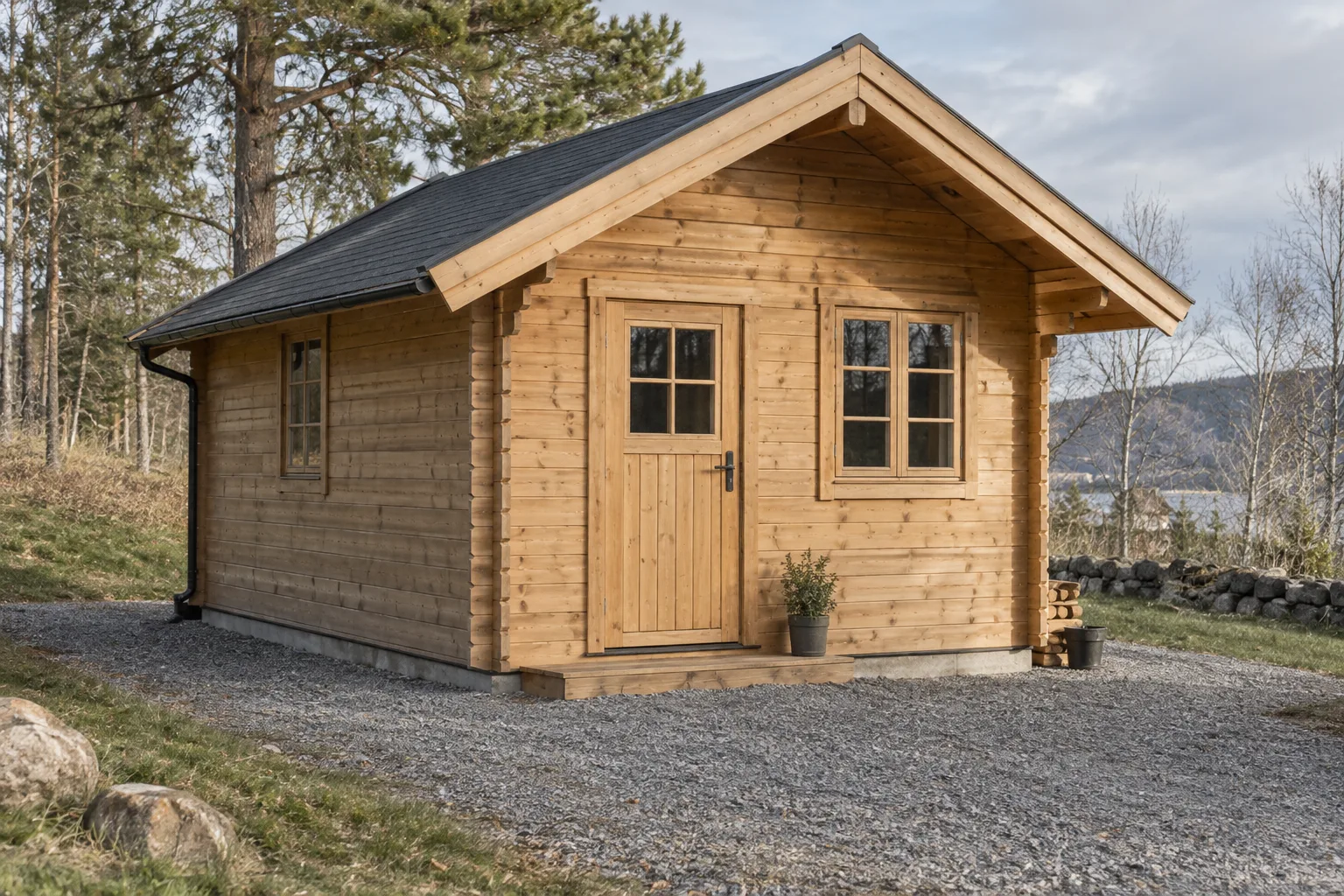
Small cabin kit prices describe only the quoted package. A complete project budget also needs destination review, foundations, freight, unloading, local completion and service connections. Some costs do not fall in proportion to floor area, so shrinking a plan may save less than expected. Compare scope-controlled options using actual quotations and keep unresolved allowances visible.
Introduction: a smaller footprint does not remove every project cost
A compact cabin can make good use of a limited site, but its budget should not be estimated by shrinking the cost of a larger building in direct proportion to area. Delivery still has to reach the site. A bathroom still needs a suitable service arrangement. Professional review and installation planning remain necessary even when the floor plan is simple.
This guide explains how to compare small cabin kits with prices attached to a defined scope. It does not publish market price ranges or promise a completed CabinWild building at a particular cost. The practical goal is a budget that distinguishes current quotations, provisional allowances and unresolved work before the buyer makes a purchasing commitment.
1. Write the minimum usable-building brief
Start with the activities and occupancy the cabin must support. Identify whether it is a garden workspace, occasional retreat, guest accommodation or dwelling. Describe the required rooms, furniture, services and expected season of use. The minimum useful building is not necessarily the smallest outline that appears in a catalogue.
Ask the relevant authority and local professionals to establish the project requirements. A compact building should not be assumed to qualify for an exemption or an easier approval route. In the United States, for example, HUD's manufactured-housing resources apply to a specific category, not every small prefabricated kit. Classification needs to be resolved before its cost consequences can be understood.
Separate essential functions from preferences. A covered outdoor area, special glazing arrangement or upgraded interior finish may be valuable, but it should not be mixed into the baseline without being identified. A disciplined brief allows the buyer to compare an adequate standard option with clearly priced alternatives instead of repeatedly changing the project during quotation.
Further reading: HUD: manufactured housing program scope; Test usable space in a compact cabin plan.
2. Divide the budget into package, site and completion layers
List the supplier's package price separately from freight, destination handling, site works and locally completed work. State the currency, quotation date and validity for each amount. A number copied from a website without the relevant inclusions is not a usable total-project estimate. Request the supplier's current scope before using the figure in an investment decision.
For each excluded item, name the party expected to price it. Foundations belong with the actual site design, not a guessed percentage of the kit. Service connections need a defined route and scope. Local labor should be based on the proposed package and assembly method. A missing quotation is an uncertainty to resolve, not a zero in the budget.
Keep professional fees, required inspections, relevant taxes and import costs visible where applicable. Their treatment depends on the destination and transaction. Have qualified advisers determine the actual obligations. This guide does not supply tax rates or customs classifications, and a general cabin description is insufficient to establish them.
| Budget layer | Evidence needed | Do not assume |
|---|---|---|
| Cabin package | Current itemized offer and drawings | Every visible item in a rendering is supplied |
| Freight and handling | Route-specific quote and named delivery point | Port arrival includes site unloading |
| Site and foundations | Reviewed design and contractor scope | Smaller area means negligible ground work |
| Services and fitout | Equipment schedule and connection proposal | Fixtures include installation and commissioning |
| Approval and handover | Destination review requirements | Delivery means permission to occupy |
3. Identify costs that are not proportional to floor area
Some project tasks have a substantial setup component. A delivery movement, contractor mobilization or service connection may still be needed for a smaller cabin. The actual amount must come from a quotation, but the budgeting principle is straightforward: reducing room area does not automatically eliminate the task.
Ask each provider what changes if the footprint is reduced and what remains the same. A smaller package could change freight arrangements, but it might still occupy a similar transport allocation. A shorter service route could help, while a smaller bathroom may use the same basic fixtures. Avoid assuming savings without checking the actual work affected.
Use this discussion to compare two practical options rather than endlessly minimizing dimensions. If a slightly larger plan improves storage and circulation without changing several major project tasks, the extra package cost may be worth evaluating. That is a project-specific tradeoff, not a claim that larger cabins always offer better value.
Illustrative comparison without invented prices
Consider two hypothetical layouts on the same site, one with a cramped entry and one with a more usable storage zone. Keep the bathroom, delivery route and intended use identical. Ask the supplier and local contractor to price only the actual changes. The exercise reveals which costs respond to the design and which do not. It is a comparison method, not a quoted CabinWild project or a forecast of savings.
4. Compare shell-only and more complete supply honestly
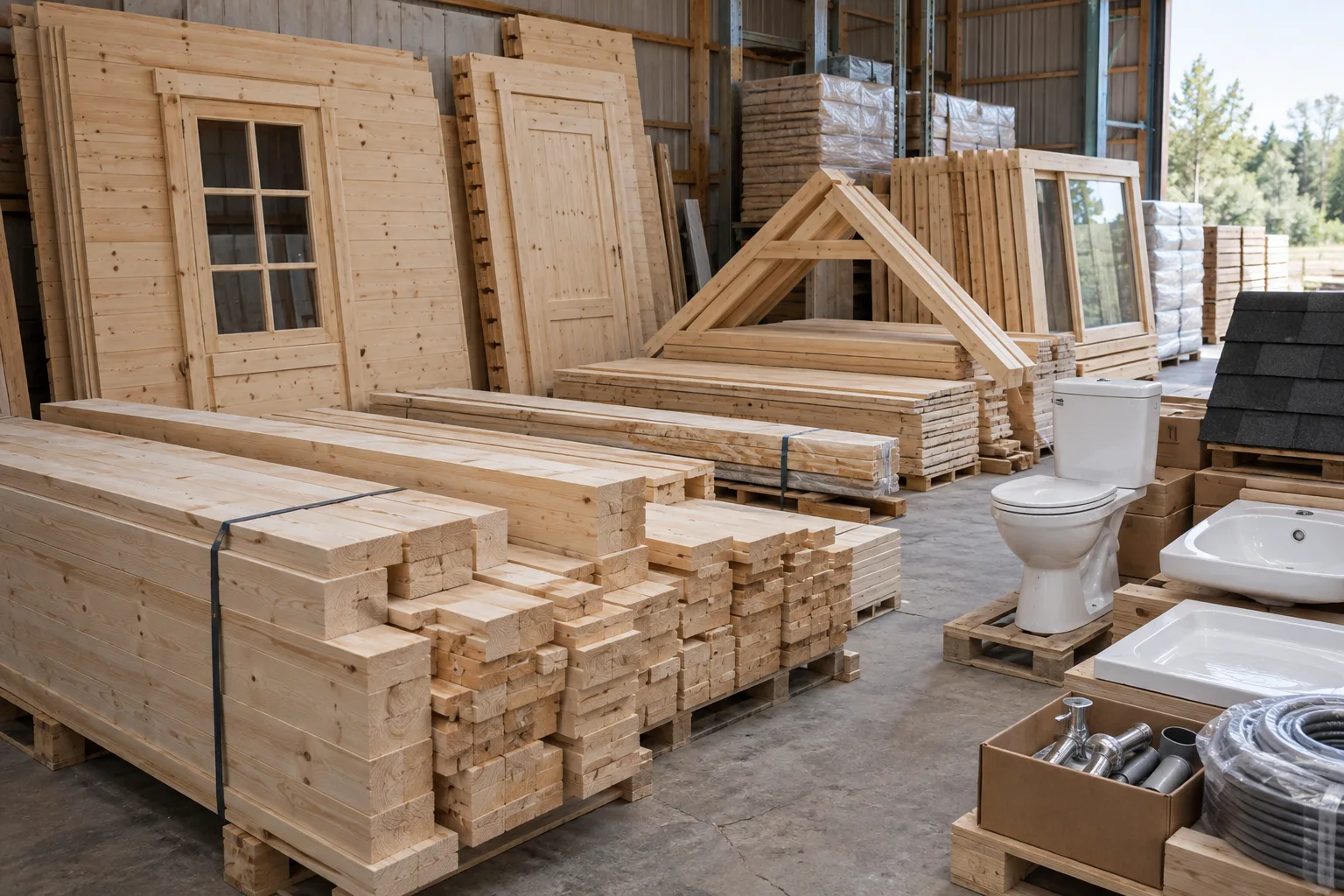
A shell package can suit a buyer with competent local trades and a clear completion plan. It can also transfer procurement and coordination work to the buyer. Ask what roof, floor, glazing, insulation and internal materials are included, and what must be sourced locally. Price the same completed result before deciding which package is cheaper.
A more complete kit should be examined with equal care. Supplied fixtures do not prove destination suitability, and a bundled material list does not guarantee installation services. Ask the local design and trade teams to review the components before ordering. Items that cannot be used as proposed can create additional work rather than convenient savings.
Use the quote-comparison guide to reconcile plan revisions and inclusion lists. For this compact-project budget, go one step further and assign a source to every remaining allowance. A supplier, contractor or adviser should be able to explain the basis of each amount. Keep an unresolved line clearly marked until that explanation is available.
Further reading: Reconcile prices with floor plans and inclusions.
Turn these questions into a project brief
Send your location, proposed use, compact layout and required supply scope. Ask for itemized inclusions and exclusions rather than an assumed completed price.
5. Review bathroom, kitchen and service decisions early
Wet services can influence a small cabin cost substantially because the decision reaches beyond the room itself. The team needs a suitable water supply, wastewater arrangement, ventilation and the relevant electrical work. The exact requirements and costs depend on the site and use. Do not select a bathroom layout first and leave the connection question until delivery.
For properties using an onsite wastewater system, EPA septic guidance is a useful starting point in the United States. The actual system and permissions require local assessment. An existing tank should not be assumed to accept additional use simply because it is nearby. Have the responsible professionals establish what the proposed cabin would require.
Compare the intended use with and without particular facilities only where both options are legitimate and practical. Removing a bathroom may reduce some work but make a guest accommodation concept unsuitable. The useful budget is the cost of an acceptable product application, not the cheapest shell that no longer meets the original requirement.
Further reading: EPA: septic systems and responsible management.
6. Protect essential enclosure performance when reducing cost
Do not use budget pressure to make unreviewed changes to weathering, insulation or structural components. Ask the design team to identify acceptable alternatives and explain their consequences. A cheaper visible finish may be a reasonable choice; omitting a required concealed layer is a different decision. The buyer needs to know which specification changes are merely aesthetic and which affect the building's operation.
EPA moisture-control guidance considers roofs, walls, foundations and building services as coordinated systems. That makes it a useful reference when evaluating a simplified compact design. A small building still needs a coherent moisture strategy. This article does not prescribe a universal assembly or claim a particular wall thickness will suit every climate.
Compare details that can genuinely simplify construction, such as a standard opening arrangement or fewer bespoke components, with the supplier and local designer. Ask for a revised quotation and drawing rather than accepting an undocumented promise of value engineering. Preserve a record of exactly what changed and why it remained suitable.
Further reading: EPA: moisture control guidance for buildings.
7. Price the actual route from factory to prepared site
The shipment needs to be described accurately before freight options can be compared. Request package dimensions, weights and the packing arrangement when available. Confirm whether the quotation includes inland transport, destination charges, unloading and temporary storage. A freight price to a port is not necessarily a price to the cabin's final position.
ICC's Incoterms rules help allocate specified delivery responsibilities and risks when correctly incorporated into the contract. Identify the rule, version and named place. They do not replace the need to define product quality, payment, installation and acceptance elsewhere in the agreement. Ask the appropriate commercial adviser to resolve unfamiliar obligations.
Prepare the site before agreeing dispatch timing. Unplanned storage, repeated handling or a failed delivery appointment can create costs that have little relationship to the cabin's small size. The contractor should plan safe unloading and access using the real package information. Do not assume ordinary garden access will accommodate a shipment merely because the finished cabin is compact.
Further reading: ICC: Incoterms 2020 rules; International Trade Administration: common export documents.
8. Keep allowances and contingency separate
An allowance is a placeholder for work that has not yet been fully quoted or specified. A contingency is provision for uncertainty within the defined project. Mixing the two can make the budget look more certain than it is. Label provisional amounts and record what information would allow each one to become a firm quotation.
Do not use a universal percentage from an online article as proof that the project has enough contingency. Ask the project team to assess the actual uncertainties, such as ground conditions, design changes, access or import handling. Record the basis for the chosen provision. The appropriate amount is a project decision, not a number this guide can responsibly prescribe.
Maintain a simple change log once a budget is approved. For each change, note the reason, specification revision, affected supplier and cost consequence. A series of individually small upgrades can change a tiny cabin cost to build materially. Seeing the cumulative effect makes the next purchasing decision more deliberate.
9. Budget for verification, defects and maintenance information
Relevant factory testing and shipment inspection should have a defined scope and cost responsibility. Ask which checks are included and whether any independent inspection is proposed. A budget should not assume that inspection will resolve unspecified design requirements. Establish the acceptance criteria before ordering so the evidence can be collected at the appropriate stage.
Retain final drawings, equipment information and maintenance instructions at handover. Ask how replacement parts are identified and who handles damage or missing components. These are practical ownership questions, not reasons to promise a particular service life. A low initial price should be evaluated alongside the ability to maintain the completed building.
Finish the comparison with a complete-building summary: confirmed quotes, allowances, exclusions, contingency and unresolved decisions. Include the date and scope revision. That document is more useful to a buyer than a single tiny cabin cost figure detached from its assumptions, and it can be updated as the project becomes better defined.
Practical buyer workshop
Use a scope-controlled option register
Keep the baseline budget unchanged while evaluating optional features. For each option, record the supplier price difference, the effect on local work and any additional review needed. This prevents a cheaper package price from hiding a more expensive installation change, or a small aesthetic upgrade from being confused with a required performance item.
For a hypothetical compact cabin, compare a standard window arrangement with a larger opening using the same location, use and finish schedule. Ask the relevant parties to identify all affected work rather than recording only the price of the window. The resulting difference is meaningful because the rest of the project is held consistent.
Give each option an accepted, rejected or unresolved status. When an option is accepted, update the baseline drawings and quotations together and retain the reason for the decision. The budget should then describe the chosen project, not a mixture of the original shell price and later unrecorded preferences.
Before ordering, review the unresolved list once more with the project team. Decide which items must be closed to proceed and which can legitimately remain provisional. A transparent budget can contain uncertainty; it should not conceal that uncertainty behind a single attractive small-cabin price.
FAQ: budgeting for small cabin kits
Why can a small cabin have a high cost per square foot?
Some project tasks, such as delivery, mobilization and service connections, do not shrink directly with floor area. The actual effect depends on the project and quotations. Compare complete-building scope and usable space rather than assuming a smaller footprint produces a proportional saving or that one unit rate explains every offer.
Does the kit price include foundations?
Only if the quotation explicitly says so and defines the relevant scope. Foundations require site-specific review and coordination with the cabin interface. Ask who designs, supplies, installs and verifies them. An image of a cabin on a finished base is not evidence that the base is included in the advertised package.
Is shell-only supply always the cheapest route?
Not necessarily. It may suit buyers with suitable local skills and procurement arrangements, but it transfers completion work and coordination to them. Compare the same usable final building with all local materials, labor and services included. A lower supplier invoice alone does not establish the lower project total.
How much contingency should I allow?
There is no universal amount this guide can responsibly assign. Ask the project team to assess the actual uncertainties and keep contingency separate from unquoted scope allowances. Record the basis and review it as surveys, design and quotations become available. Do not treat a generic percentage as evidence that every risk is covered.
What makes a small-cabin enquiry easier to price?
Provide the site, intended use, preliminary layout, service requirements, preferred supply boundary and access information. State which items are essential and which are optional. Ask for an itemized offer with exclusions and document requirements. Clear customer requirements reduce ambiguity even when some design decisions still need professional review.
Conclusion: compare the cost of a usable building
A reliable compact-cabin budget joins the package quotation to site work, services, logistics and completion. Identify costs that do not follow floor area, protect essential performance and label uncertainty honestly. The result should explain what the buyer receives and what remains to be arranged.
Send CabinWild your compact-cabin brief and ask for a clearly scoped quotation. Use that offer alongside destination professional and contractor proposals to build a complete budget before placing an order.
Request a clearly scoped small-cabin quote
Send your location, proposed use, compact layout and required supply scope. Ask for itemized inclusions and exclusions rather than an assumed completed price.
Prepared with AI assistance for CabinWild Editorial using the linked public sources. Examples are illustrative, not customer results or verified CabinWild test data. Project-specific design and local requirements need review by the appropriate professionals.