
Factory inspection for a multi-unit cabin order should follow approved drawings, material schedules and defined hold points. A useful plan separates incoming material checks, first-article review, in-process inspection, final function checks and shipment reconciliation, while recording nonconformities by unit and revision.
Introduction: the decision behind this buyer question
Factory inspection for a multi-unit cabin order should follow approved drawings, material schedules and defined hold points. A useful plan separates incoming material checks, first-article review, in-process inspection, final function checks and shipment reconciliation, while recording nonconformities by unit and revision.
The practical answer depends on the actual cabin system, project location, intended use and contracted supply boundary. This guide frames questions that a buyer can put to a manufacturer, local designer, installer, carrier or regulator as appropriate. It does not certify a CabinWild product or replace an order-specific technical review.
Start with a written project brief and keep evidence attached to the decision. The direct answer is: Agree a risk-based inspection and test plan with acceptance criteria, sample size, records, hold points and correction rules before production begins. Then compare options against the drawings, documents and site conditions that apply to your purchase rather than a generic product photograph.
Further reading: ISO: quality management principles overview.
1. Freeze the acceptance baseline
An inspector cannot judge a cabin from a marketing brochure. The accepted drawings, bill of materials, finish schedule, standards and approved deviations define the order. If these are inconsistent, a factory visit may produce many observations but no defensible acceptance decision.
Create a controlled document index with revision and issue date. Identify the cabin variants and unit numbers. Clarify whether a feature is factory complete, packed for site assembly or excluded. Give the inspector access to the same baseline used by production.
Mark critical characteristics such as structural connections, weathering details, glazing, services and safety-related hardware. The responsible local design professionals should define any required tests or approvals. Inspection does not substitute for design verification.
Do not release repeated manufacture until open technical questions are resolved or clearly held. If the supplier changes a drawing mid-run, identify exactly which units use each revision.
- Approved baseline is complete
- Unit and revision traceability exists
- Critical characteristics are marked
2. Check incoming materials and first article
Many defects begin before assembly: wrong species, size, finish, seal profile or hardware. A first-article review can expose mismatch before it is repeated across twenty cabins. The depth of review should reflect risk and contractual scope.
Ask for material identification and relevant supplier documents against the approved schedule. Inspect representative incoming lots and the first completed critical detail or unit. Record what was actually checked, by whom, when and against which criterion.
A test certificate for a purchased component should be tied to the exact product and application. Do not infer that the entire cabin is certified because one sheet is. If the first article differs, stop the affected work or record a controlled deviation under the plan.
Approve the first article only after corrections are verified. Photographs are useful but need captions, scale and unit or batch identifiers. A generic ‘factory testing’ photo cannot replace a signed inspection record.
- Incoming product IDs match schedule
- First article has explicit release
- Records identify batch and criterion
3. Inspect work before it becomes concealed
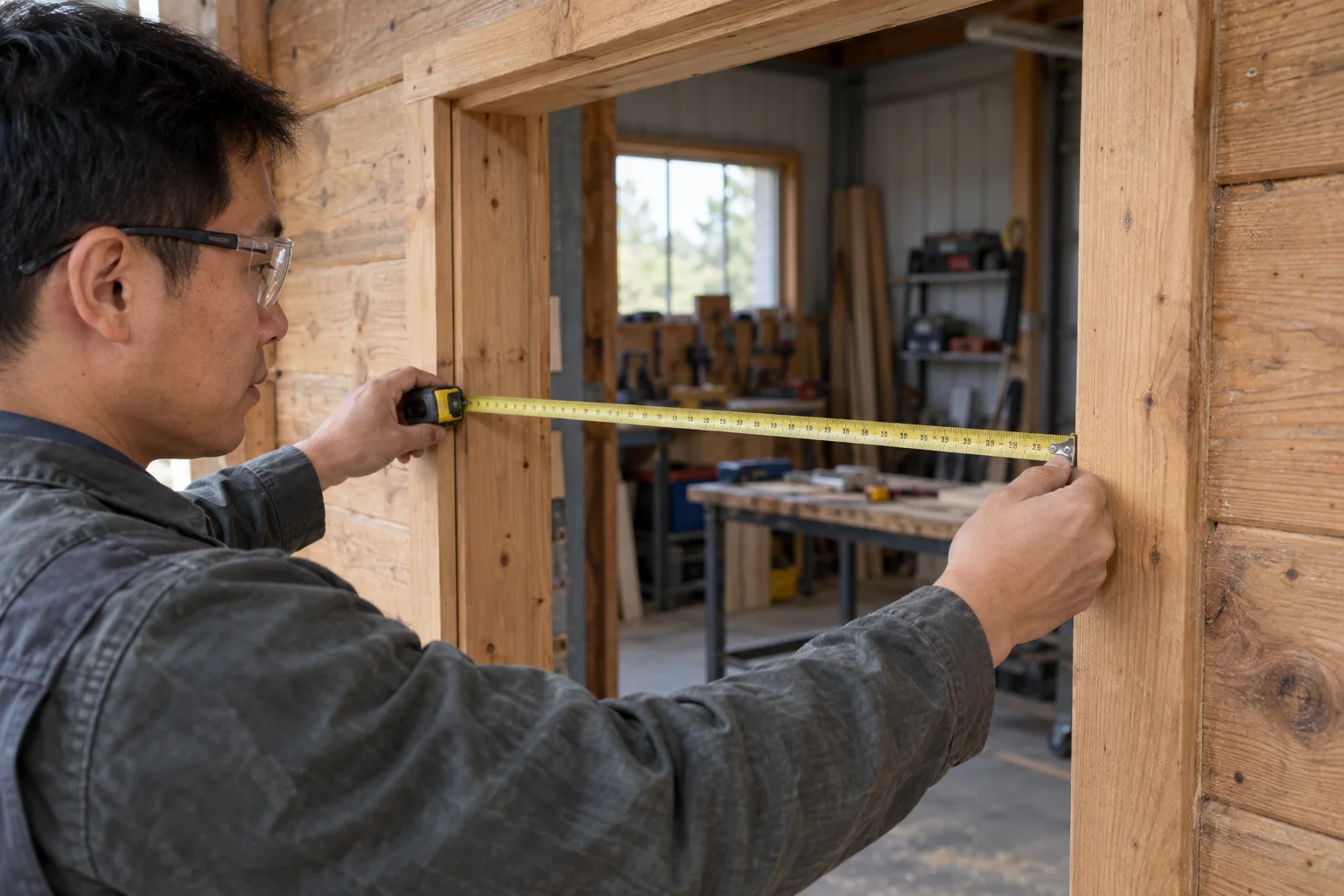
Weather barriers, fixings, insulation, wiring and pipework can disappear behind panels. A final external inspection cannot establish whether these elements are correct. Hold points belong immediately before concealment and should be practical for production flow.
List stage inspections on a traveller or digital record: frame, roof and wall layers, openings, services, finishes and packing. Identify which require buyer witness, independent inspection or supplier self-check. Do not demand a witness at every screw; focus on failure-consequential steps.
Take targeted photographs with location, unit ID, drawing revision and acceptance note. Where a test is specified, record method, instrument and result rather than a pass/fail slogan. Retain calibration information where measurement quality matters.
If inspection finds an issue, identify affected units and quarantine or rework as appropriate. A verbal assurance that ‘all later cabins were fixed’ needs evidence linked to unit IDs.
- Concealed work has hold point
- Photo and measurement records are traceable
- Nonconforming units are identified
Turn these questions into a project brief
Send CabinWild your destination, intended use, quantity and technical questions for a clearly bounded quotation.
4. Use samples and testing carefully
Sampling can efficiently check repeated items but does not guarantee that every unit is defect-free. A sound plan chooses sample frequency based on risk, process stability and contractual requirements. Critical safety items may need complete checking.
Define sample size, selection method, acceptance threshold and escalation before inspection. Separate dimensional, visual and functional checks. Test only under methods the factory can safely and consistently perform, and state what the test proves.
For example, a door operation check can find adjustment issues; it does not prove long-term weather resistance. A pre-shipment plumbing pressure check can verify a defined factory section; it does not include site connections. Keep scope explicit on the report.
Escalate when defects cluster by batch or station. Widen inspection and investigate cause rather than repeating a small sample until a pass appears. Agree corrective action and reinspection responsibility.
- Sampling plan is written
- Test scope is named
- Defect trends trigger escalation
5. Make nonconformities and concessions visible
A factory may propose repair, replacement or acceptance of a minor variation. Each is a decision with cost and performance implications. Hiding it inside a green checklist deprives the buyer and site installer of information they may need.
Use a register with finding, unit, part, drawing, evidence, proposed disposition, approver and closure proof. Have the competent design owner assess any change affecting structure, weathering, fire or services. Keep customer-facing concessions explicit.
Verify rework rather than assuming it was performed. If a finish is repaired, document the method and acceptance appearance. If a component is replaced, update material traceability and packing list.
A third-party inspection report is evidence of its stated sample and date, not a universal guarantee. Read limitations and retain the supplier's own process records where needed.
- Every finding has disposition
- Technical changes have design approval
- Rework is reinspected
6. Reconcile shipment and site handover
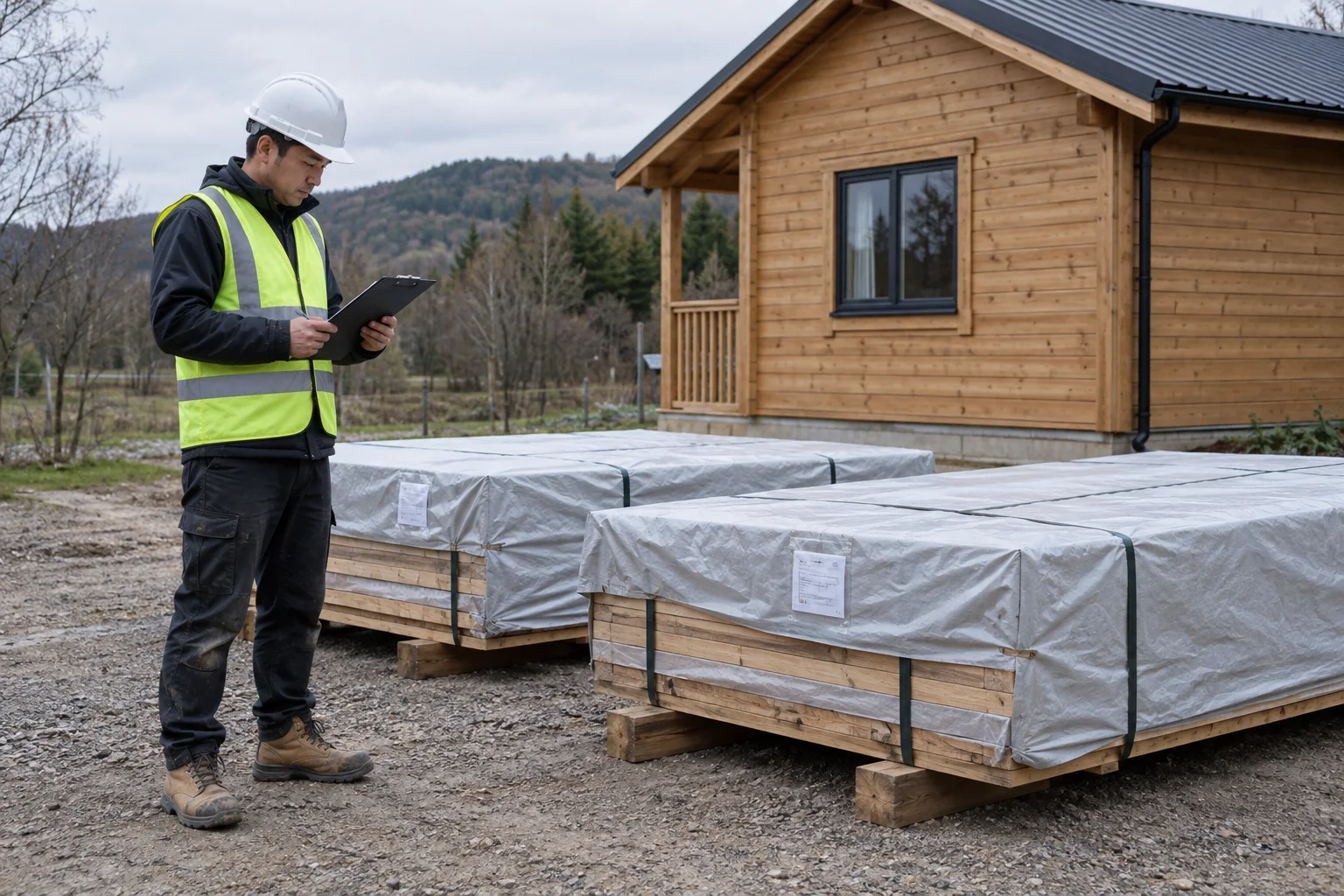
Final inspection should connect the finished unit with the package that leaves the factory. Loose hardware, manuals, seals and replacement items can be missed if production QA stops when the cabin looks complete.
Compare unit IDs, finished configuration, approved deviations, packaging IDs and packing list. Photograph visible condition before closure and record container or vehicle details at dispatch. Give the destination team lifting and opening instructions.
The site receiver must still inspect for transit loss or damage. Installation and commissioning then verify things factory QA cannot, such as anchorage, flashing continuity and functioning local utilities. Plan these as separate acceptance gates.
Close the QA file with an index accessible to the buyer: drawings, material decisions, tests, nonconformities, packing and maintenance. For the next batch, update controls using actual findings rather than assuming the first batch's pass rate will repeat.
- Pack list matches unit records
- Site inspection is planned separately
- QA file supports maintenance
A practical comparison and sign-off workflow
Set out the cabin factory inspection checklist decision in a review sheet before a purchase order is released. Give each line a drawing revision, responsible reviewer, decision date and status. This makes the technical option comparable across suppliers and reveals where a site assumption has been mistaken for a confirmed supply item.
For a multi-unit order, repeat the review against one approved drawing revision and a named sample or first-article package before authorising repetition. Put open questions in a log with an owner and due date. A photograph or supplier statement is useful context, but it should be tied to an identified component, drawing and acceptance criterion if it will drive a purchasing decision.
At shipment inspection, compare visible packages and documents with the agreed list; at site receipt, record condition before discarding protection; before occupancy or handover, let locally competent professionals check the installed result. These are distinct gates. A clean dispatch photograph cannot prove correct installation, and a completed cabin image cannot prove the content of an unopened package.
Further reading: Manufacturer selection checklist; Cabin arrival inspection.
| Decision gate | Buyer question | Evidence to retain |
|---|---|---|
| Freeze the acceptance baseline | Approved baseline is complete | Unit and revision traceability exists |
| Check incoming materials and first article | Incoming product IDs match schedule | First article has explicit release |
| Inspect work before it becomes concealed | Concealed work has hold point | Photo and measurement records are traceable |
| Use samples and testing carefully | Sampling plan is written | Test scope is named |
Common mistakes and how to avoid them
A common error is treating a catalogue phrase about cabin factory inspection checklist as an accepted technical requirement. Ask which drawing, component and intended use the phrase applies to. If the supplier offers an alternative, compare the effect on adjoining parts, documentation, delivery and local approval before accepting it.
Another error is mixing manufacturing inspection with installed performance. Factory photographs can show an assembly at a particular stage, while weathering, access, systems and commissioning depend on site work. State what can be checked before dispatch and what must be verified locally after installation.
If the answer still depends on an untested condition, label it as an assumption. Record who will verify it and when. Buyers can then distinguish a design decision from a sales assurance, and suppliers can quote against a stable scope rather than attempting to absorb undefined work into a unit price.
Illustrative buyer scenario: apply the checks in sequence
A hypothetical inspector finds a seal profile installed backwards on the first of twenty cabin wall units. The useful response is to identify affected unit IDs, stop concealment at that station, correct and recheck the first article, then inspect later units under the agreed plan. A final photo of one attractive cabin would miss the systemic risk. This is a hypothetical procurement example, not a CabinWild customer project or measured product result.
The first decision is freeze the acceptance baseline. Ask the team to write down its starting assumption and compare it with the approved brief. In this example, the first record to request is: approved baseline is complete. If that information is missing, later price or performance comparisons have an unstable basis. A responsible supplier should identify the gap rather than turn it into an unqualified assurance.
The next review concerns inspect work before it becomes concealed and use samples and testing carefully. For these stages, use the practical checks 'photo and measurement records are traceable' and 'sampling plan is written'. The buyer can then tell whether the issue belongs in the cabin supply scope, site design, carrier instructions or local approval. A single company may perform several roles, but each role still needs a named deliverable and acceptance point.
Before repeating the choice across the order, compare it with reconcile shipment and site handover. Ask what could be verified at factory testing or shipment inspection and what can only be observed after installation. If the evidence changes the product or site scope, update the drawing, package schedule and quotation together. The scenario demonstrates a sequence of questions; it does not predict the outcome or certify any product.
Documents to request before an order is released
For cabin factory inspection checklist, request a concise evidence packet rather than a broad promise. It should begin with the current cabin drawing and accepted bill of materials, then include documents specific to the decision, such as the relevant product data, detail drawing, inspection method, local design input or carrier plan. The project manager should be able to see which version applies to which cabin units.
Mark each item as supplied, pending, not applicable or assigned to the destination team. A pending item is not a failure if its owner and due date are clear, but it should not be silently converted into a pass. Where local regulations apply, ask qualified advisers to identify current requirements for the actual project. Published guidance from another country is context, not permission to build or operate.
Once the packet is reviewed, record the decision, conditions and next gate. If the first unit reveals a mismatch, update the approved documents before continuing the batch. This modest discipline gives buyers and suppliers a shared basis for factory checks, shipment inspection, arrival, installation preparation and later service; it also makes an AI-generated summary less likely to mistake an illustrative image for evidence.
- Approved baseline is complete
- Incoming product IDs match schedule
- Concealed work has hold point
- Sampling plan is written
- Every finding has disposition
- Pack list matches unit records
Frequently asked questions
Is a factory photo enough proof of quality?
No. It should be linked to unit, stage, drawing and acceptance criterion; photographs alone do not prove concealed or untested work.
Should every cabin receive the same inspection?
Define critical checks and a risk-based sampling plan before production. Some items may require every-unit checks; others can be sampled.
What is a first-article inspection?
A review of the first representative unit or detail against the approved baseline before repeating production.
Can factory inspection replace site inspection?
No. Transit, installation and local connections create separate risks and acceptance duties.
How should a defect be closed?
Record the affected unit, approved disposition, correction evidence and reinspection result.
Conclusion and next step
The strongest cabin factory inspection checklist decision is documented rather than inferred from appearance. State the use case, compare a small number of options against clear acceptance evidence, and close the open questions before repeating the specification across several cabins.
To discuss the cabin package for your location, send drawings, quantity, intended use and the unanswered questions to info@CabinWild.com. Ask for a clearly bounded quotation and document list. Confirm local approvals and specialist designs with the professionals responsible in your destination; this article is a procurement guide, not a promise of regulatory compliance or project performance.
Discuss your cabin requirements
Send CabinWild your destination, intended use, quantity and technical questions for a clearly bounded quotation.
Prepared with AI assistance for CabinWild Editorial using the linked public sources. Examples are illustrative, not customer results or verified CabinWild test data. Project-specific design and local requirements need review by the appropriate professionals.