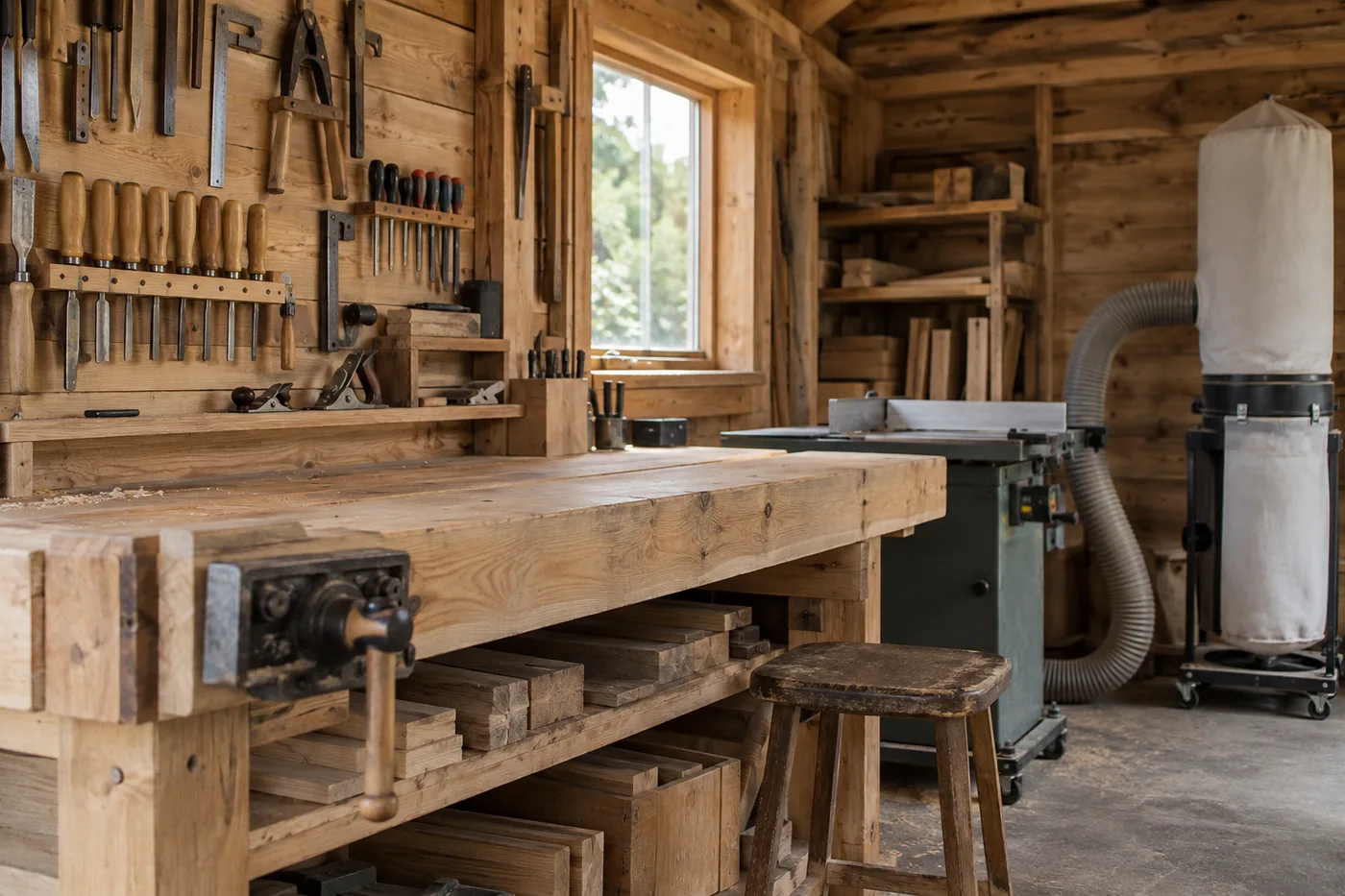
For a workshop garden studio, accept the extraction arrangement through its competent provider, then preserve the installed configuration, operating instructions and maintenance responsibilities. Identify the work and equipment the system was assessed for. A running fan, clean-looking room or completed cabin shell does not independently establish effective process control.
Introduction: focus on the system after it is installed
A workshop cabin may have an installed extractor, neat ducting and a completed electrical package while still lacking a usable handover. The owner cannot identify which operations the system covers, where the operating information is kept or who assesses a changed machine. A working-looking installation is not a complete ownership arrangement.
This guide concentrates on extraction commissioning, operating information and later changes. It complements the initial woodworking workshop layout brief by asking how the actual installed system is accepted and kept understandable. The building shell, specialist equipment and operator responsibilities need to stay connected after the construction team leaves.
The examples are hypothetical. This is not an extraction design, workplace exposure assessment or maintenance instruction, and no CabinWild system performance is claimed. Use the competent process-control providers, relevant manufacturer instructions and applicable local workplace requirements for the actual activities.
1. Establish the installed system identity
Begin with the configuration that the competent provider actually installed and assessed. Identify the relevant equipment, capture arrangements, connected machines and documented operating scope. Keep a clear distinction between a sales proposal and the completed system. A later technician should be able to identify the arrangement without reconstructing it from photographs.
Record the processes and materials that formed the basis of the specialist assessment. This is the baseline for deciding whether a future change needs review. It should not be expanded informally because another tool fits into the room or a hose appears to connect to an available port.
For a garden studio shed, link the extraction record to the actual cabin layout and equipment locations. A general garden studio design drawing may explain the room but omit the information needed to understand the process controls. Ask the relevant providers which final documents must be retained and who supplies them.
2. Request a purpose-based commissioning handover
HSE information for employers emphasizes a systematic approach to buying and using local exhaust ventilation, with relevant operating information, checking and maintenance. This Great Britain workplace source provides context; the actual system needs the competent assessment and applicable requirements for its destination.
Ask the specialist to explain what commissioning covers, which configuration was assessed and what limitations remain. The owner needs a readable record of the intended function and operating conditions, not an undefined passed label. Keep observations and results connected to the relevant equipment and scope.
Agree the handover before accepting the system into the intended operation. A fan running quietly or a room appearing free of dust does not independently establish the effectiveness of the controls. The appropriate competent provider should define the evidence and user information needed for the actual work.
Further reading: HSE: buying, using and maintaining local exhaust ventilation.
| Record | What it establishes | What remains a separate question |
|---|---|---|
| Installed configuration | Which equipment and connections are described | Whether an altered process remains suitable |
| Commissioning information | The assessed scope and relevant results | Unverified activities outside that scope |
| Operating instructions | How authorized users should operate the arrangement | Specialist diagnosis and maintenance |
| Service record | What work was done and which components changed | Future compatibility without provider review |
| Change decision | Who assessed the proposed alteration | Unrelated later additions or substitutions |
3. Verify access for the specified service tasks
Ask the provider to identify components requiring authorized checking, cleaning, replacement or specialist service. Review access with the real benches, storage and equipment in place. A filter unit accessible during installation can become obstructed once ordinary workshop furniture and materials occupy the room.
Coordinate the access arrangement with the cabin supplier where panels, cupboards or enclosure penetrations are involved. The required service function should be clear, while the relevant teams determine and accept the actual detail. Do not allow a future maintenance opening to be improvised without reviewing its effect on adjoining work.
Keep working access distinct from a place to store spare materials. The operator should know which areas must remain available and how an obstruction is reported. A service plan that relies on regularly dismantling unrelated fitout may be impractical even when it technically allows access on opening day.
Further reading: Plan separate studio and storage zones.
4. Define filter and collected-material responsibilities
Obtain the relevant equipment instructions and competent advice about the actual material collected. Assign tasks to the appropriate roles and identify any work that requires a specialist. This article does not prescribe a filter-cleaning method, disposal procedure or handling technique for an unspecified process residue.
Ask how replacement components are identified and which products are compatible with the assessed system. Similar appearance or a matching nominal dimension does not establish equivalence. Keep the exact accepted identity and any provider review in the record rather than letting an urgent purchase silently alter the system.
Where the studio also contains a bathroom or clean amenity, coordinate the relevant service and hygiene boundaries with the competent team. A backyard studio shed with bathroom facilities still needs a distinct process-control record. The existence of washing facilities does not establish that a particular maintenance or cleanup method is suitable.
Further reading: Define cabin bathroom and kitchenette service scope.
5. Define electrical, enclosure and equipment interfaces
Provide equipment service information to the qualified electrical and workshop design teams. They should assess the actual supply and installation requirements. Sockets in a standard office package do not establish suitability for the proposed machinery, simultaneous use or specialist equipment. Ask for the complete scope and applicable acceptance records.
Agree where routes and penetrations meet the cabin enclosure. The relevant providers need to coordinate the accepted detail and any effect on weather performance or other reviewed assemblies. Avoid allowing a later contractor to cut openings without access to the supplier's information and a clear approval route.
Ask about maintenance positions before enclosing equipment. Filters, controls and connection points may need regular access under the provider's instructions. The layout should allow the responsible person to perform authorized tasks without dismantling unrelated furniture or disturbing a finished wall each time a component requires service.
Turn these questions into a project brief
Send the location, proposed tools, materials and room-use requirements. Ask CabinWild which shell, layout and service-interface information can be provided for your competent workshop design team.
6. Preserve the review when machines or processes change
A new machine, material or working pattern can affect the basis of the original extraction assessment. Give the competent provider the proposed change before assuming the installed system remains suitable. A spare connection or a larger fan label is not a complete assessment of the altered process.
Keep temporary substitutions visible. A borrowed hose, moved bench or replacement component can remain in place after the original reason is forgotten. Record the change, ask the responsible provider what review is required and update the current configuration only after the relevant decision is made.
Connect changes to the building interfaces as well. An altered route or equipment position can affect service access, power or an enclosure detail. The process specialist and relevant cabin or site providers should coordinate their scopes so the operator does not inherit incompatible assumptions from separate contractors.
Further reading: Separate sound isolation from room acoustics.
7. Ask for scope-specific production and delivery records
Factory testing
Ask the cabin supplier which shell or provision checks can be performed before shipment. A measurement or assembly observation should identify the configuration and agreed scope. It does not establish extraction effectiveness, workplace exposure control or the acceptability of tools installed later. Keep supplier evidence separate from specialist process commissioning.
Shipment inspection
Verify supplied openings, provisions, accessories and instructions against the accepted packing and drawing records. Identify specialist equipment supplied separately and who receives it. A complete-looking delivery should not conceal an excluded service component or an unreviewed substitution that affects the final workshop layout.
Installation preparation
Provide the installer with the accepted workshop and service interface plans. Sequence building completion, equipment installation and relevant specialist testing so work is not concealed before it can be checked. If an activity or equipment choice remains unresolved, identify it as a release condition rather than declaring the workshop ready solely because the cabin is assembled.

8. Make the operating record useful to the next person
Ask an authorized user to locate the current instructions, identify the system and find the appropriate support contact using the handover pack. This retrieval exercise can reveal missing or ambiguous information without encouraging unqualified testing or maintenance. A document that only the original installer understands is a weak ownership resource.
Retain checking and service records through the provider-defined process. Describe observations accurately and separate them from an unverified diagnosis. Where a fault is reported, record the responsible decision, work performed and evidence needed to return to the intended operation.
Plan for staff and ownership changes. Transfer the current configuration, limitations, open actions and relevant access rights alongside the workshop itself. The next operator needs to understand which processes were assessed and who can review a change, rather than assume every activity suits the existing cabin ventilation system.
9. Workshop brief checklist
- Identify the installed system and processes covered by its competent assessment.
- Obtain readable commissioning information, instructions and configuration records.
- Verify access for the provider-defined checking and maintenance tasks.
- Assign filter, collected-material and fault responsibilities within competence.
- Review substitutions and new processes before altering the accepted system.
- Keep the current records usable when staff, contractors or ownership changes.
Build a handover index that identifies the current system
Use one index to connect the equipment schedule, relevant specialist reports, instructions and service history. Identify superseded proposals clearly so a user does not select a convenient old file as the current reference. A filename should help locate the information, while the content and status establish what it applies to.
Check retrieval with someone who was not responsible for the installation. Ask them to identify the provider, find the operating limits and locate the authorized fault-reporting route. This exercise does not test extraction performance; it tests whether the ownership information can support appropriate action when a question arises.
Keep specialist examination and maintenance records in their applicable scope. A routine operator observation is different from a competent technical assessment. Link the records without merging them into an undefined checked label. The distinction helps the next owner understand what was actually reviewed and what needs further professional input after a change or reported fault.
Keep the system boundaries visible
Ask the provider to explain how the owner recognizes missing or superseded information. A service report may describe a component before replacement, while a current equipment list identifies the newer item. Keep both with their dates and relationships so a technician does not unknowingly assess a configuration that no longer exists. Retain the current index in the agreed owner-controlled location.
Where the workshop uses more than one process-control arrangement, identify their boundaries in ordinary language. Staff need to know which instructions and reporting route apply to the activity in question. This record should follow the competent provider's actual scope; it should not invent permission to combine systems or move connections between machines. A clear boundary supports better questions when the operator considers the next change.
Hypothetical decision worksheet: Hypothetical handover: a new machine after the first installation
An illustrative owner has an operating timber workshop and an extraction system assessed for its original machines. A new tool is proposed, and the operator sees an unused connection that appears convenient. The building layout still works, but the team does not know whether the original process-control assessment includes the new activity. The useful decision is a competent review before treating the spare connection as permission.
One option is to retain the existing process until the provider assesses the change. Another is a revised specialist proposal with updated equipment or routes. A third is to choose a different activity or tool after reviewing the operational brief. The owner compares those routes with actual provider advice rather than assuming a larger advertised fan or a matching hose proves suitability.
The evidence pack includes the current configuration, relevant commissioning information, operating instructions and the new equipment data. The specialist identifies additional information needed and explains the scope of the assessment. If a route or access panel changes, the relevant cabin and local providers also review the affected enclosure, power and service interfaces.
The unresolved ownership question concerns future substitutions. The owner assigns a role to maintain the current component schedule, preserve service records and obtain provider review before an apparently equivalent filter, hose or machine is introduced. Authorized users receive the relevant instructions while specialist work remains with the appropriate competent team.
The proposed change is deferred while configuration information or the required review remains incomplete. It can proceed only through the accepted project process with the relevant decisions and operating records updated. This scenario is an editorial decision exercise, not a verified installation or a claim about extraction effectiveness, exposure levels or a completed CabinWild workshop.
Frequently asked questions
Does a running extractor prove effective control?
It demonstrates only that equipment is running under the observed conditions. The actual control arrangement needs the appropriate competent assessment and commissioning evidence for the intended process. Keep the configuration and limitations recorded rather than treating sound, visible airflow or a tidy room as a complete performance test.
What information should a workshop owner receive?
Request the assessed configuration, relevant commissioning information, operating instructions, checking and service responsibilities and the appropriate provider contacts. Ask the specialist to identify applicable local records or duties. Keep the current pack accessible to authorized users and distinguish it from an early sales proposal.
Can a similar filter be substituted?
Ask the relevant provider to confirm compatibility with the actual system and assessed use. Appearance or a nominal size match does not establish equivalence. Record the accepted replacement and any revised instructions so a hurried purchase does not silently alter the configuration or maintenance process.
When should the system be reviewed again?
Follow the competent provider instructions and applicable local requirements, and seek advice when equipment, materials, processes or connections change. The exact review depends on the proposal. A previous assessment for one activity does not automatically cover a new tool or a different collected material.
Conclusion: procure the workshop around the work
A workshop garden studio needs an extraction handover that remains useful after installation. Identify the assessed configuration, obtain the relevant operating and service information and preserve a competent change process. The building and equipment become easier to manage when the next operator can understand the actual scope without relying on the original project team.
Describe your workshop application
Send the location, proposed tools, materials and room-use requirements. Ask CabinWild which shell, layout and service-interface information can be provided for your competent workshop design team.
Prepared with AI assistance for CabinWild Editorial using the linked public sources. Examples are illustrative, not customer results or verified CabinWild test data. Project-specific design and local requirements need review by the appropriate professionals.