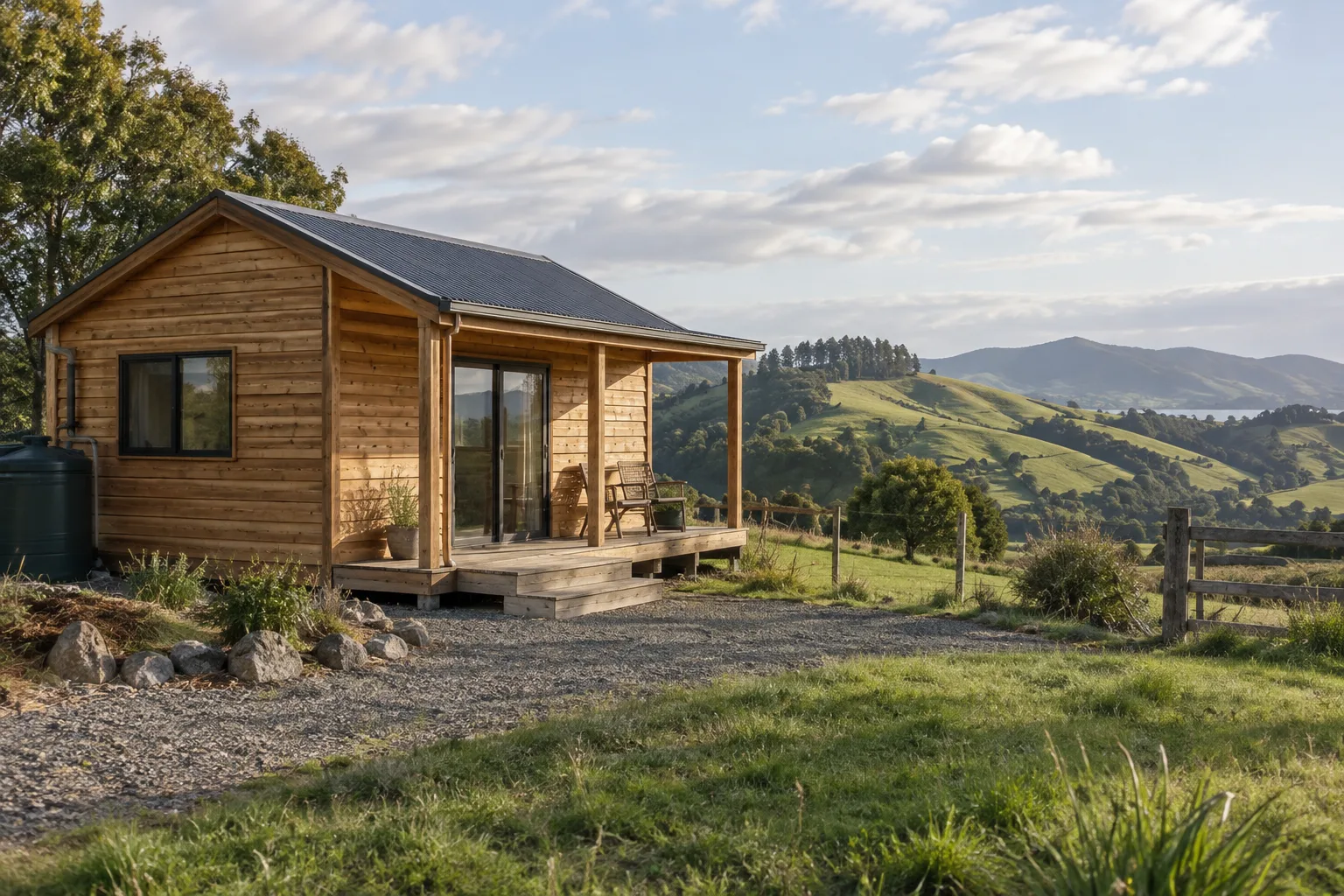
For flat pack cabins in New Zealand, confirm the intended use and site first, then coordinate MPI import requirements, the applicable building route and local assembly. A small footprint, a kit label or an exemption headline does not resolve every condition. Review the current rules for the actual product, services and location before releasing an overseas order.
Introduction: separate the shipment from the finished building
A buyer researching flat pack cabins NZ may be comparing an imported component package with a locally delivered room or a completed glamping pod. The products can look similar in search results while leaving very different responsibilities to the buyer. The useful comparison starts with what is supplied and what must happen between delivery and lawful use.
This guide is for New Zealand purchasers and distributors organizing that work. It is not a building-consent determination, an import-health ruling or a claim that CabinWild operates a local factory. All product availability and support must be confirmed for the actual order. Examples are hypothetical, and current advice from the relevant authorities and qualified local professionals takes priority over a general article.
1. Define the use before applying an exemption headline
Describe whether the proposal is a daytime garden room, sleeping accommodation, a self-contained dwelling or commercial guest accommodation. Include plumbing, cooking, occupancy and its relationship to existing buildings. These details can affect the applicable route. Do not change the description to make a preferred exemption appear to fit while intending a different use after delivery.
New Zealand's Ministry of Business, Innovation and Employment publishes tiny-house information covering consent, exemptions, sanitary fixtures and professional responsibilities. Its current guidance also points readers to granny-flat exemption information. That means an old statement that every small building follows one simple rule is not a reliable purchasing basis. Ask the local team to identify the current provisions and conditions relevant to the actual proposal.
Keep the outcome of that review with the order brief. If the building's use, size or services change, ask whether the original conclusion still applies. A supplier's drawing revision can introduce an assumption that the local review never considered. Resolve those changes before production rather than treating a consent discussion as a one-time formality.
Further reading: MBIE Building Performance: tiny-house considerations.
2. Review building and planning conditions separately
Ask the local adviser to identify the building route and any planning or site restrictions. A building-consent exemption is not a general statement that every other requirement disappears. Confirm what applies to the location, intended activity, site coverage, boundaries and service arrangements. Record who has checked each issue and which assumptions remain open.
MBIE's exempt-work information distinguishes different categories of work and professional involvement. Its guidance for detached buildings also directs readers to check district or regional planning implications with the council. Use those resources to frame a current local discussion, not to select an area threshold from an unrelated example and treat it as permission for a different cabin.
For backyard cabins NZ projects, obtain a site plan showing existing structures and the proposed position. Include access and service constraints that could affect the package. If the building is intended for paying guests, say so at the start. The product label garden cabin does not decide how the activity is treated at that particular property.
Further reading: MBIE: building work that may not require consent; MBIE: detached-building notes and local planning checks.
3. Compare a flat-pack kit with a completed pod honestly
Flat-pack packages distribute work between the factory and the site differently from completed pods. Ask what is delivered loose, preassembled or installed. Identify the local work for the floor, enclosure, services and finishes. Do not assume that a more completed product has no destination work, or that a kit automatically requires fewer approval documents.
For glamping pods for sale NZ enquiries, compare the same guest-ready scope. Does the pod include an ensuite, ventilation, hot water equipment and internal finishes, or only a shell? Where do the supplier's connections stop? A bathroom visible in an image may be an optional fitout, so request the actual fixture and service schedule before comparing prices.
Have the local contractor assess the delivery format. A completed module may require a placement plan, while a kit needs protected storage and assembly space. A restricted access route can make one format impractical, but the answer depends on actual dimensions and handling arrangements. Keep the choice tied to the site rather than treating flat pack or pod as a universal advantage.
Further reading: Compare glamping pod procurement scope.
| Decision | Flat-pack package | Completed pod or module |
|---|---|---|
| Site work | Assembly and completion scope | Placement and connection scope |
| Inspection access | Parts and work in progress | Factory evidence plus site interfaces |
| Transport | Package dimensions and protection | Module envelope and placement constraints |
| Services | Loose supply or local installation | Installed systems and connection boundaries |
| Quotation basis | Goods plus remaining work | Declared completion stage plus site work |
4. Establish MPI requirements for the actual wood products
New Zealand's Ministry for Primary Industries provides import guidance for wood products and other regulated goods. The applicable requirements depend on what is being imported, not simply the name cabin. Ask the importer to identify the relevant material and processing information, origin and current import-health requirements for the actual component schedule.
MPI's wood-product guidance points to treatment, packing and plant-health requirements. Obtain the records needed for the applicable route before shipment. A general statement that the goods are manufactured or kiln dried should not be treated as an import ruling. Have the import team confirm how the particular materials and documents satisfy the relevant conditions.
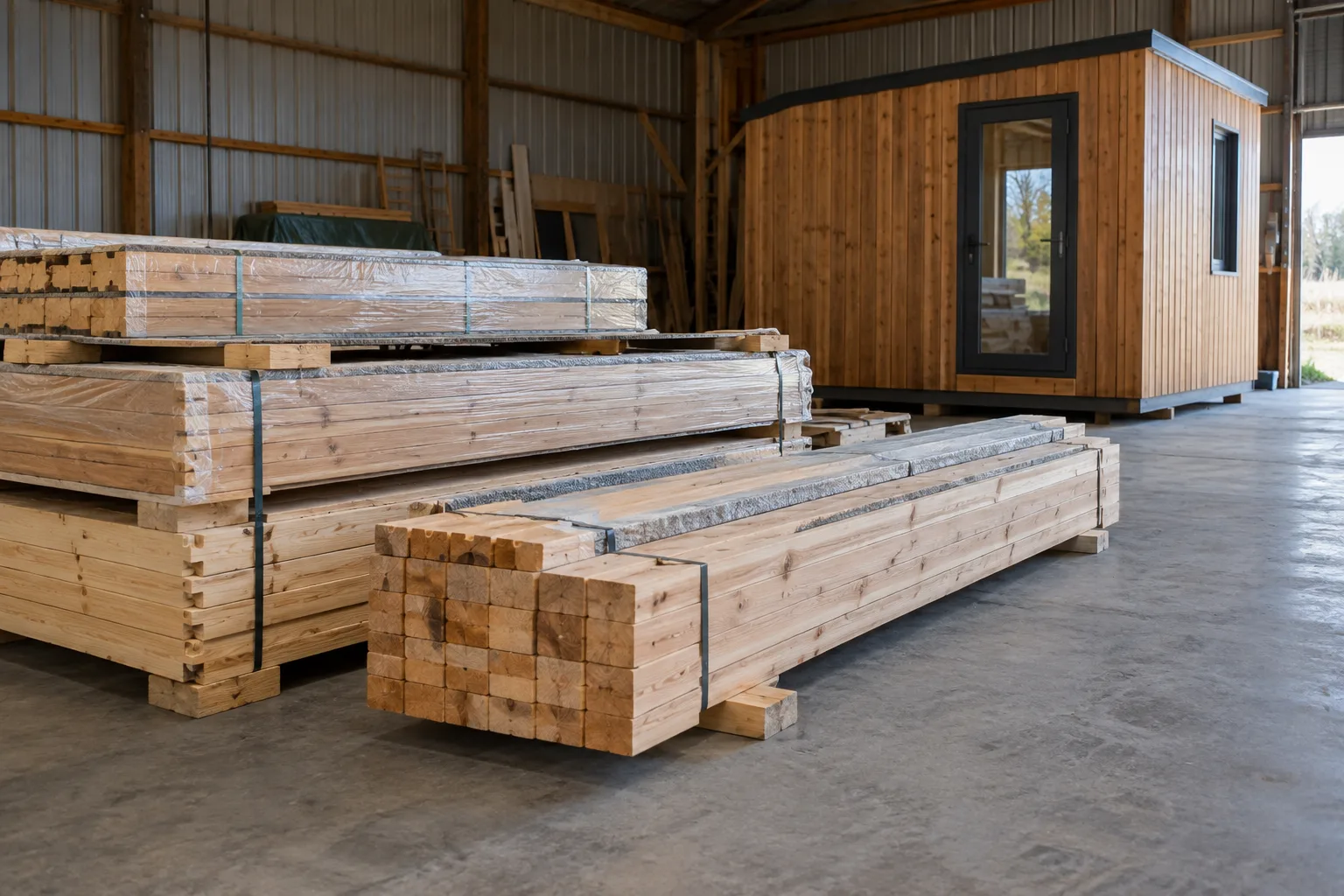
Keep the product and packaging reviews connected but distinct. Timber bearers or crates can have their own requirements even when they are not part of the finished cabin. If a supplier changes the packing arrangement, ask the importer to review it before dispatch. Do not rely on a certificate from a previous shipment without checking that it relates to the current goods and conditions.
Further reading: MPI: importing goods into New Zealand; MPI Ground Rules: importing wood products.
Turn these questions into a project brief
Send the location, intended use, services and preferred delivery format. Ask for a component schedule and the documents available for your local review.
5. Plan container and cargo clearance before arrival
MPI publishes a separate process for containers and cargo, including packaging considerations. Ask the forwarder and importer what declarations, inspection arrangements and destination handling are needed. A cabin component list and a container record serve different purposes. The shipment plan should bring both together without assuming that one document replaces every other requirement.
Confirm where the shipment will be received and what happens if examination or additional handling is needed. Ask who coordinates the response, where accessible goods can be safely inspected and how costs will be reported. Do not promise a fixed clearance time without a current professional basis. Retain a practical plan for delays that does not depend on leaving materials unprotected at the site.
Reconcile the packing list with the installation sequence. Packages should be identifiable so the local team can locate essential parts without opening every bundle at once. If multiple cabins are shipped together, distinguish common components from unit-specific items. Clear identification supports both arrival checks and construction logistics, especially when only part of the project is ready to receive materials.
Further reading: MPI: steps for importing containers and cargo.
6. Request evidence suitable for the New Zealand site
Provide the actual location and ask local professionals to establish the structural, energy, moisture and service requirements. Do not turn a general New Zealand climate description into a design load or construction detail. The supplier's evidence needs to relate to the chosen cabin configuration, while the local design addresses the site and its interfaces.
For garden cabins NZ buyers, clarify whether the intended use is occasional or year-round. Review glazing, shading, ventilation and heating together with the enclosure. A thicker wall alone does not establish the performance of the whole room. Ask which assumptions support the proposed package and which items require local selection or calculation.
If the cabin includes sanitary fixtures, coordinate the connection and disposal arrangements before finalizing the floor plan. MBIE's tiny-house information treats sanitary fixtures as a distinct topic, which is a useful reminder that a bathroom is not merely an interior upgrade. The competent local team must determine the actual building and service requirements.
7. Compare flat pack cabins for sale NZ by total responsibility
Request a current written quotation linked to the model, drawing revision and component schedule. Separate goods, freight, destination handling, import support, taxes, inland delivery, unloading, local construction and services. Ask which party is responsible for each line. A price advertised in another currency or for another destination cannot be treated as a ready-to-use New Zealand project total.
Keep uncertain items as allowances with an identified basis or as unresolved questions. Do not use zero for an unpriced task simply to make an offer look complete. Ask local contractors for estimates of the work they will actually perform. Small cabins can still need significant site preparation or services, so avoid scaling every cost directly from floor area.
Compare support as well as the package. Who answers a drawing question during assembly? How are replacements identified and shipped? Is a local installer included, recommended or entirely the buyer's responsibility? Confirm the actual arrangement rather than assuming that the presence of New Zealand in a search result establishes a local service network.
Further reading: Reconcile cabin plans and commercial offers.
8. Agree verification before production and dispatch
Specify what factory testing is relevant to the order and what records the buyer will receive. A dimensional check, material identity review and a performance test answer different questions. If a destination reviewer requires particular evidence, establish that requirement before the factory closes or packs the relevant component. Do not replace a missing record with an unsupported general quality claim.
Shipment inspection should check the approved goods, accessible condition, quantities and documentation. Record exceptions with package references and agree how they will be resolved. If the inspector cannot see a concealed item, state that limitation. A photograph of an unopened bundle is useful for packaging condition but cannot prove the condition of every piece inside.
For repeated purchases, retain a first-unit review of both the supply and local assembly process. Identify which changes improve handling, instructions or maintainability, and approve them before the next release. Do not assume that a configuration accepted for one property can be repeated at another site without reviewing the local requirements.
Further reading: Organize a cabin arrival inspection.
9. Close the site and operating responsibilities
Installation preparation should confirm access, foundation interfaces, storage, service locations and the local team's readiness. Compare those arrangements with the final supplier drawings before shipment. If the site changes, update the relevant documents and responsibilities rather than expecting the installer to improvise around an outdated plan.
At completion, retain the records required by the applicable route together with the supplier's maintenance and component information. Identify unresolved defects and any conditions on use. Do not describe the cabin as ready for occupancy solely because its interior is finished; the responsible parties must close the relevant building, service and commercial requirements.
For guest accommodation, plan the handover to the operator as well as the contractor. Controls, maintenance access, replacement part references and guest-use limits should be understandable after the construction team leaves. A useful procurement process ends with a maintainable, documented building, not merely a successful delivery photograph.
Practical buyer workshop
Review the consent and import assumptions together before release
Create a one-page project status record showing the selected product format, actual site, intended use and the outstanding questions for each reviewer. A flat-pack kit and a completed pod may create different handling and documentation tasks. Do not assume that choosing the more finished product removes the need for local review or service coordination.
For a hypothetical buyer changing from a dry garden room to accommodation with sanitary facilities, pause the configuration decision long enough for the local team to reassess the implications. The relevant current rules and project details govern the answer. This guide does not declare either proposal exempt or require a particular consent route without that review.
Ask the supplier to confirm which drawings and component information can be provided for the actual chosen model. Ask the importer to confirm what the final consignment description must contain. The two requests should converge on one controlled specification rather than separate versions prepared for marketing, clearance and construction.
At dispatch release, record which dependencies have been resolved and which site tasks remain. Keep delivery planning realistic about access and storage. The objective is a traceable handover from purchasing to installation preparation, not a claim that a single checklist proves the cabin's compliance or suitability for every New Zealand location.
FAQ: sourcing cabins for New Zealand
Does a small cabin always avoid building consent?
No blanket answer is reliable. Current exemptions have conditions and may involve specified professionals, uses or building arrangements. Identify the applicable route with the relevant local team and check planning implications separately. Do not rely on an old area threshold or a supplier's general statement for a different proposal.
Does a completed glamping pod need no local work?
It can still require placement, foundations or supports, service connections, inspections and other site-specific work. Ask for the actual completion scope and local responsibilities. Compare a pod with a kit on the same guest-ready basis rather than assuming a finished interior means every installation and operating requirement is already resolved.
What does MPI need to know about the timber?
The import review needs the actual product and material facts relevant to the applicable conditions, including processing and origin where required. Have the importer identify the current requirements and supporting documents. Review packaging separately. A cabin model name or generic treatment statement is not enough to establish the correct import route.
Can I use another buyer's New Zealand approval?
Do not assume it applies to your site, use or configuration. Supporting product evidence may be relevant, but local conditions and the actual proposal still need review. Confirm the scope and currency of every document. Changes to the layout, services or construction can alter the questions that must be answered.
What should my first enquiry include?
Send the New Zealand location, intended use, service requirements, preferred supply format and site constraints. Include any local adviser or importer document requests. Ask for a component schedule, available evidence and explicit exclusions. Confirm the delivery and local completion plan before committing to production or shipment.
Conclusion: connect the kit, the import route and the site
Flat pack cabins NZ purchases are easier to evaluate when the goods and the finished building are treated as connected but separate responsibilities. Clarify the intended use, current local route, MPI requirements and completion scope. Keep document revisions and unresolved assumptions visible until the responsible parties have reviewed them.
Use the inquiry form to send CabinWild your New Zealand destination and customer requirements. Request a proposed cabin package and the records available for your local advisers. Confirm availability, installation preparation and import arrangements before releasing the order.
Prepare your New Zealand cabin brief
Send the location, intended use, services and preferred delivery format. Ask for a component schedule and the documents available for your local review.
Prepared with AI assistance for CabinWild Editorial using the linked public sources. Examples are illustrative, not customer results or verified CabinWild test data. Project-specific design and local requirements need review by the appropriate professionals.