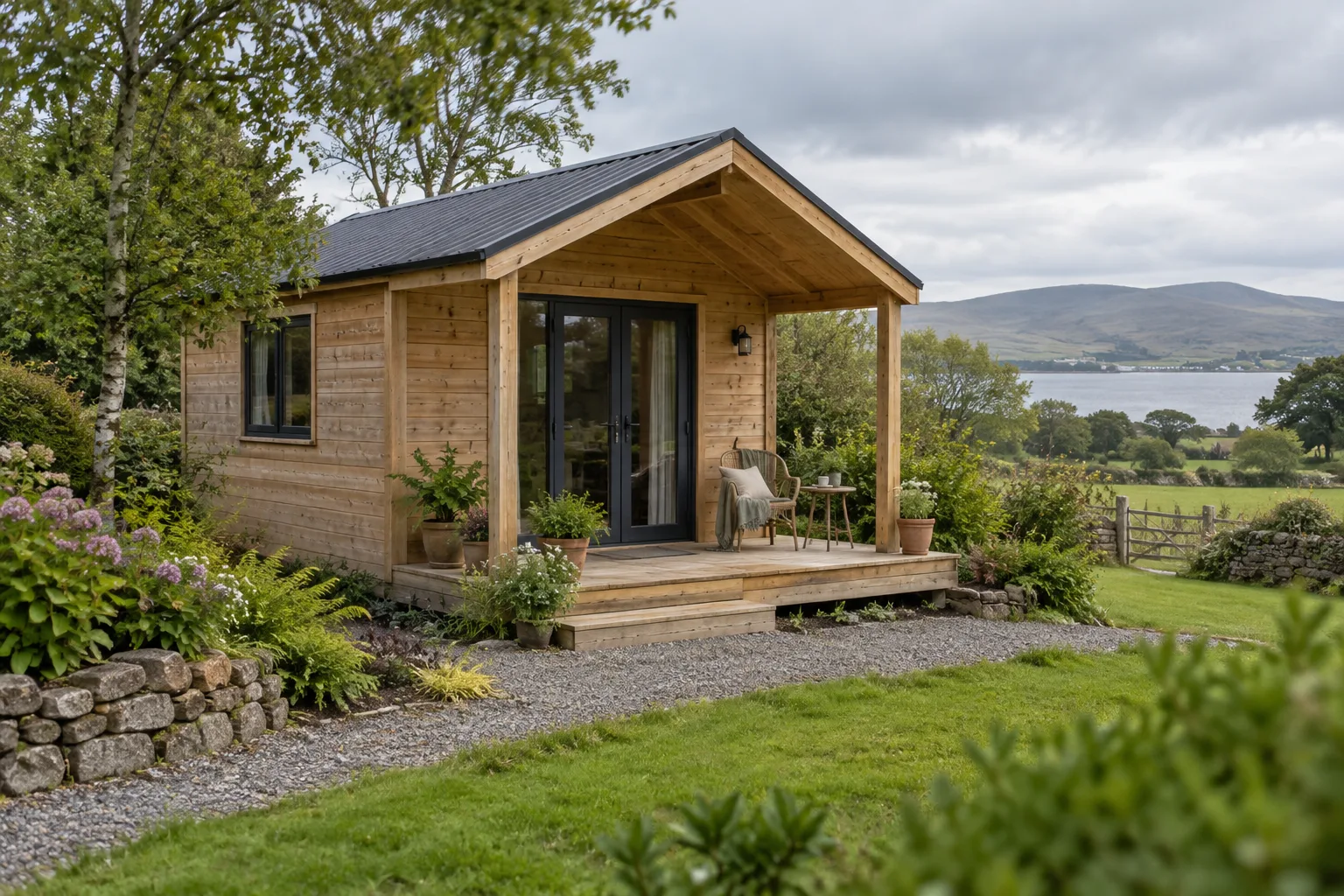
For a cabin project in Ireland, compare the same intended use, completion stage and delivery responsibility before choosing a supplier. Review Irish planning and building requirements separately from customs and plant-health conditions. An imported kit, a locally coordinated cabin and a finished pod can leave different tasks to the buyer, even when their photographs appear similar.
Introduction: the supply route matters as much as the cabin shape
A buyer searching glamping cabins for sale Ireland may find local installers, imported component kits and completed pods in the same results. Their prices can refer to different completion stages, and their supporting documents may answer different questions. Choosing the right route means identifying who will coordinate the building, the shipment and the local work.
This guide concerns projects in Ireland, not a transfer of UK planning or import assumptions. Northern Ireland requires a separate jurisdiction-specific review. It is a purchasing framework rather than legal advice or a finding that a particular site can be developed. CabinWild does not claim an Irish factory, completed local project or approved model here; confirm the proposed supply and support directly.
1. Describe the actual use of garden cabins Ireland projects
State whether the proposed building is a home office, occasional garden room, sleeping accommodation, a dwelling or a commercial guest unit. Include the intended kitchen, bathroom and service arrangements. The name garden cabin does not establish the planning or building treatment. A product can be sold for several applications while the actual site proposal needs one precise description.
Identify the relationship with the existing property and any other development. A single garden room and several rented units are not interchangeable purchasing briefs. Ask the local planning professional what information is needed to assess the proposal. Avoid ordering first on the assumption that a small footprint or timber construction creates an automatic exemption.
Keep future intentions visible. If the buyer hopes to convert an office into accommodation later, discuss that possibility during the review rather than treating it as a harmless furniture change. The first purchase should not depend on an unverified future use. A supplier can propose physical options, but the relevant local process determines whether the intended development is acceptable.
2. Check current exemptions instead of repeating old thresholds
Irish planning exemption information changed during 2026. South Dublin County Council's July 2026 notice points to the new regulations and relevant categories. Use current primary guidance and have the local adviser examine the actual conditions. This article deliberately does not present one area limit as a universal permission for garden cabins or glamping accommodation.
Ask which restrictions and site facts matter to the proposal, and whether a formal determination or application is appropriate. Keep the answer tied to the actual use and drawings. A statement about a domestic garden structure should not be stretched to cover commercial visitor accommodation simply because the building has a similar exterior.
Save the date and basis of the planning review. If the layout, occupancy or site arrangement changes, confirm whether the earlier advice still applies. A buyer comparing suppliers should issue the same approved brief to each one rather than accepting a more attractive package that quietly changes the proposal under review.
Further reading: South Dublin County Council: July 2026 planning exemptions.
3. Keep building-control evidence separate from planning
Irish government guidance explains the building-control framework and provides Technical Guidance Documents associated with the Building Regulations. Have the local professionals determine what applies to the actual project and which evidence is needed. A planning exemption or permission should not be described as proof that the selected cabin construction meets every relevant technical requirement.
Ask the supplier for the documents needed to support that review: drawings, component descriptions, structural information and relevant performance records. Identify which items can be supplied and which require local design. A certificate with a broad title is not enough if its scope, issuing body or relationship to the selected model is unclear.
For repeat accommodation units, standardize the document package without assuming every site is identical. The same cabin design may meet different ground, access or exposure conditions. Have the local team review the interfaces and record any changes. Keep factory information and site-specific work coordinated so a later substitution does not invalidate the basis of review.
Further reading: Irish government: building control; Irish government: Technical Guidance Documents.
4. Compare flat pack cabins Ireland offers by the work left on site
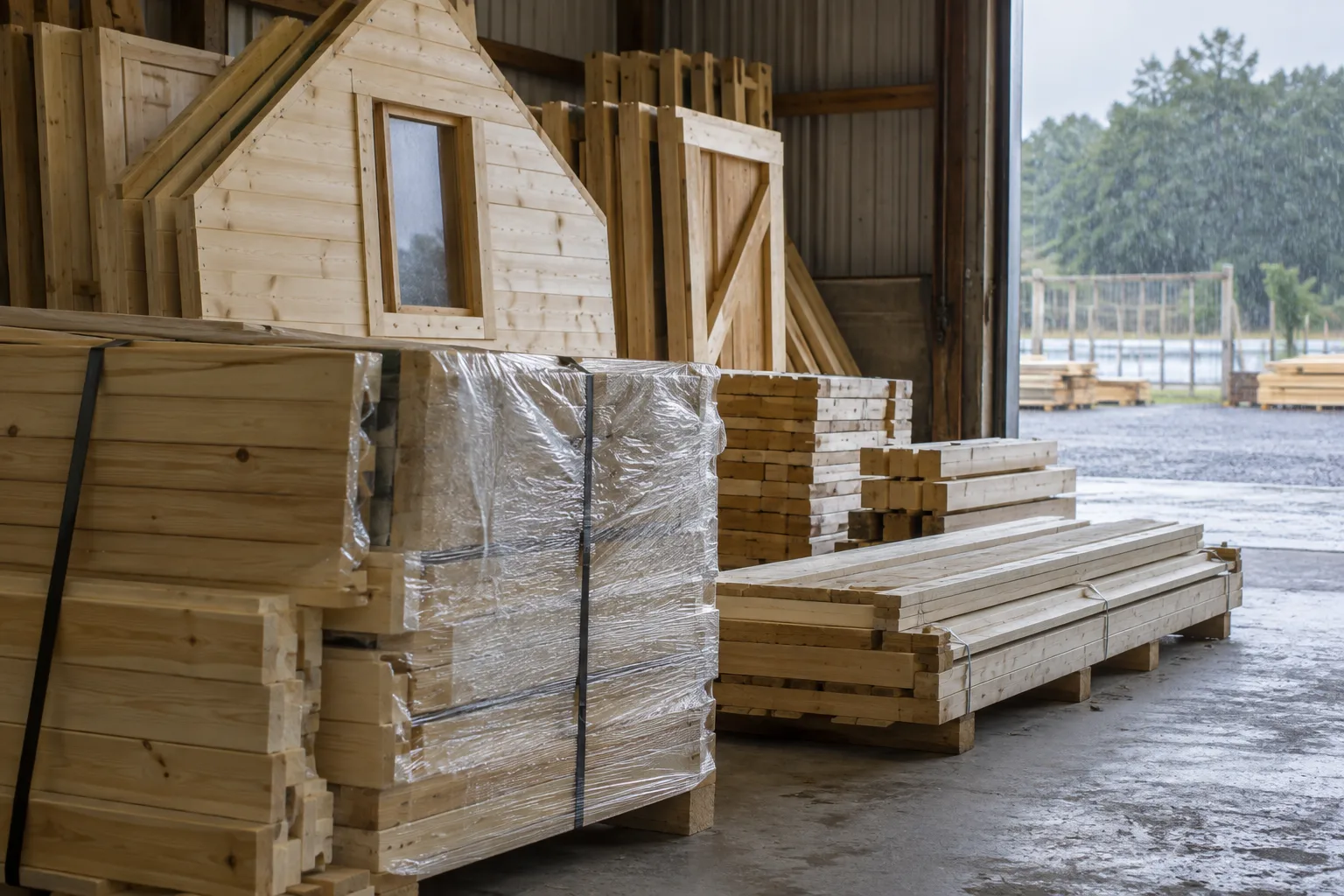
A flat-pack kit can contain cut timber, panels, glazing, hardware and selected finishes, but there is no universal inclusion list. Ask what arrives loose, assembled or installed. Identify roof covering, floor layers, insulation, internal lining, fixtures and services separately. A model photograph is not evidence that every visible item is included in the quoted package.
For glamping pods for sale Ireland comparisons, establish whether the offer is a bare shell, an ensuite fitout or a more complete unit. Ask where the supplier's responsibility stops at the service connections and foundation interface. A finished bathroom inside a pod does not establish the site's water supply, wastewater arrangement or local acceptance.
Have the proposed contractor review the package before the order. A local team may prefer a kit it can assemble and inspect, while another project may benefit from more factory completion. Compare handling, weather protection, inspection access and support. The correct choice depends on the site and team, not a universal claim that one format is faster or cheaper.
| Scope question | Evidence to request | Buyer decision |
|---|---|---|
| Building format | Component and assembly schedule | Kit, panels or completed unit |
| Guest fitout | Fixtures and installed systems | Required completion stage |
| Local work | Foundation, assembly and services | Named local responsibilities |
| Approval support | Available drawings and records | Gaps to resolve before production |
| After-sales support | Parts and reporting process | Practical maintenance route |
Turn these questions into a project brief
Share the location, intended use, quantity, services and preferred delivery format. Ask for a defined supply scope and the evidence available for local review.
5. Establish the customs route for the actual transaction
Ireland's Revenue guidance distinguishes imports from outside the European Union and the associated customs requirements. Ask a qualified broker to review the goods, origin, dispatch route and transaction. Do not infer the customs position solely from the seller's website address or assume a package shipped through another country has changed its relevant origin.
Record the importer and the party arranging declarations and transport. Confirm the documents required for the actual route before dispatch. A cabin kit can include several material and equipment types, so the commercial description must be accurate enough for professional classification. This article does not assign a tariff code, duty rate or VAT treatment to your order.
If goods move through Great Britain or another non-EU route, discuss the transit arrangements with the logistics team rather than copying a domestic delivery assumption. Keep the freight quotation tied to the current packing schedule. A revised cabin or additional fitout can alter the shipment and the documents needed to describe it.
Further reading: Revenue Ireland: importing, exporting and moving goods.
6. Review wood-product and packaging requirements
Ireland's Department of Agriculture, Food and the Marine provides guidance for regulated forestry plants, wood and wood products entering from outside the EU. Have the importer determine whether the actual materials are regulated and which current entry conditions apply. A statement that timber is kiln dried or finished is not, by itself, a complete import-health assessment.
Ask the supplier to identify relevant species, processing and origin information and to provide the records requested by the import team. Review solid wood packaging and dunnage separately from the building components. The goods and their supports can raise different questions. Do not allow a change in packing material to bypass a review that was completed for an earlier arrangement.
The department's guidance directs uncertain importers to its forest-protection contact for commodity questions. Use that route or qualified specialist support when the classification is unclear. Avoid resolving uncertainty by assuming the least demanding condition. Establish the required evidence while the supplier can still arrange it before production and shipment.
Further reading: DAFM: forestry wood-product imports from outside the EU; DAFM: forest-health guidance and import resources.
7. Specify the enclosure and services for the site
Provide the actual location and exposure conditions to the local design team. Ask for the required structural, moisture, energy and service criteria. Do not reduce Irish conditions to a generic wet-weather label or copy a roof detail from another market. The selected cabin configuration and its site interfaces need a coordinated review.
For guest accommodation, describe occupancy, cooking, bathing and periods of vacancy. Ventilation, heating, hot water and maintenance access should be considered together. A thicker timber wall does not prove the complete room will meet the brief. Ask for the proposed layer and equipment schedules and the evidence available to support relevant performance statements.
Include the operator in the practical review. Where will wet coats and luggage go, how will the bathroom be cleaned, and how can equipment be serviced without dismantling finished furniture? These are product-application questions that can improve a specification without inventing a compliance rating. Record the answers before interior options are finalized.
Further reading: Specify year-round cabin use realistically; Compare glamping pod fitout and procurement.
8. Normalize the price and support boundary
Compare current written offers in a consistent currency and at the same completion stage. List goods, freight, destination handling, customs support, applicable taxes, inland delivery, unloading, local work and commissioning. Ask which tasks are included and who supplies them. An imported kit price and a locally coordinated ready-to-use offer are not directly comparable without that reconciliation.
Keep provisional amounts and exclusions visible. Ask local contractors and advisers for the costs within their responsibility rather than filling every blank with an optimistic estimate. Do not promise a fixed return, nightly rate or payback for glamping huts for sale. Commercial results depend on the actual site, operating model and market, none of which is established by a cabin quotation.
Compare the support route as well as the purchase amount. Who answers technical questions during installation, approves substitutions and supplies replacement parts? A local presence can be useful but should be verified, while overseas support should be described honestly. Do not infer a local CabinWild service team from the geographic focus of this article.
Further reading: Compare cabin quotations on the same basis.
9. Close the production, shipment and installation gates
Before production, reconcile the drawings, material schedule, local document requests and commercial scope. Define relevant factory testing and the records needed. Before dispatch, complete shipment inspection against the order and import requirements. Treat those as separate gates: a factory's internal quality check does not establish that the local approval or import paperwork is complete.
Installation preparation should confirm access, foundation interfaces, storage, service readiness and the contractor's planned sequence. If the site is not ready, agree the consequences before shipping. Do not leave the buyer to improvise a storage location or unloading method when the goods arrive. Changes should be reviewed by the parties responsible for the affected work.
At handover, keep the final drawings, relevant local records, operating information and defect list together. Confirm any limitations on the intended use and identify who closes outstanding items. A professionally presented cabin should come with a traceable decision and evidence record, not merely a collection of attractive photographs and informal messages.
Practical buyer workshop
Compare a locally coordinated offer with an imported package
Give both suppliers the same intended use, site brief and room schedule. Ask each to identify design coordination, delivery, installation, services and handover responsibilities. A locally coordinated offer may include work that an imported package leaves to the buyer, but that should be established from the quotation rather than assumed from the supplier's address.
For a hypothetical glamping proposal, separate the cabin itself from the operating site's requirements. An attractive pod does not resolve the planning position, utility arrangements or guest-management responsibilities. Ask the local professionals to identify the necessary review and information. Do not transfer advice about a domestic garden building to commercial accommodation without checking applicability.
Where import records are needed, ensure they describe the same products and configuration that the local team reviewed. If the supplier changes a material or package format, update the relevant information before shipment. Keep a record of who checked the change and whether further questions remain.
The final comparison should show the work the buyer must still arrange after accepting each offer. Obtain real proposals for those tasks or clearly label them unresolved. This approach avoids presenting a cheaper supplier invoice as a cheaper completed Irish project when its local scope has not yet been established. It also provides a practical starting point for the installation contractor's planning.
FAQ: cabin sourcing for Ireland
Can I use a UK garden-cabin exemption in Ireland?
No. Review the Irish rules and the actual site proposal with the relevant local professionals. Northern Ireland also requires its own jurisdiction-specific review. A similar building shape or product name does not make planning, building-control or import requirements interchangeable between the different destinations.
Do the 2026 planning changes approve every garden cabin?
No blanket approval should be inferred from a headline. Current exemptions have categories and conditions that must match the actual proposal. Check primary guidance and obtain local advice on the intended use and site. Keep building-control and other applicable responsibilities separate from the planning question.
Is a glamping pod easier to approve than a flat-pack cabin?
Do not assume that the supply format decides the approval route. Intended use, site, design and applicable requirements matter. Compare the actual documentation and local work for each option. A more completed pod can change manufacturing and transport responsibilities without eliminating site review or service requirements.
Does an overseas supplier handle all import tasks?
Only if the actual agreement clearly assigns the relevant responsibilities and they can be fulfilled. Confirm the importer, broker, documents, delivery terms and costs. Keep customs and plant-health requirements distinct. A statement that shipping is included does not automatically cover every destination declaration, inspection or local delivery task.
What should I send when requesting a cabin offer for Ireland?
Provide the site, intended use, quantity, preferred format and service needs. Include any local adviser and importer document requests. Ask for a drawing-linked component schedule, current quotation and explicit exclusions. Confirm support and availability directly rather than assuming a local factory or installation service from a geographic article.
Conclusion: choose a supply route your local team can complete
A useful comparison of cabins for Ireland connects the intended use, current local review, import route and actual supply scope. Keep planning, building control, customs and plant-health questions separate but coordinated. Select the offer whose responsibilities and evidence can be understood before production, not the one with the most reassuring general label.
Send CabinWild your Irish project brief and customer requirements through the inquiry form. Ask what package, documentation and support can be proposed for local review. Confirm installation preparation and the commercial boundary before releasing the order.
Prepare a cabin brief for Ireland
Share the location, intended use, quantity, services and preferred delivery format. Ask for a defined supply scope and the evidence available for local review.
Prepared with AI assistance for CabinWild Editorial using the linked public sources. Examples are illustrative, not customer results or verified CabinWild test data. Project-specific design and local requirements need review by the appropriate professionals.