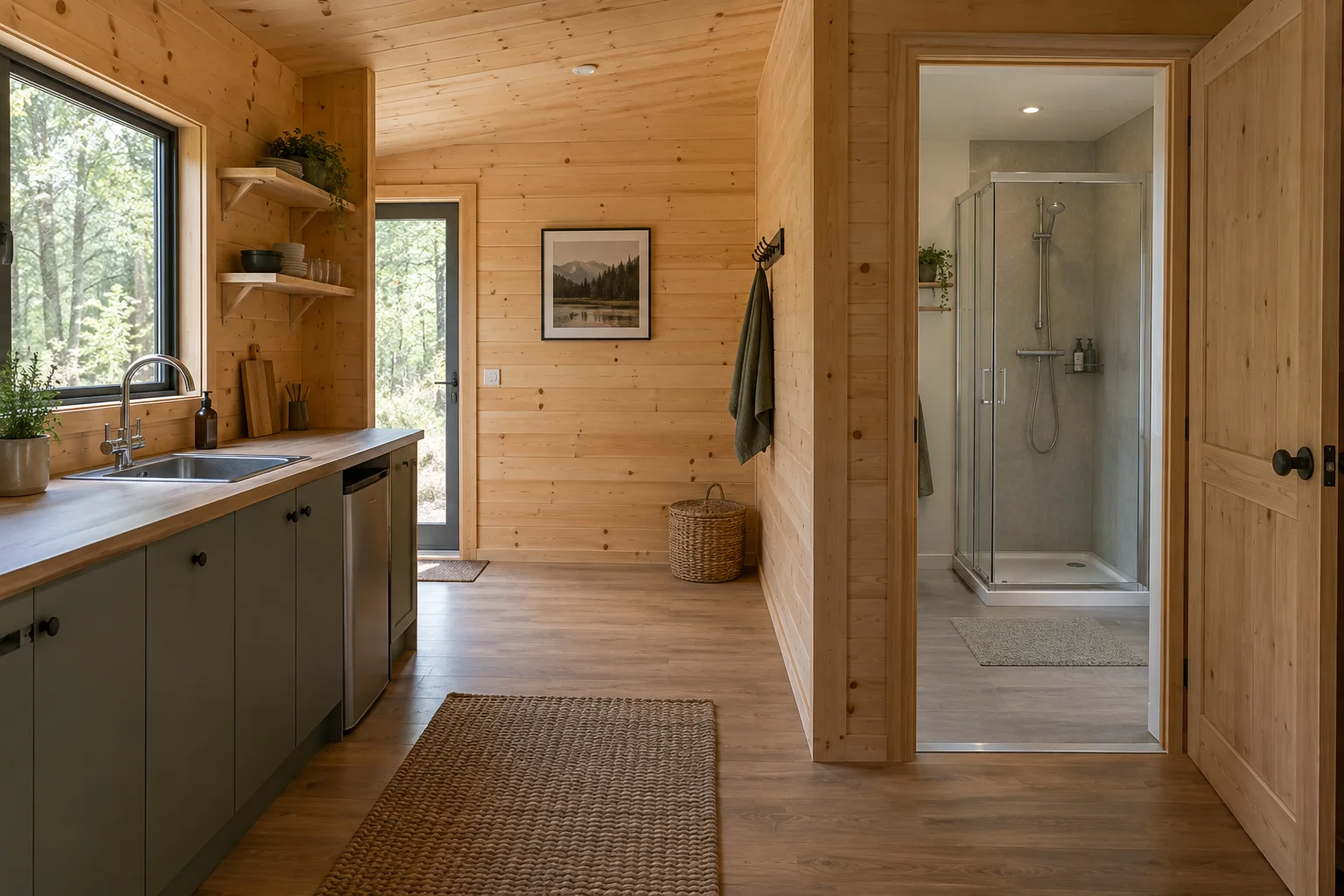
A poolside changing cabin should be specified for wet feet, privacy, dry belongings, wash facilities and frequent cleaning. Pool chemical and humidity conditions require a project-specific materials and ventilation review. A cabin shell is not a pool facility design or proof of compliance with local aquatic-centre requirements.
Introduction: trace the wet-to-dry route
Changing space sits between a wet pool deck and dry personal items. If that transition is not drawn, water reaches lockers and the entrance becomes a slippery, crowded shortcut. The buyer should evaluate the full route and pool operation.
A poolside changing cabin should be specified for wet feet, privacy, dry belongings, wash facilities and frequent cleaning. Pool chemical and humidity conditions require a project-specific materials and ventilation review. A cabin shell is not a pool facility design or proof of compliance with local aquatic-centre requirements.
This guide is written for small pool, spa and hospitality operators evaluating changing facilities. Its examples are hypothetical purchasing and operating situations. Use the checks to prepare a precise brief for the cabin supplier and destination team; they do not establish that an unspecified cabin meets a particular performance level or local approval route.
Further reading: HSE: managing health and safety in swimming pools.
1. Trace the wet-to-dry route
Show entry from pool deck, changing, dry belongings, washing and exit. Doors and benches need operating clearances with people present. Keep the public route distinct from staff cleaning and product storage. The actual pool management team should decide occupancy and facility provision, using local rules. Do not size from nominal cabin area alone.
Turn this requirement into a review item using a furnished wet/dry movement and privacy plan. Start with the actual intended activity and identify the information that could change the room or package choice. If the purchaser and supplier use different assumptions, compare them explicitly before discussing upgrades. Keep the baseline visible so a later request can be recognized as a change in scope rather than a missing original inclusion.
A common failure is placing lockers directly where wet users enter and drain. Check the consequence against the stated customer requirements rather than adding a generic premium feature. If the answer remains uncertain, preserve it as an open item with a responsible reviewer. The next purchase decision should use the accepted scope, not an optimistic assumption borrowed from another product application.
A question to put in the buyer brief
Where can users change without wetting clean belongings or blocking others?
2. Review the full floor and threshold assembly
Wet feet and repeated cleaning make the floor and wall-base interfaces critical. Evaluate slip behaviour and maintenance instructions for the selected system. Trace water to its intended drain or removal method. Surface labels such as waterproof are insufficient if edges and penetrations are not detailed. Keep concealed timber interfaces accessible for inspection.
Use a wet floor, threshold and wall-base detail to assess the proposed arrangement. Ask the reviewer to distinguish what is shown on a concept plan from what is specified for manufacture. A realistic review includes the occupied or working condition, not only an empty presentation image. Where a supplier proposes an alternative, record how it answers the same requirement and whether any operational limitation remains.
A common failure is using a loose absorbent mat as the only water-management measure. Check the consequence against the stated customer requirements rather than adding a generic premium feature. If the answer remains uncertain, preserve it as an open item with a responsible reviewer. The next purchase decision should use the accepted scope, not an optimistic assumption borrowed from another product application.
Further reading: EPA: moisture control guidance.
A question to put in the buyer brief
How does water leave the room without accumulating at timber junctions?
3. Protect privacy without hiding risk
Draw sightlines with doors open, from both pool deck and access path. Provide storage and change positions that work for the intended visitors. A visual screen can create blind maintenance corners or block ventilation if uncoordinated. Destination access review is essential for shared public facilities.
The next evidence item is day/night sightline and access review. Check its relationship to the adjoining work before approving it. In a small building, an adjustment to one detail can affect another activity, service route or maintenance task. Do not judge this item in isolation simply because it can be purchased separately. Identify which team member coordinates its interfaces and which supplier information they still need.
A common failure is judging privacy only from closed-door presentation images. Check the consequence against the stated customer requirements rather than adding a generic premium feature. If the answer remains uncertain, preserve it as an open item with a responsible reviewer. The next purchase decision should use the accepted scope, not an optimistic assumption borrowed from another product application.
A question to put in the buyer brief
Can guests change and reach facilities with an acceptable route and privacy arrangement?
4. Coordinate showers and utilities
If showers are proposed, use actual simultaneous-use demand, water heating, drainage and fixture data. Show what is factory supplied and what is connected at the site. Do not assume a cabin shower installation proves the pool’s wider water systems. Isolation, cleaning and repair access need positions in the fitout.
Discuss service capacity and connection responsibility schedule with the people who will install and operate the cabin. Ask them to walk through a normal use sequence and point out where the proposal depends on an unstated assumption. Keep a distinction between a design requirement, a manufacturer's instruction and an operating preference. That distinction helps the quotation remain precise without presenting every preference as a verified technical result.
A common failure is ordering shower cubicles without water and wastewater review. Check the consequence against the stated customer requirements rather than adding a generic premium feature. If the answer remains uncertain, preserve it as an open item with a responsible reviewer. The next purchase decision should use the accepted scope, not an optimistic assumption borrowed from another product application.
A question to put in the buyer brief
Which hot-water and drainage duties belong to each party?
Turn these questions into a project brief
Send your destination, quantity, intended use and this specification question. Ask for a clearly bounded quotation and document list.
5. Address humidity and product exposure
The pool setting may expose components to humidity, cleaning agents or splashes. Specify materials from actual product guidance and planned cleaning method. Ventilation and drying should work while facilities are busy and after closure. Do not assert a universal coating makes timber maintenance-free. Separate pool plant and chemical storage from an ordinary changing room unless specialists design it.
Before choosing an upgrade, compare an exposure and cleaning-material schedule. Assess how the proposed detail will be reached, cleaned and corrected after furniture or equipment is in place. A lower initial price may leave a costly access problem, while a more expensive feature may solve no relevant operational issue. Review the exact configuration and the practical upkeep task rather than assigning a benefit from appearance alone.
A common failure is using a general garden-room interior as an unreviewed pool wet-zone finish. Check the consequence against the stated customer requirements rather than adding a generic premium feature. If the answer remains uncertain, preserve it as an open item with a responsible reviewer. The next purchase decision should use the accepted scope, not an optimistic assumption borrowed from another product application.
Further reading: EPA: moisture control guidance.
A question to put in the buyer brief
How will surfaces be cleaned, dried and inspected over the operating season?
6. Make staff upkeep practical
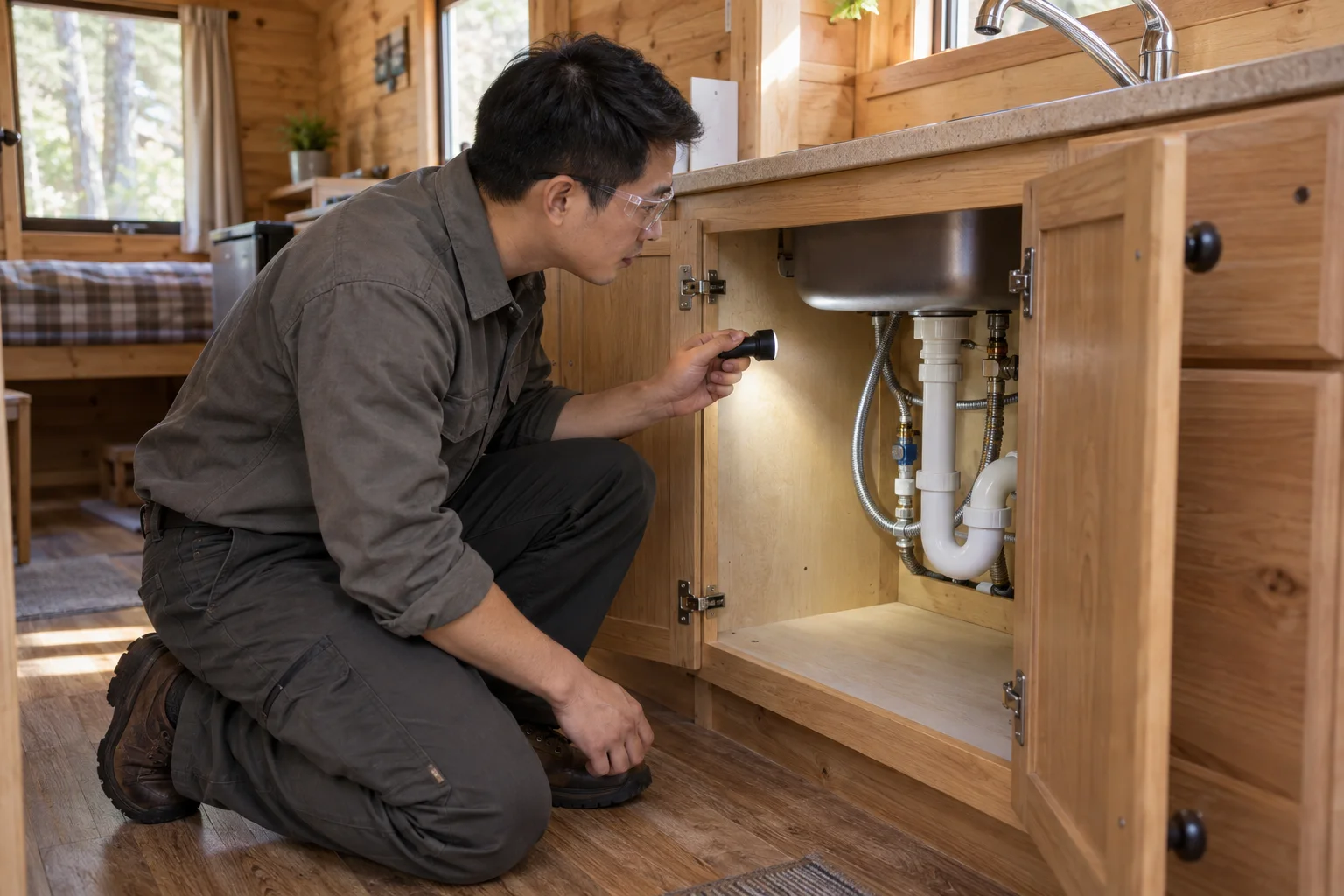
Provide access to floor edges, drains, lockers and service panels. Document cleaning closures, consumables and minor part replacements. Poolside entry may have seasonal patterns, but wet conditions can remain intensive at peak use. An initial fitout quote should identify who installs lockers and who commissions services.
Close this decision with a cleaning and handover plan with component references. Identify the remaining work at the destination and keep its owner visible in the purchase comparison. A delivered component, a completed building interface and an operating facility are different stages. The buyer should be able to explain which stage the supplier price reaches and what additional evidence is needed before the intended use begins.
A common failure is specifying fixed furniture that prevents inspection or repair. Check the consequence against the stated customer requirements rather than adding a generic premium feature. If the answer remains uncertain, preserve it as an open item with a responsible reviewer. The next purchase decision should use the accepted scope, not an optimistic assumption borrowed from another product application.
A question to put in the buyer brief
What can staff reach and replace without dismantling the whole room?
Use a decision matrix to compare the complete proposal
A buyer can turn the questions above into a comparison sheet for poolside changing cabin. Keep the original requirement in one column and each supplier's proposed answer in another. Compare like-for-like scope first; then assess how convincing the supporting evidence is. A missing answer should appear as pending, not as a zero-cost inclusion or an assumed pass.
Use three practical statuses: accepted with evidence, accepted subject to a named condition, and unresolved. Conditional acceptance needs an owner and a deadline before the affected work begins. It may be sensible to proceed with unrelated work while a detail is developed, but the team should explicitly identify the boundary. That is different from letting an unresolved detail silently spread across a multi-unit order.
Further reading: Related CabinWild buyer guide; Related CabinWild buyer guide; Browse cabin options; Discuss a project.
| Review item | Evidence to compare | Question that closes the gap |
|---|---|---|
| Trace the wet-to-dry route | A furnished wet/dry movement and privacy plan | Where can users change without wetting clean belongings or blocking others? |
| Review the full floor and threshold assembly | A wet floor, threshold and wall-base detail | How does water leave the room without accumulating at timber junctions? |
| Protect privacy without hiding risk | Day/night sightline and access review | Can guests change and reach facilities with an acceptable route and privacy arrangement? |
| Coordinate showers and utilities | Service capacity and connection responsibility schedule | Which hot-water and drainage duties belong to each party? |
| Address humidity and product exposure | An exposure and cleaning-material schedule | How will surfaces be cleaned, dried and inspected over the operating season? |
| Make staff upkeep practical | A cleaning and handover plan with component references | What can staff reach and replace without dismantling the whole room? |
Worked buyer scenario: an illustrative decision sequence
In an illustrative outdoor-pool project, the first sketch puts the lockers immediately inside the deck door. A wet-use walk-through shows water and waiting users concentrated there. The layout gains a transition zone and a clear drainage or removal strategy.
Local designers review shower demand and pool-specific exposures; the cabin supplier defines the shell and agreed fitout interfaces. Staff cleaning routes remain available behind lockers.
This example is not an installed CabinWild pool changing block, a slip rating or an approval for pool use. The destination pool team must establish the actual operating criteria.
Translate the application brief into factory, shipment and site checks
Factory testing should be requested only for a defined question and with an agreed method. For poolside changing cabin, begin by confirming which proposed details are factory-completed and which are installed locally. Ask for an identified configuration, conditions and acceptance criterion where a test is specified. An attractive demonstration does not verify loads, acoustic privacy, regulatory suitability or the complete occupied result.
Shipment inspection should compare the delivered scope against the accepted application brief. Review the component references and condition needed to support the decisions above. Photograph any discrepancy with its package or unit identification. The inspection does not create evidence for a feature that was never specified, and it should not be described as destination approval of locally connected systems.
Installation preparation needs to preserve the accepted operating arrangement. Give the local team the drawings and information behind trace the wet-to-dry route. Check the interfaces before they are concealed, and return proposed changes to the responsible reviewer. Keep the actual equipment, furniture or use requirements available instead of asking installers to reconstruct them from a promotional image.
At handover, walk through the intended use and maintenance tasks with the operator. Pay particular attention to address humidity and product exposure and make staff upkeep practical. Confirm instructions, remaining specialist checks and replacement information. A completed checklist should describe its scope and limitations; it should not convert a short demonstration into an unsupported long-term performance promise.
- A furnished wet/dry movement and privacy plan.
- A wet floor, threshold and wall-base detail.
- Day/night sightline and access review.
- Service capacity and connection responsibility schedule.
- An exposure and cleaning-material schedule.
- A cleaning and handover plan with component references.
RFQ handoff: six questions to send with the site plan
A useful request for quotation for poolside changing cabin should include the intended use, destination and actual equipment or stock. Ask each supplier to distinguish included work, local specialist work and exclusions. Keep open decisions visible when comparing different layouts.
- Trace the wet-to-dry route: attach a furnished wet/dry movement and privacy plan. Ask: Where can users change without wetting clean belongings or blocking others? Mark the answer, owner and remaining site work.
- Review the full floor and threshold assembly: attach a wet floor, threshold and wall-base detail. Ask: How does water leave the room without accumulating at timber junctions? Mark the answer, owner and remaining site work.
- Protect privacy without hiding risk: attach day/night sightline and access review. Ask: Can guests change and reach facilities with an acceptable route and privacy arrangement? Mark the answer, owner and remaining site work.
- Coordinate showers and utilities: attach service capacity and connection responsibility schedule. Ask: Which hot-water and drainage duties belong to each party? Mark the answer, owner and remaining site work.
- Address humidity and product exposure: attach an exposure and cleaning-material schedule. Ask: How will surfaces be cleaned, dried and inspected over the operating season? Mark the answer, owner and remaining site work.
- Make staff upkeep practical: attach a cleaning and handover plan with component references. Ask: What can staff reach and replace without dismantling the whole room? Mark the answer, owner and remaining site work.
Frequently asked questions
Can an ordinary cabin be used by a pool?
Only after the actual wet use, materials, services and destination requirements are reviewed. The setting changes the design brief.
Do pool changing rooms need drains?
Water management depends on the selected layout and local requirements. Trace all expected water to an approved removal method; do not assume a surface finish solves it.
Is timber suitable in a humid changing room?
The complete assembly, finishes, ventilation and maintenance determine suitability. Avoid a universal answer from the material label alone.
Who supplies lockers and showers?
That is a contractual scope choice. Identify products, fixings, connections and commissioning separately in the quotation.
What should a buyer provide?
Send the pool route, peak users, service capacities, wet-zone cleaning method and destination review requirements.
Conclusion: Treat wet-to-dry movement as the main design task
A changing cabin should protect people, belongings and building interfaces through frequent wet use. Quote that complete service route, not just the enclosure.
Send CabinWild your destination, intended use, quantity, drawing stage and the questions that remain open. Include the evidence you need in the quotation rather than asking only for a model price. Contact info@CabinWild.com to discuss the proposed cabin supply boundary and supporting documents. Local design, installation and approval responsibilities should be agreed with the destination professionals.
Discuss poolside changing cabin
Send your destination, quantity, intended use and this specification question. Ask for a clearly bounded quotation and document list.
Prepared with AI assistance for CabinWild Editorial using the linked public sources. Examples are illustrative, not customer results or verified CabinWild test data. Project-specific design and local requirements need review by the appropriate professionals.