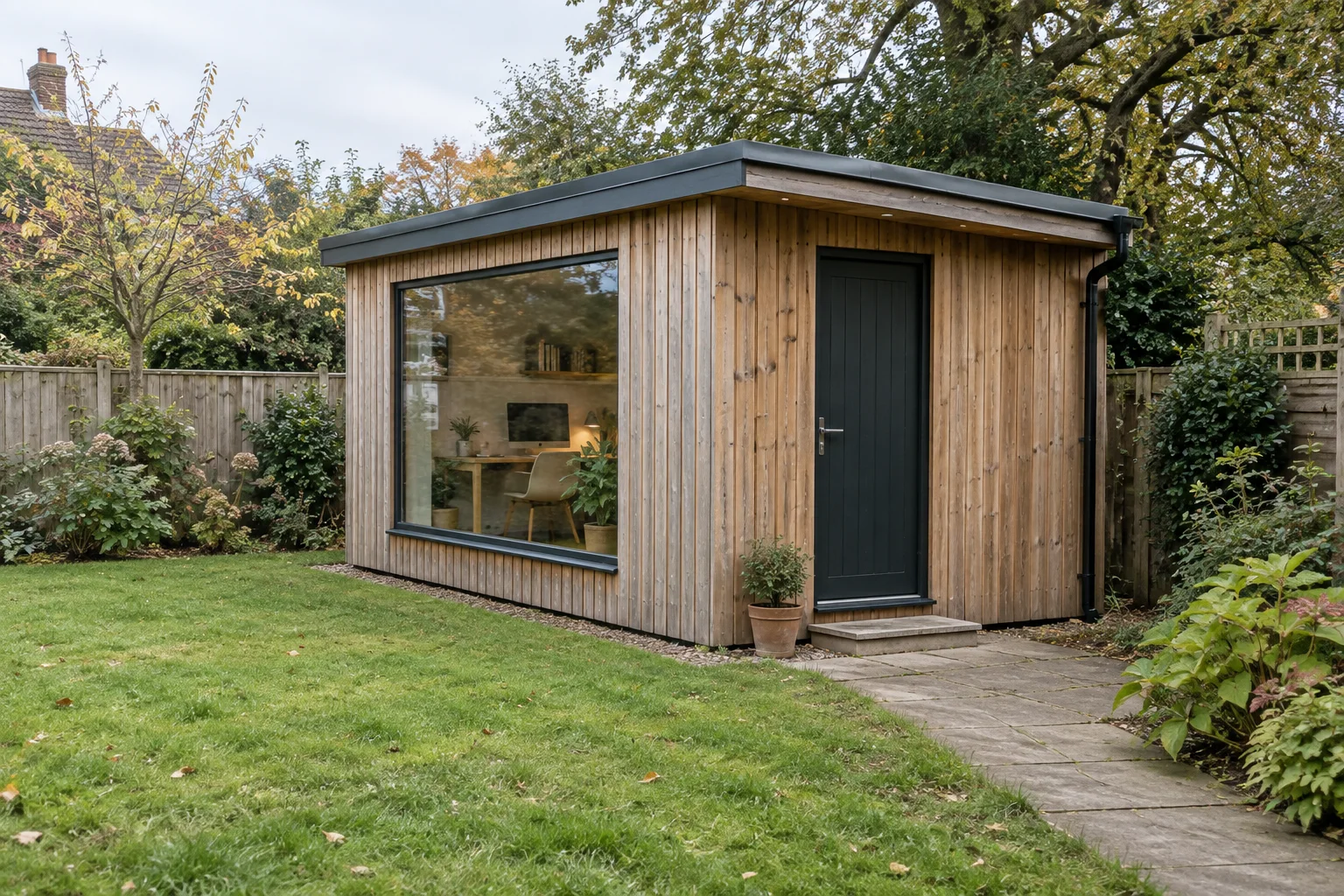
A plant nursery sales cabin should connect outdoor browsing to checkout, advice and stock control. Draw trolley movement, wet-footfall paths, display positions and the working counter. Decide which plants remain outside and which products require indoor conditions; a sales cabin is not automatically a greenhouse or plant-propagation space.
Introduction: map browsing to payment and exit
Nursery customers arrive with plants, labels, soil and trolleys. A small timber counter can improve service when its door and payment point suit those loads, but it can create a queue in the sales aisle if located by appearance alone.
A plant nursery sales cabin should connect outdoor browsing to checkout, advice and stock control. Draw trolley movement, wet-footfall paths, display positions and the working counter. Decide which plants remain outside and which products require indoor conditions; a sales cabin is not automatically a greenhouse or plant-propagation space.
This guide is written for plant nurseries and garden centres selecting a customer-facing timber sales point. Its examples are hypothetical purchasing and operating situations. Use the checks to prepare a precise brief for the cabin supplier and destination team; they do not establish that an unspecified cabin meets a particular performance level or local approval route.
Further reading: HSE: slips and trips in retail.
1. Map browsing to payment and exit
Sketch the route from outdoor benches through advice, payment and collection. Show trolleys, customers carrying pots and those who only ask a question. The counter should not obstruct plant replenishment or the main exit. Test busy weekends rather than a quiet empty forecourt.
Turn this requirement into a review item using a customer and replenishment flow plan. Start with the actual intended activity and identify the information that could change the room or package choice. If the purchaser and supplier use different assumptions, compare them explicitly before discussing upgrades. Keep the baseline visible so a later request can be recognized as a change in scope rather than a missing original inclusion.
A common failure is putting the cabin at the narrowest sales aisle. Check the consequence against the stated customer requirements rather than adding a generic premium feature. If the answer remains uncertain, preserve it as an open item with a responsible reviewer. The next purchase decision should use the accepted scope, not an optimistic assumption borrowed from another product application.
A question to put in the buyer brief
Can people browse and pay while staff restock nearby?
2. Build the counter around products handled
List transaction devices, labels, wrapping, returns and the largest ordinary plant items brought to the desk. A slim ledge may fail under a heavy pot or long tray. Confirm local loading and staff reach with the furnished counter drawing. Keep water-sensitive electronics away from foreseeable wet stock.
Use a counter task and load mock-up to assess the proposed arrangement. Ask the reviewer to distinguish what is shown on a concept plan from what is specified for manufacture. A realistic review includes the occupied or working condition, not only an empty presentation image. Where a supplier proposes an alternative, record how it answers the same requirement and whether any operational limitation remains.
A common failure is using a domestic desk as a wet plant checkout. Check the consequence against the stated customer requirements rather than adding a generic premium feature. If the answer remains uncertain, preserve it as an open item with a responsible reviewer. The next purchase decision should use the accepted scope, not an optimistic assumption borrowed from another product application.
Further reading: USDA Forest Service: handling container plants.
A question to put in the buyer brief
Where do plants and payment devices sit during a transaction?
3. Distinguish sales stock from growing stock
Identify what is displayed indoors, what remains outdoors and what needs specialist growing conditions. A timber retail cabin may offer shelter and merchandising but does not establish light, temperature or irrigation performance for propagation. Use plant-handling guidance for the actual stock and climate. Keep marketing displays from blocking operation.
The next evidence item is a plant and merchandise location schedule. Check its relationship to the adjoining work before approving it. In a small building, an adjustment to one detail can affect another activity, service route or maintenance task. Do not judge this item in isolation simply because it can be purchased separately. Identify which team member coordinates its interfaces and which supplier information they still need.
A common failure is describing a sales kiosk as suitable for all live-plant storage. Check the consequence against the stated customer requirements rather than adding a generic premium feature. If the answer remains uncertain, preserve it as an open item with a responsible reviewer. The next purchase decision should use the accepted scope, not an optimistic assumption borrowed from another product application.
A question to put in the buyer brief
Which plants enter the room, for how long and under what conditions?
4. Design wet thresholds and trolley routes
Rain, irrigation and soil affect entries. Set a cleanable approach, appropriate threshold and surface specification, with drainage that does not leave water against the timber base. Draw a loaded trolley through the doorway. HSE retail slip guidance is a useful source for risk review but destination rules still govern.
Discuss a wet-entry detail and trolley path check with the people who will install and operate the cabin. Ask them to walk through a normal use sequence and point out where the proposal depends on an unstated assumption. Keep a distinction between a design requirement, a manufacturer's instruction and an operating preference. That distinction helps the quotation remain precise without presenting every preference as a verified technical result.
A common failure is assuming a porch alone controls mud and wet floors. Check the consequence against the stated customer requirements rather than adding a generic premium feature. If the answer remains uncertain, preserve it as an open item with a responsible reviewer. The next purchase decision should use the accepted scope, not an optimistic assumption borrowed from another product application.
A question to put in the buyer brief
Can a loaded trolley pass without bringing runoff into an unprotected junction?
Turn these questions into a project brief
Send your destination, quantity, intended use and this specification question. Ask for a clearly bounded quotation and document list.
5. Support staff advice and stock information
Staff may answer growing questions, check availability and arrange delivery. Provide data connection, screen visibility, filing and a clear place for reference material. Define whether advice is given at the counter or in a separate standing area. Do not imply that the building itself validates horticultural recommendations.
Before choosing an upgrade, compare a staff service and device schedule. Assess how the proposed detail will be reached, cleaned and corrected after furniture or equipment is in place. A lower initial price may leave a costly access problem, while a more expensive feature may solve no relevant operational issue. Review the exact configuration and the practical upkeep task rather than assigning a benefit from appearance alone.
A common failure is locating the only screen where customers cannot view product information. Check the consequence against the stated customer requirements rather than adding a generic premium feature. If the answer remains uncertain, preserve it as an open item with a responsible reviewer. The next purchase decision should use the accepted scope, not an optimistic assumption borrowed from another product application.
Further reading: USDA Forest Service: handling container plants.
A question to put in the buyer brief
How will staff check stock and speak with customers without halting payment?
6. Plan seasonal peaks and close-down
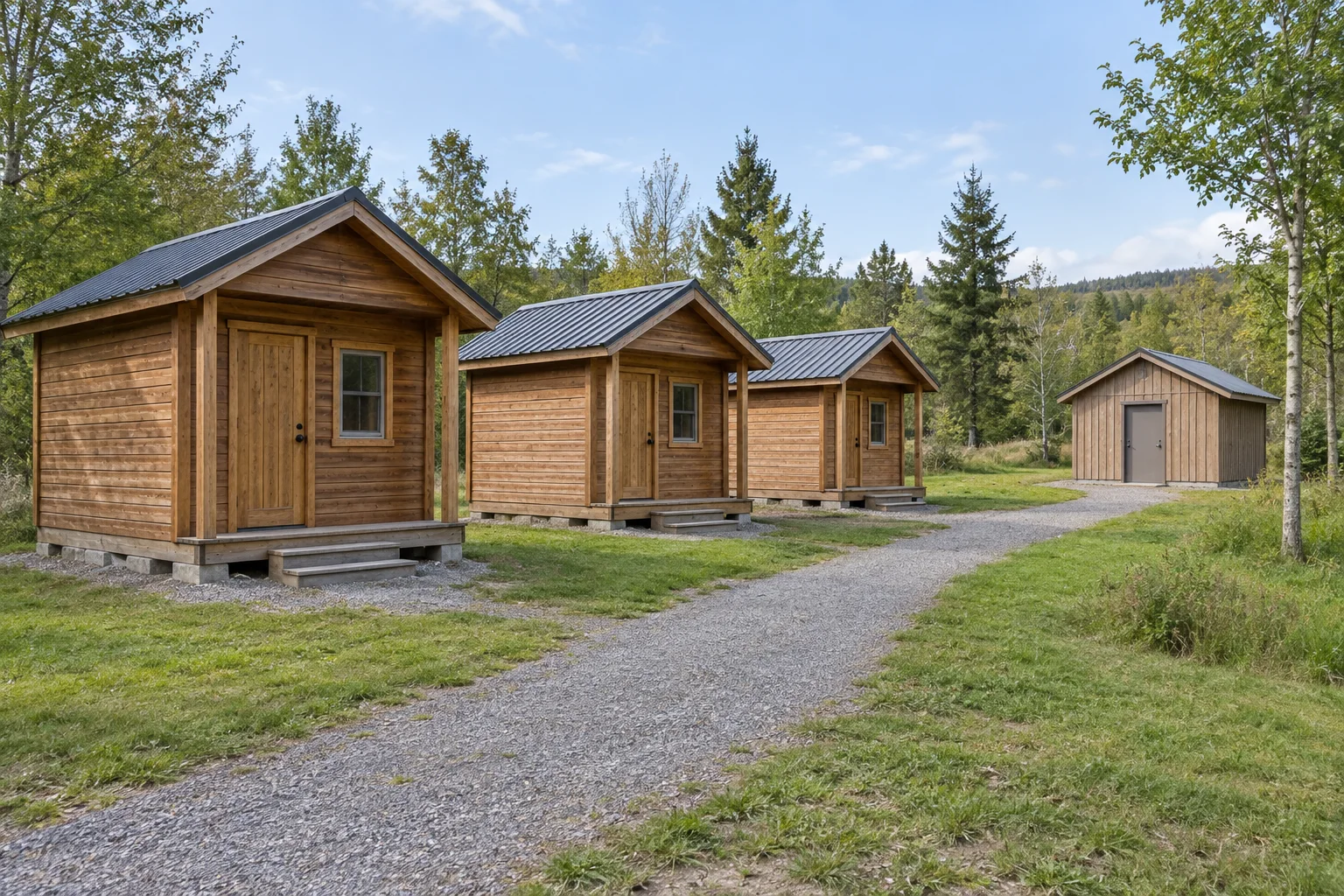
Plant sales vary with season. Test temporary promotions, queue space, weather shelter and after-hours security. Establish who maintains exterior displays, signs and stock; those are not silently included in a cabin package. Schedule cleaning of soil and water at the counter. The room should still work when promotional stock changes.
Close this decision with a peak-season operating and maintenance plan. Identify the remaining work at the destination and keep its owner visible in the purchase comparison. A delivered component, a completed building interface and an operating facility are different stages. The buyer should be able to explain which stage the supplier price reaches and what additional evidence is needed before the intended use begins.
A common failure is using promotional racks to consume the arrival and exit path. Check the consequence against the stated customer requirements rather than adding a generic premium feature. If the answer remains uncertain, preserve it as an open item with a responsible reviewer. The next purchase decision should use the accepted scope, not an optimistic assumption borrowed from another product application.
A question to put in the buyer brief
What changes on the busiest weekend and who resets the area afterward?
Use a decision matrix to compare the complete proposal
A buyer can turn the questions above into a comparison sheet for plant nursery sales cabin. Keep the original requirement in one column and each supplier's proposed answer in another. Compare like-for-like scope first; then assess how convincing the supporting evidence is. A missing answer should appear as pending, not as a zero-cost inclusion or an assumed pass.
Use three practical statuses: accepted with evidence, accepted subject to a named condition, and unresolved. Conditional acceptance needs an owner and a deadline before the affected work begins. It may be sensible to proceed with unrelated work while a detail is developed, but the team should explicitly identify the boundary. That is different from letting an unresolved detail silently spread across a multi-unit order.
Further reading: Related CabinWild buyer guide; Related CabinWild buyer guide; Browse cabin options; Discuss a project.
| Review item | Evidence to compare | Question that closes the gap |
|---|---|---|
| Map browsing to payment and exit | A customer and replenishment flow plan | Can people browse and pay while staff restock nearby? |
| Build the counter around products handled | A counter task and load mock-up | Where do plants and payment devices sit during a transaction? |
| Distinguish sales stock from growing stock | A plant and merchandise location schedule | Which plants enter the room, for how long and under what conditions? |
| Design wet thresholds and trolley routes | A wet-entry detail and trolley path check | Can a loaded trolley pass without bringing runoff into an unprotected junction? |
| Support staff advice and stock information | A staff service and device schedule | How will staff check stock and speak with customers without halting payment? |
| Plan seasonal peaks and close-down | A peak-season operating and maintenance plan | What changes on the busiest weekend and who resets the area afterward? |
Worked buyer scenario: an illustrative decision sequence
In a hypothetical nursery, the first sales cabin concept sits between two outdoor display rows. A busy-day diagram shows trolley queues blocking plant replenishment. Moving the counter entrance and marking a separate service approach lets both flows continue.
The operator limits indoor plants to short-duration display and briefs their actual environmental needs separately. The supplier specifies counter loads and wet-entry details, while stock care stays with the nursery team.
This is not a completed CabinWild nursery installation, plant survival test or promise of retail performance. The scenario illustrates a more precise buying brief.
Translate the application brief into factory, shipment and site checks
Factory testing should be requested only for a defined question and with an agreed method. For plant nursery sales cabin, begin by confirming which proposed details are factory-completed and which are installed locally. Ask for an identified configuration, conditions and acceptance criterion where a test is specified. An attractive demonstration does not verify loads, acoustic privacy, regulatory suitability or the complete occupied result.
Shipment inspection should compare the delivered scope against the accepted application brief. Review the component references and condition needed to support the decisions above. Photograph any discrepancy with its package or unit identification. The inspection does not create evidence for a feature that was never specified, and it should not be described as destination approval of locally connected systems.
Installation preparation needs to preserve the accepted operating arrangement. Give the local team the drawings and information behind map browsing to payment and exit. Check the interfaces before they are concealed, and return proposed changes to the responsible reviewer. Keep the actual equipment, furniture or use requirements available instead of asking installers to reconstruct them from a promotional image.
At handover, walk through the intended use and maintenance tasks with the operator. Pay particular attention to support staff advice and stock information and plan seasonal peaks and close-down. Confirm instructions, remaining specialist checks and replacement information. A completed checklist should describe its scope and limitations; it should not convert a short demonstration into an unsupported long-term performance promise.
- A customer and replenishment flow plan.
- A counter task and load mock-up.
- A plant and merchandise location schedule.
- A wet-entry detail and trolley path check.
- A staff service and device schedule.
- A peak-season operating and maintenance plan.
RFQ handoff: six questions to send with the site plan
A useful request for quotation for plant nursery sales cabin should include the intended use, destination and actual equipment or stock. Ask each supplier to distinguish included work, local specialist work and exclusions. Keep open decisions visible when comparing different layouts.
- Map browsing to payment and exit: attach a customer and replenishment flow plan. Ask: Can people browse and pay while staff restock nearby? Mark the answer, owner and remaining site work.
- Build the counter around products handled: attach a counter task and load mock-up. Ask: Where do plants and payment devices sit during a transaction? Mark the answer, owner and remaining site work.
- Distinguish sales stock from growing stock: attach a plant and merchandise location schedule. Ask: Which plants enter the room, for how long and under what conditions? Mark the answer, owner and remaining site work.
- Design wet thresholds and trolley routes: attach a wet-entry detail and trolley path check. Ask: Can a loaded trolley pass without bringing runoff into an unprotected junction? Mark the answer, owner and remaining site work.
- Support staff advice and stock information: attach a staff service and device schedule. Ask: How will staff check stock and speak with customers without halting payment? Mark the answer, owner and remaining site work.
- Plan seasonal peaks and close-down: attach a peak-season operating and maintenance plan. Ask: What changes on the busiest weekend and who resets the area afterward? Mark the answer, owner and remaining site work.
Frequently asked questions
Is a timber sales cabin also a greenhouse?
No. A sales cabin needs its own retail brief; growing or propagation conditions require separate, plant-specific environmental design.
How wide should its door be?
Check the actual trolley and product load, public route and local access framework rather than copying a generic width.
Should plants be displayed indoors?
Only when their stock-care needs and display duration support it; record which species and quantities are intended.
What about wet floors?
Assess irrigation, rain and soil at the threshold, then specify drainage, cleanability and appropriate slip risk controls.
What should I send for a quote?
Send a sales and replenishment route plan, counter tasks, equipment, trolley sizes, utilities and seasonal peak assumptions.
Conclusion: Design the customer and stock routes together
A useful nursery sales cabin gives staff a workable checkout while keeping outdoor stock movement and customer browsing clear.
Send CabinWild your destination, intended use, quantity, drawing stage and the questions that remain open. Include the evidence you need in the quotation rather than asking only for a model price. Contact info@CabinWild.com to discuss the proposed cabin supply boundary and supporting documents. Local design, installation and approval responsibilities should be agreed with the destination professionals.
Discuss plant nursery sales cabin
Send your destination, quantity, intended use and this specification question. Ask for a clearly bounded quotation and document list.
Prepared with AI assistance for CabinWild Editorial using the linked public sources. Examples are illustrative, not customer results or verified CabinWild test data. Project-specific design and local requirements need review by the appropriate professionals.